Temple rugs for home
Repurposing sacred stepped plinth shapes as brand-building blocks
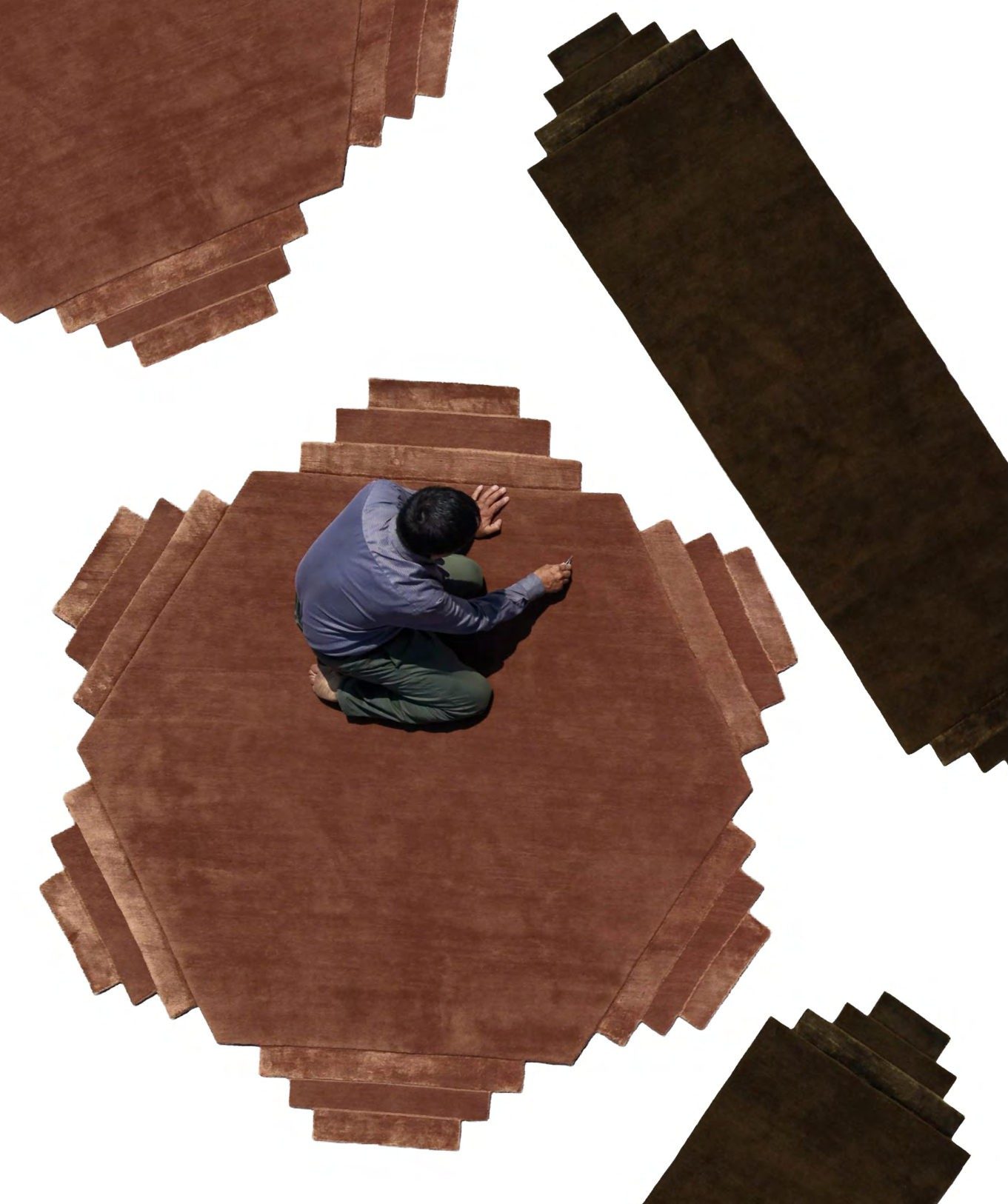
In San Francisco, artist Eric Hildebrandt has long led high-end furnishings showrooms and developed a close familiarity with hand-knotted rugs and textiles. In 2023, he launched Temple, a rug collection named for gathering spots “both secular and sacred” such as spaces in Nepal where weaving traditions have been practiced for centuries. Historically, many rugs were made for specific places and rituals within temples.
Right at the start, he was nominated for an Interior Design Magazine award.
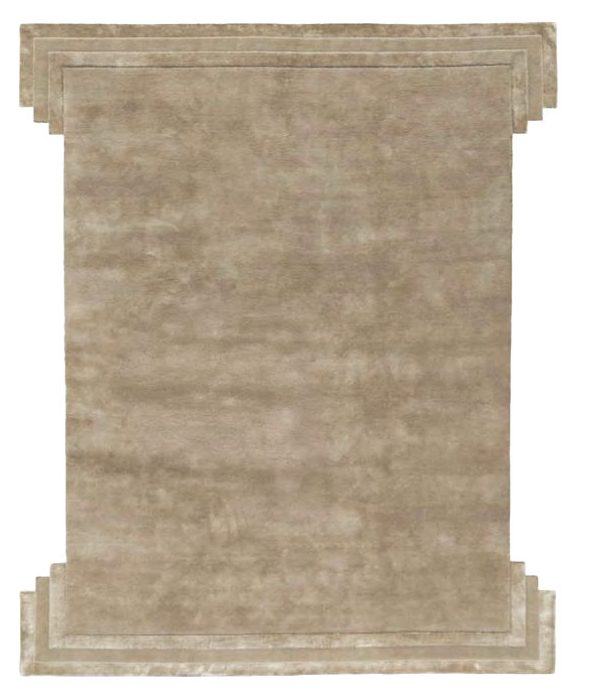
“I wanted to give these traditions a modern context,” Hildebrandt says. His designs set aside traditional ornate motifs, relying instead on unexpected forms, varied pile heights, and subtle shifts in texture. Now, made-to-order collections range from $120-$200 per square foot.