When interior designer Floriana Petersen arrived in San Francisco from her native Slovenia in 1986, two things in particular helped stave off homesickness: the creative community that she tapped into and the bonds forged around the dinner table. Her first job in the city was at SH Frank & Company, where she befriended myriad artists and designers who frequented the leather supplier. “I love to cook,” she says. “Having people over and cooking gave me a sense of home. You have people in the kitchen, you talk and it reminds you of your family at home.”
Nearly 40 years on, community and cooking are still integral parts of life in her adopted hometown. In a circa-1875 Victorian in the Mission District, Petersen, the founder of Floriana Interiors, hosts weekly dinner parties. The intimate affairs bring together upwards of eight friends, old and new — artists, designers, gardeners, farmers, chefs, writers, restaurateurs, sailors, teachers and travelers.
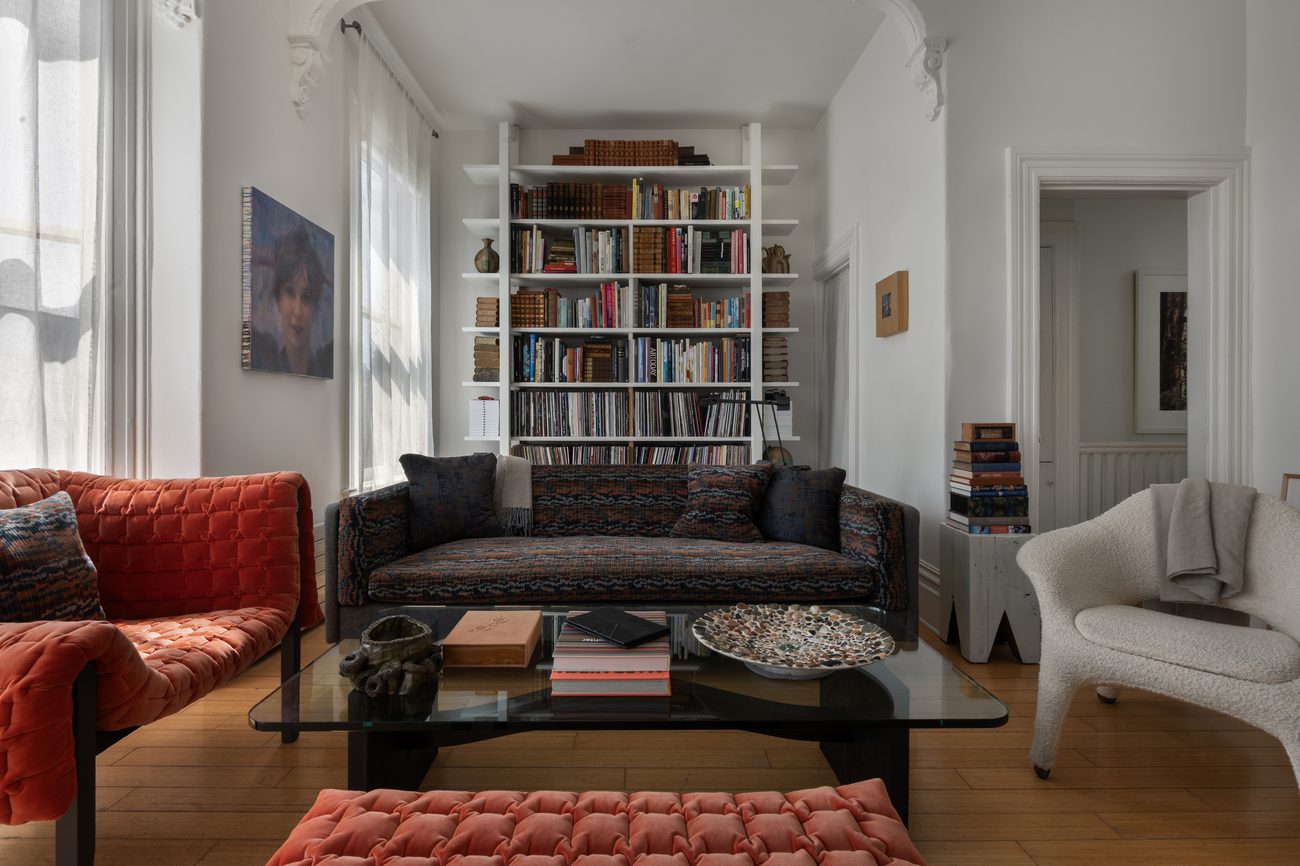
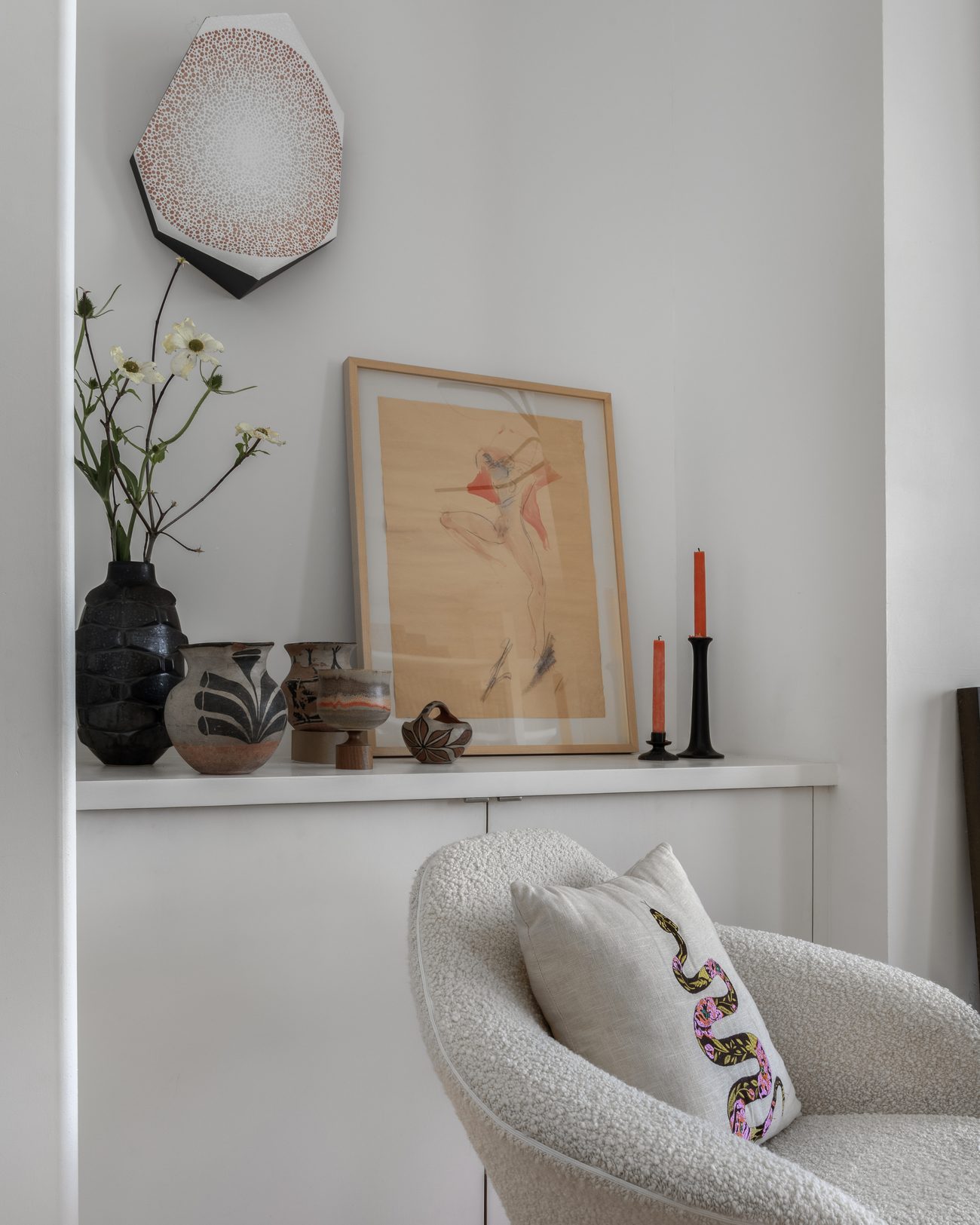
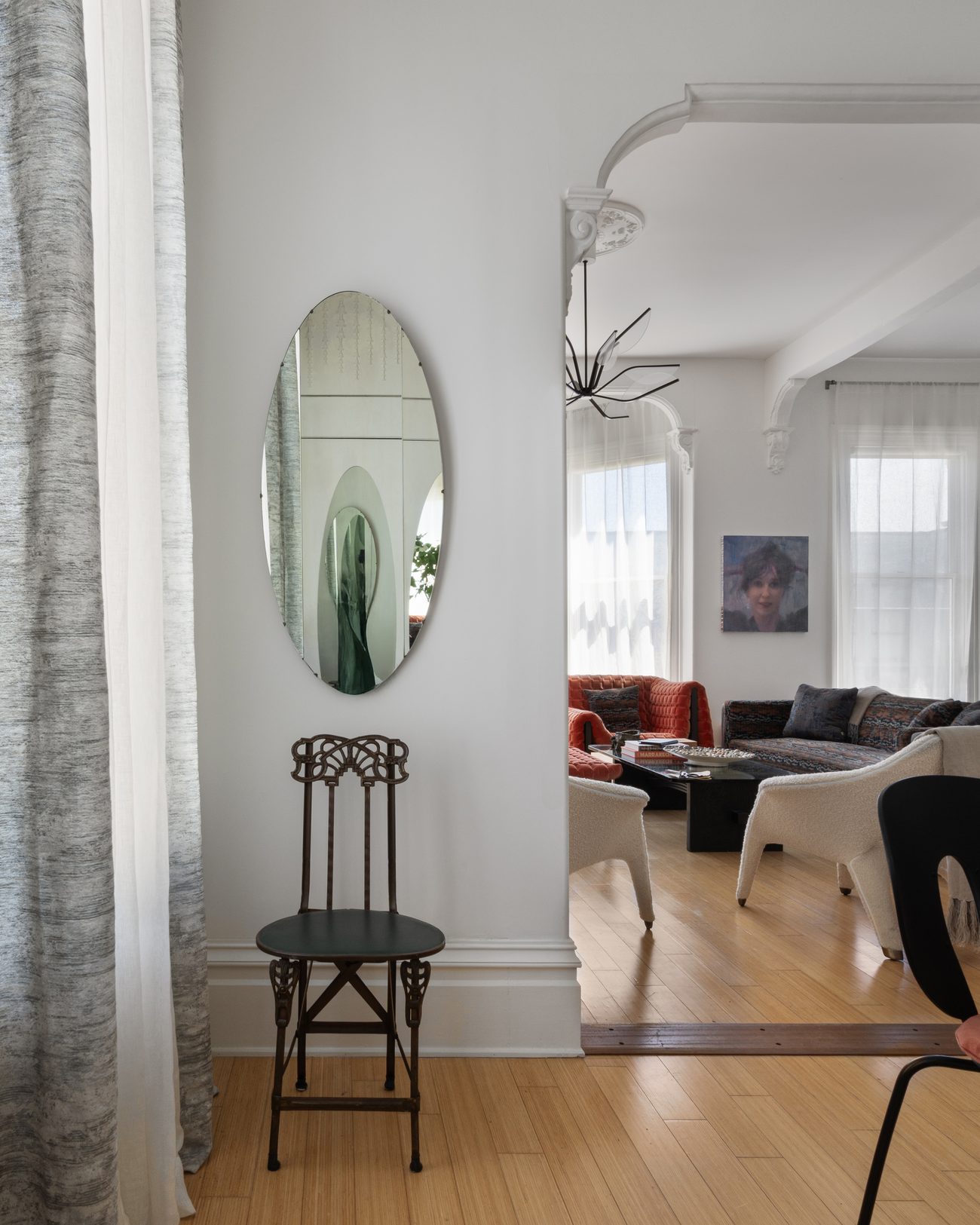
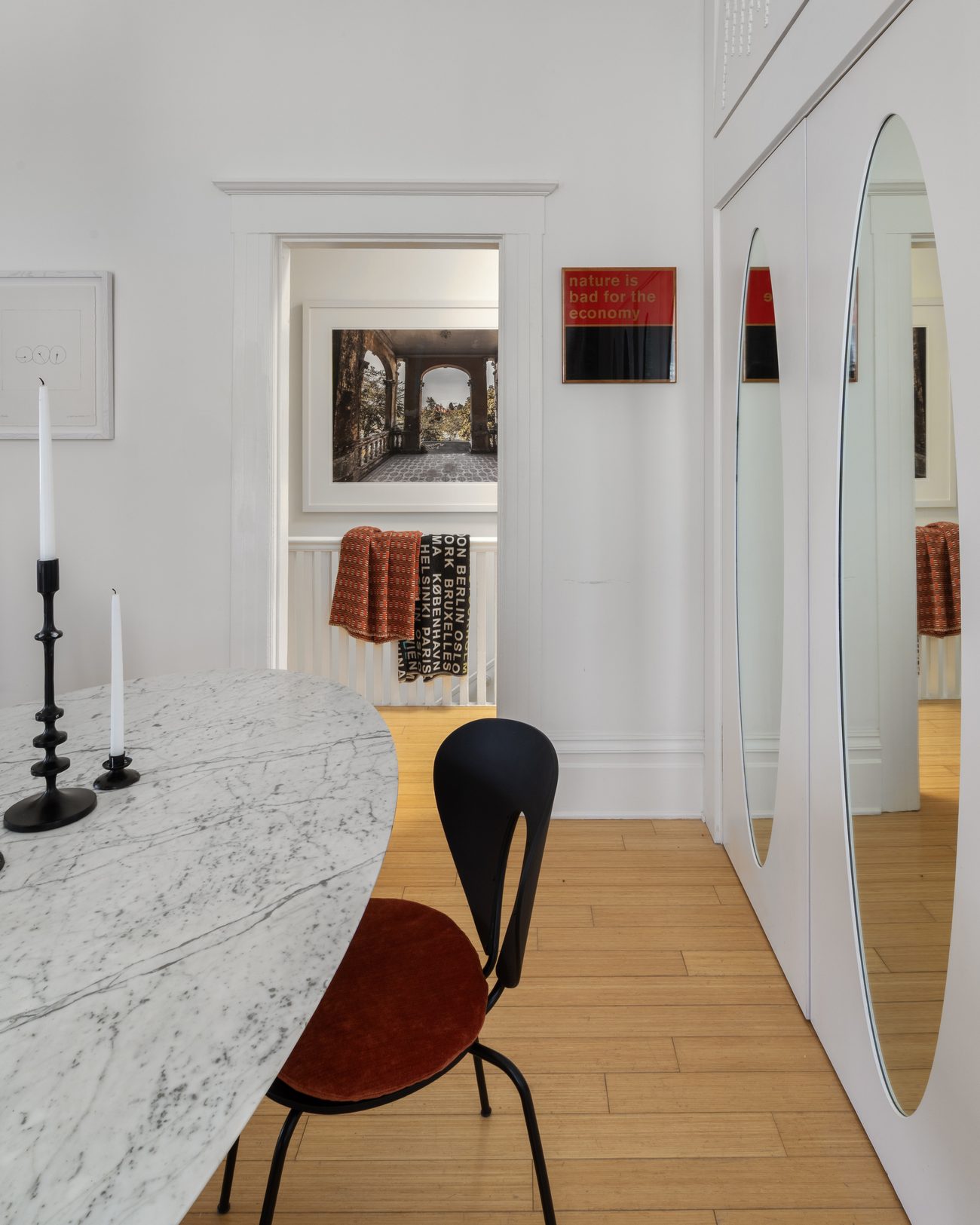
The setting for these gatherings — a 1,200-square-foot flat she shares with partner Steve Werney — brims with artworks and furnishings collected over the decades, many steeped in personal connections. “Every piece has a story,” Petersen says. Especially poignant are the coffee table in the living room and striped cabinet in the dining room, both by her late ex-husband, furniture designer and craftsman Norman Petersen.
In 1999, the couple purchased a property on Shotwell Street with three structures: a house that had been divided into two flats at some point, separate residence that is currently a rental and workshop/office. The latter was essential as he had his practice and, at the time, she owned a business that specialized in exquisite leather books and boxes. Seven years after their 2012 divorce, she acquired his stake in the property. In 2020, when renters vacated the upstairs flat, Petersen moved in; Werney, a general contractor and proprietor of several local food and beverage establishments, including The Beehive, a bar in the Mission that he and Petersen worked on together, soon followed.
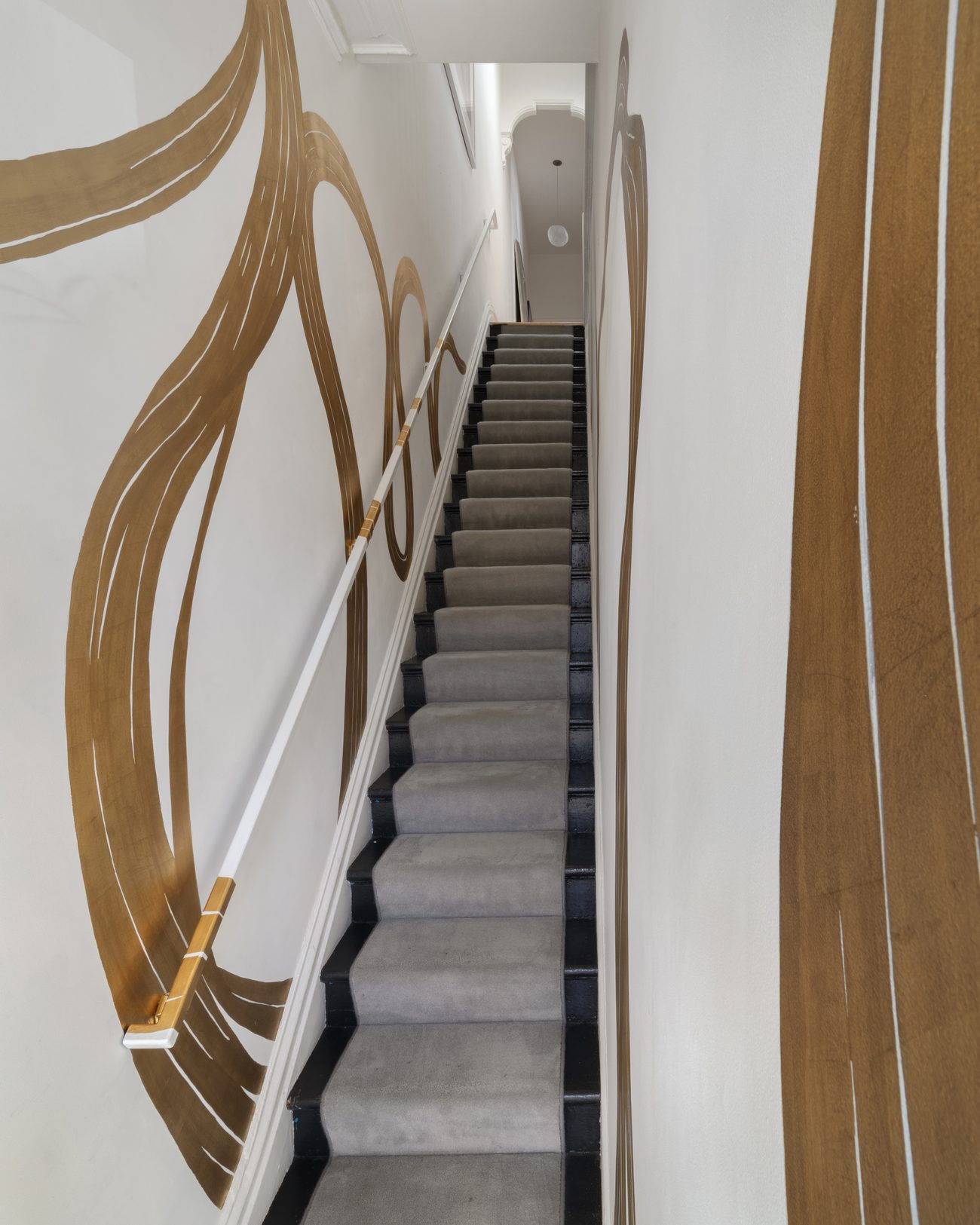
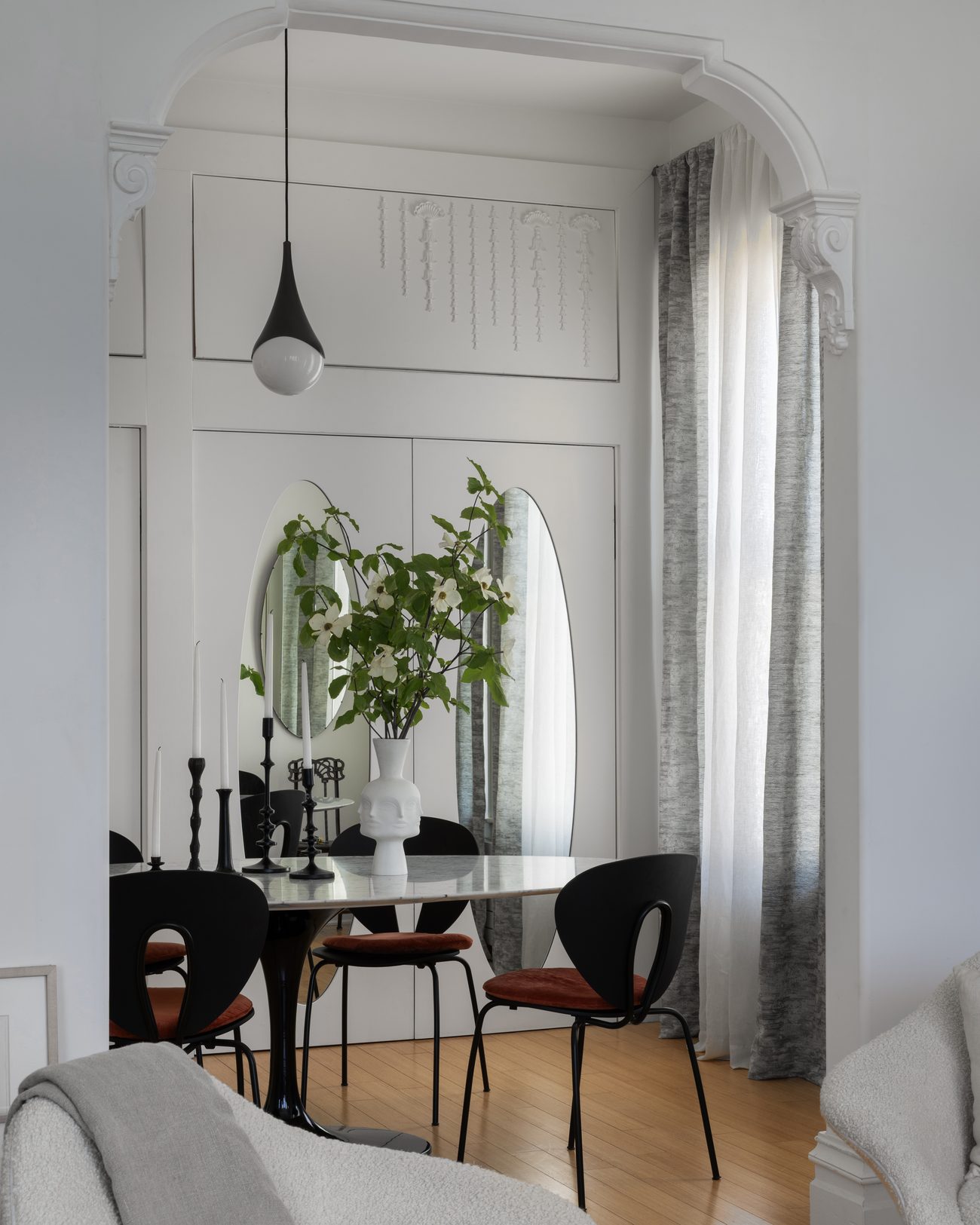
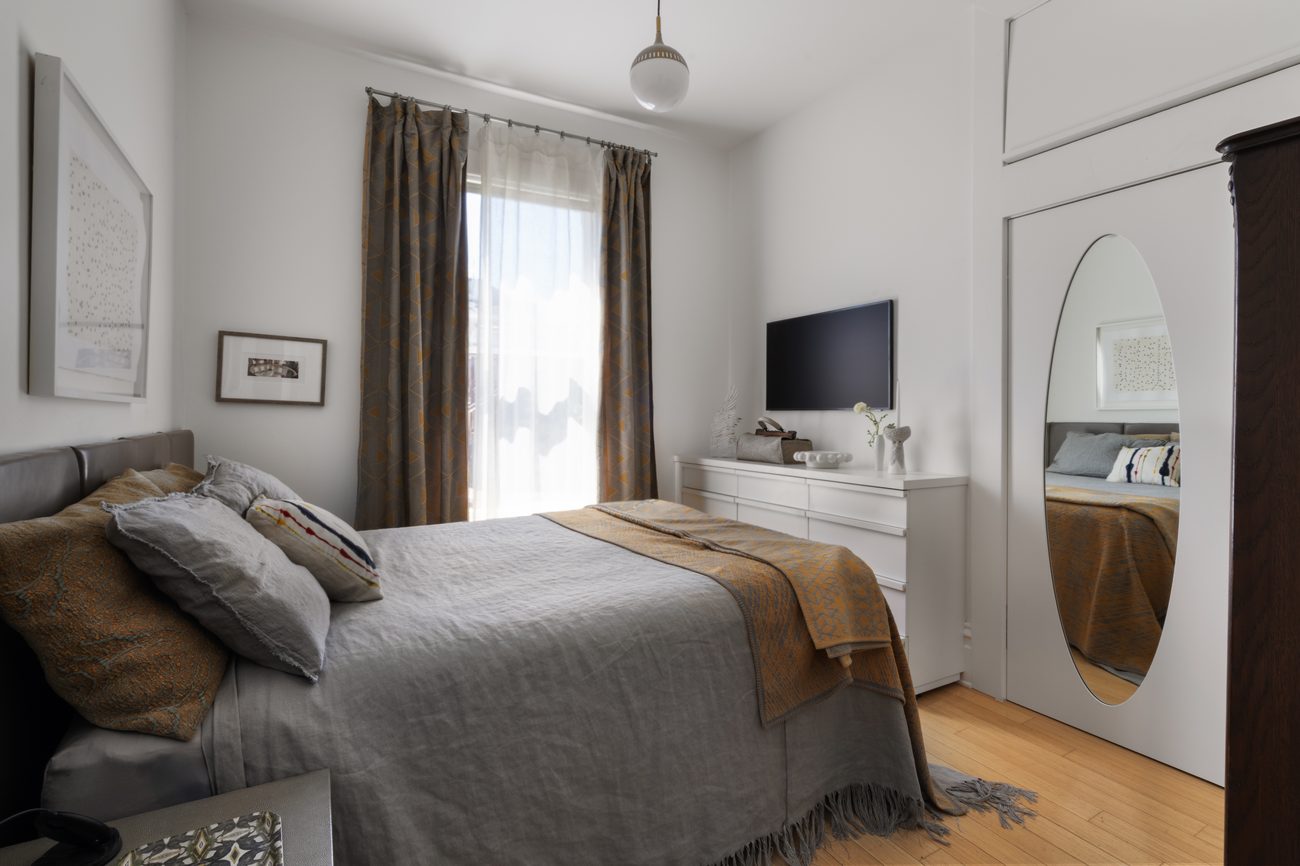
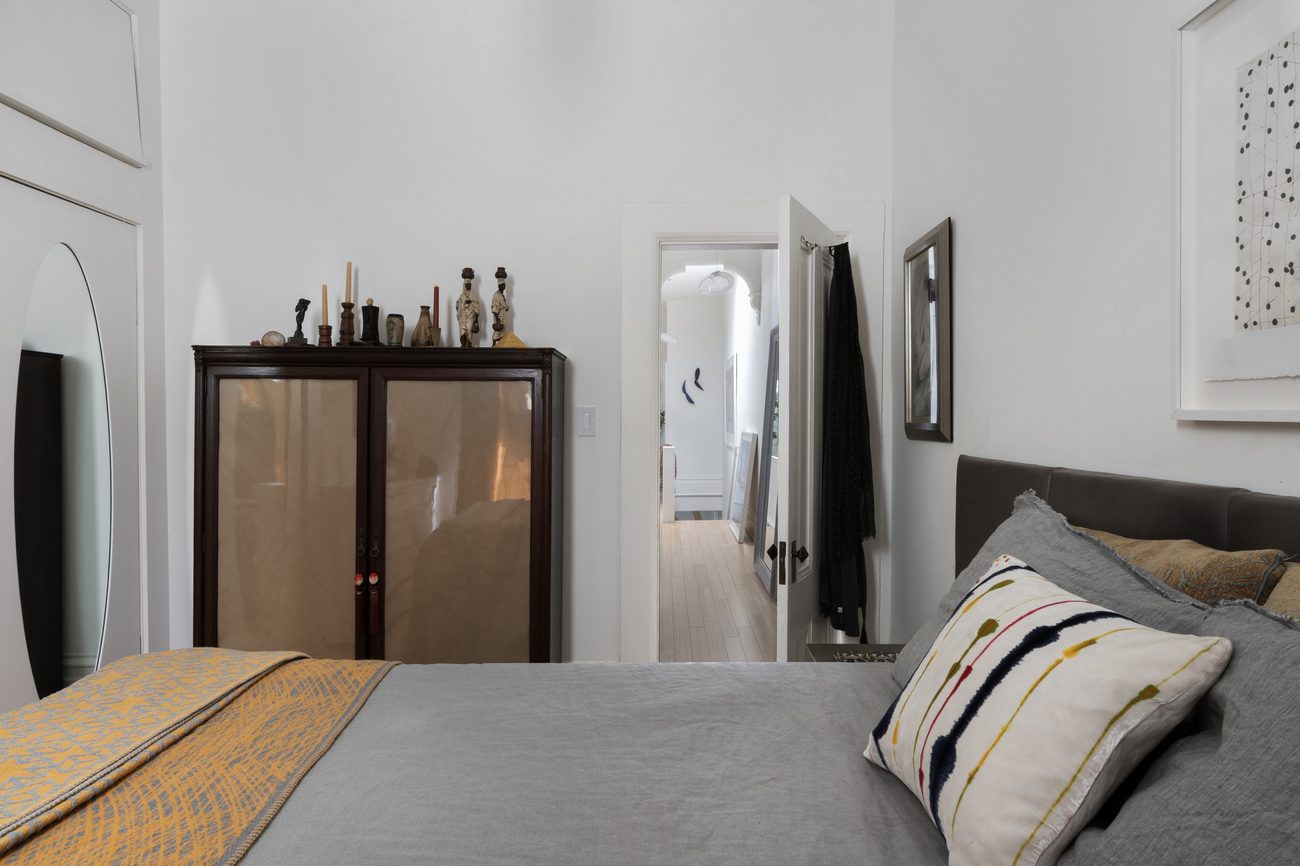
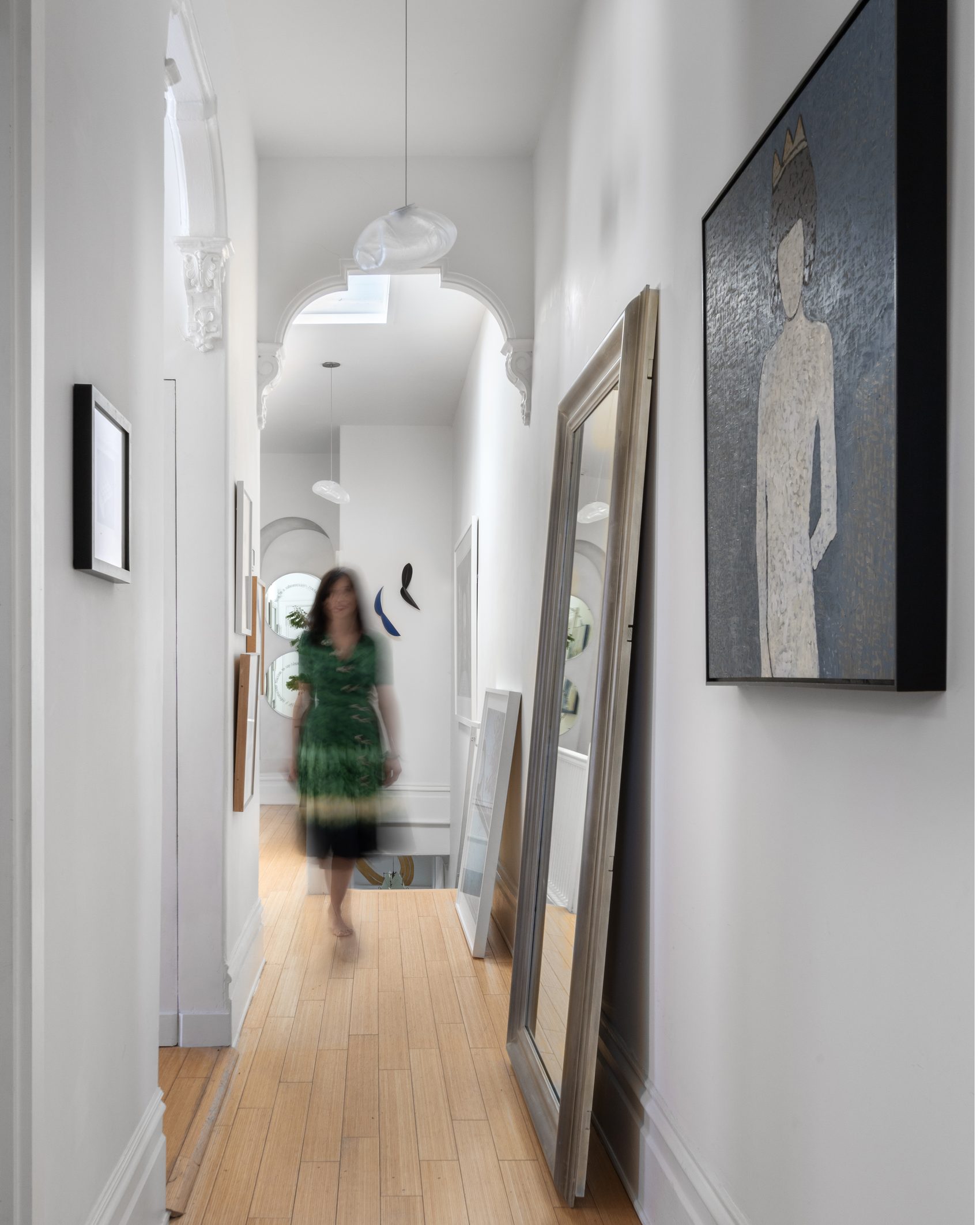
Ascending the stairs, hand-painted gold-leaf swirls by Sarah A. Smith add visual interest while hinting at the artful abode that awaits. A photograph by Werney, depicting an abandoned building in Cambodia, ushers visitors into the second floor. The living room includes a shelving unit of his making, and in the dining room as well as the bedroom, closets previously concealed by ho-hum curtains were transformed with doors that Petersen designed and Werney fabricated.
The dining room was formerly a bedroom; Petersen removed a wall, so it flows into the living room. She enlisted Lorna Kollmeyer, whose ornamental plaster studio is in the Hunters Point Shipyard, for corbels and ceiling medallions based on original ones in the dwelling. The Victorian elements contrast with the Globus dining chairs by Stua and Tulip table by Eero Saarinen — contemporary and midcentury designs, respectively.
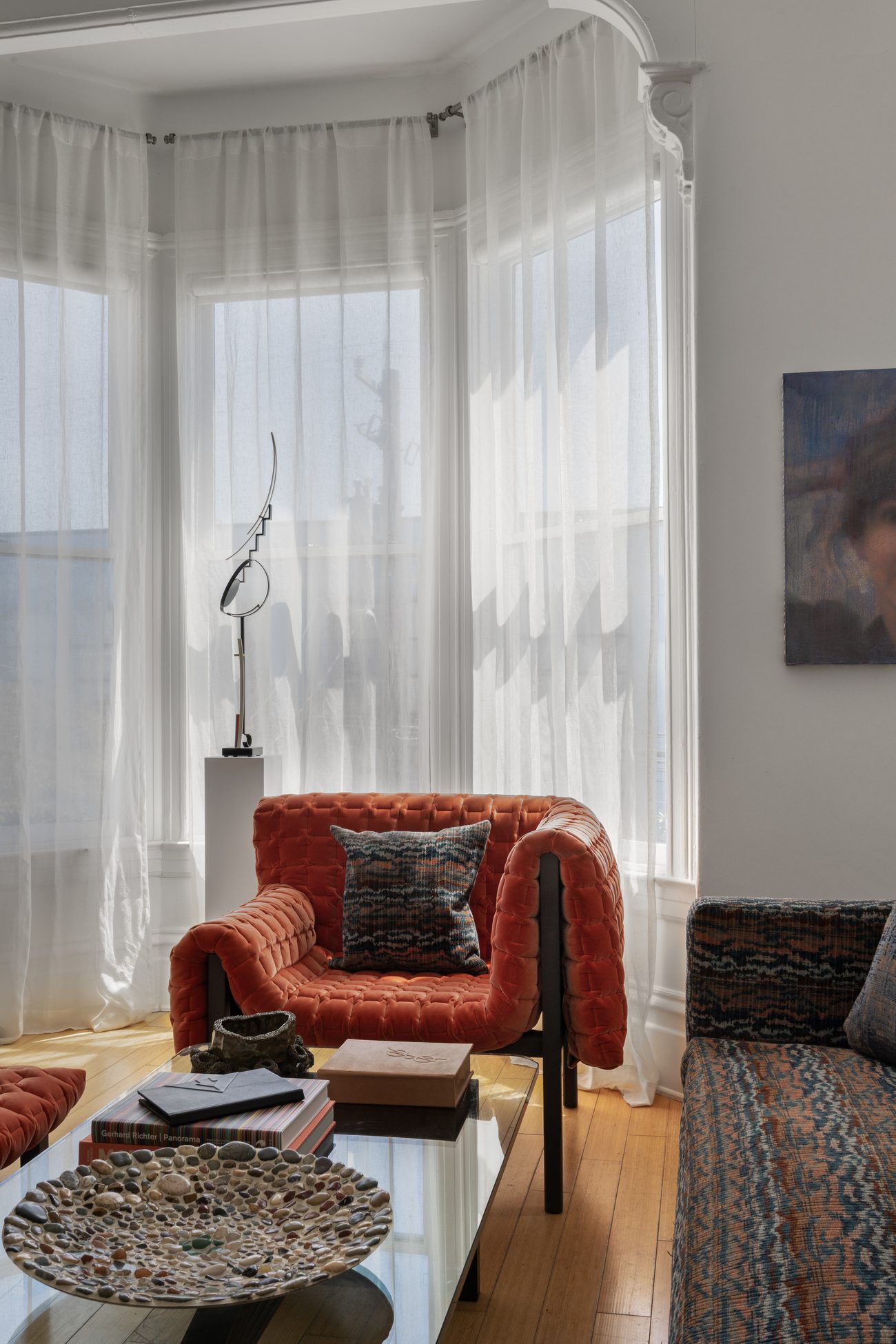
With its quilted seat, Petersen jokingly likens the living room’s orange Ruché armchair by Ligne Roset to a sleeping bag. Nearby are a sculpture by Fletcher Benton — the sculptor and painter, who passed away in 2019 at age 88, was a friend — and a sofa upholstered in a Jiun Ho textile designed by neighbor Saana Baker.
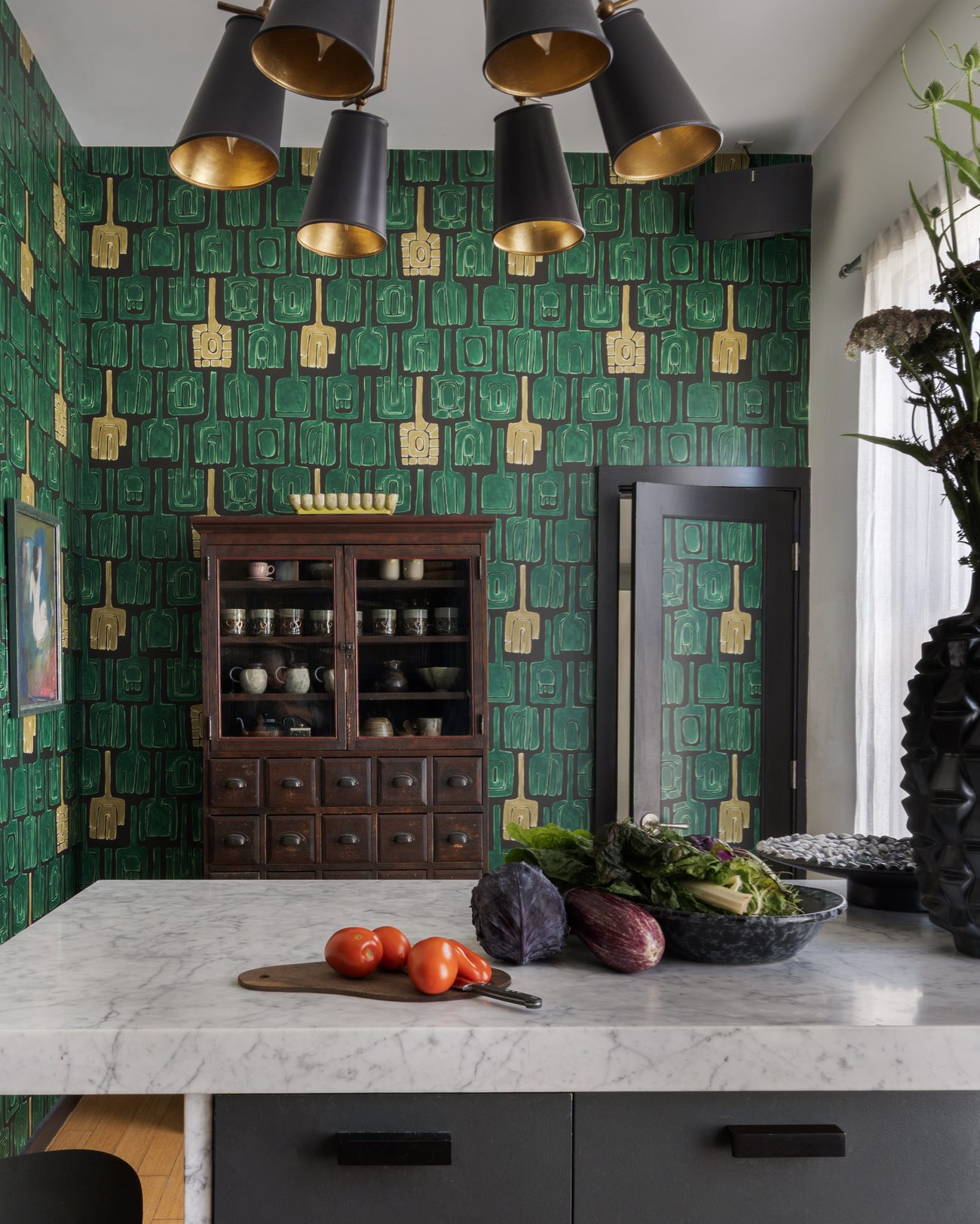
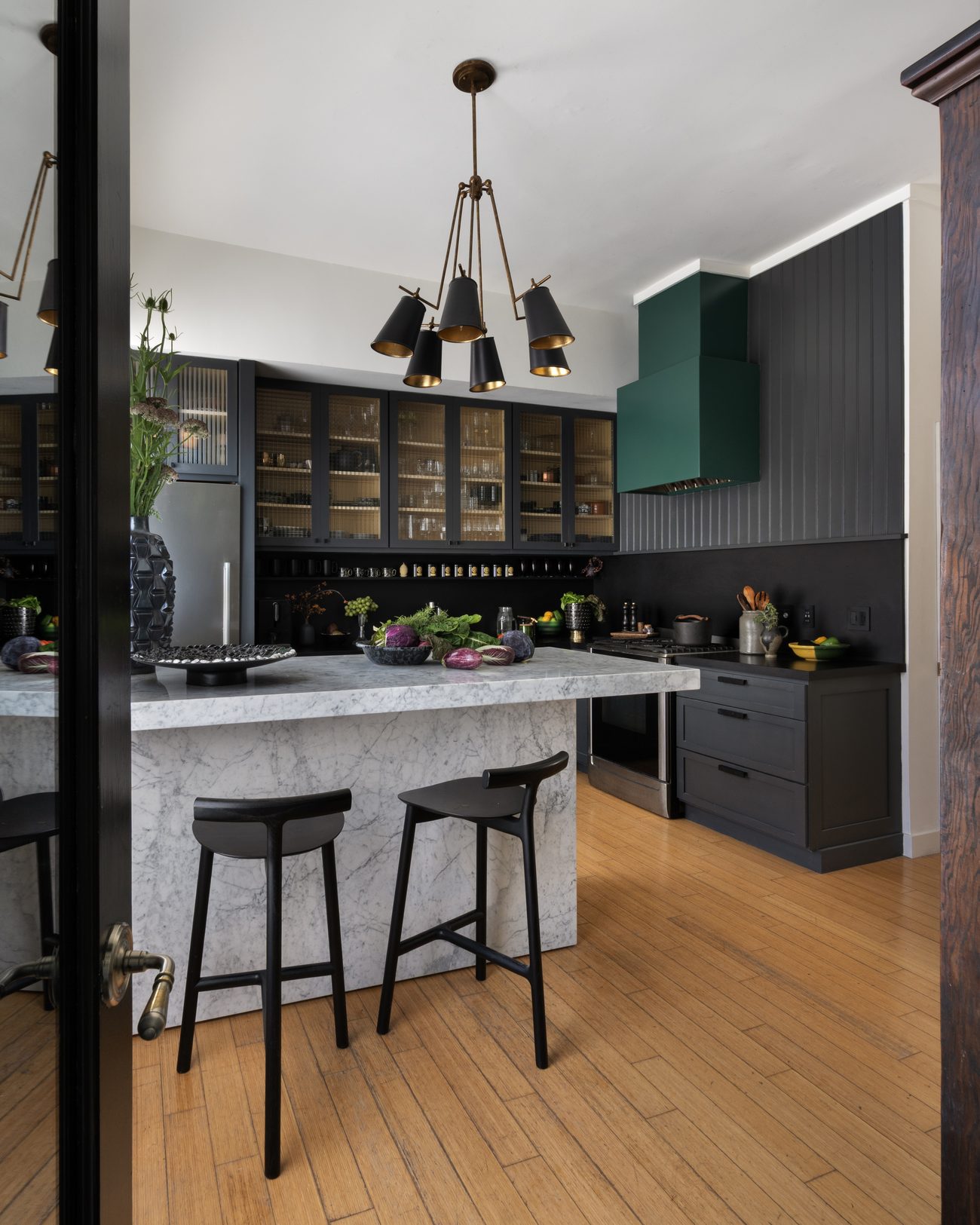
The kitchen, where guests gravitate, underwent a major metamorphosis. A striking Carrara marble island was introduced and the once light wood cabinetry revamped with Benjamin Moore’s Nightfall. The green hood — conceived by Petersen and custom-made by Lewis Metal Products — is another showstopper in the room, which also includes late American Pop artist Mel Ramos’ Phantom Lady.
“I knew him for a long time,” she says. “I’m still good friends with his daughter.”
For her dinner parties, Petersen tends to whip up risottos and polenta dishes that recall her upbringing in Slovenia, near the Italian border.
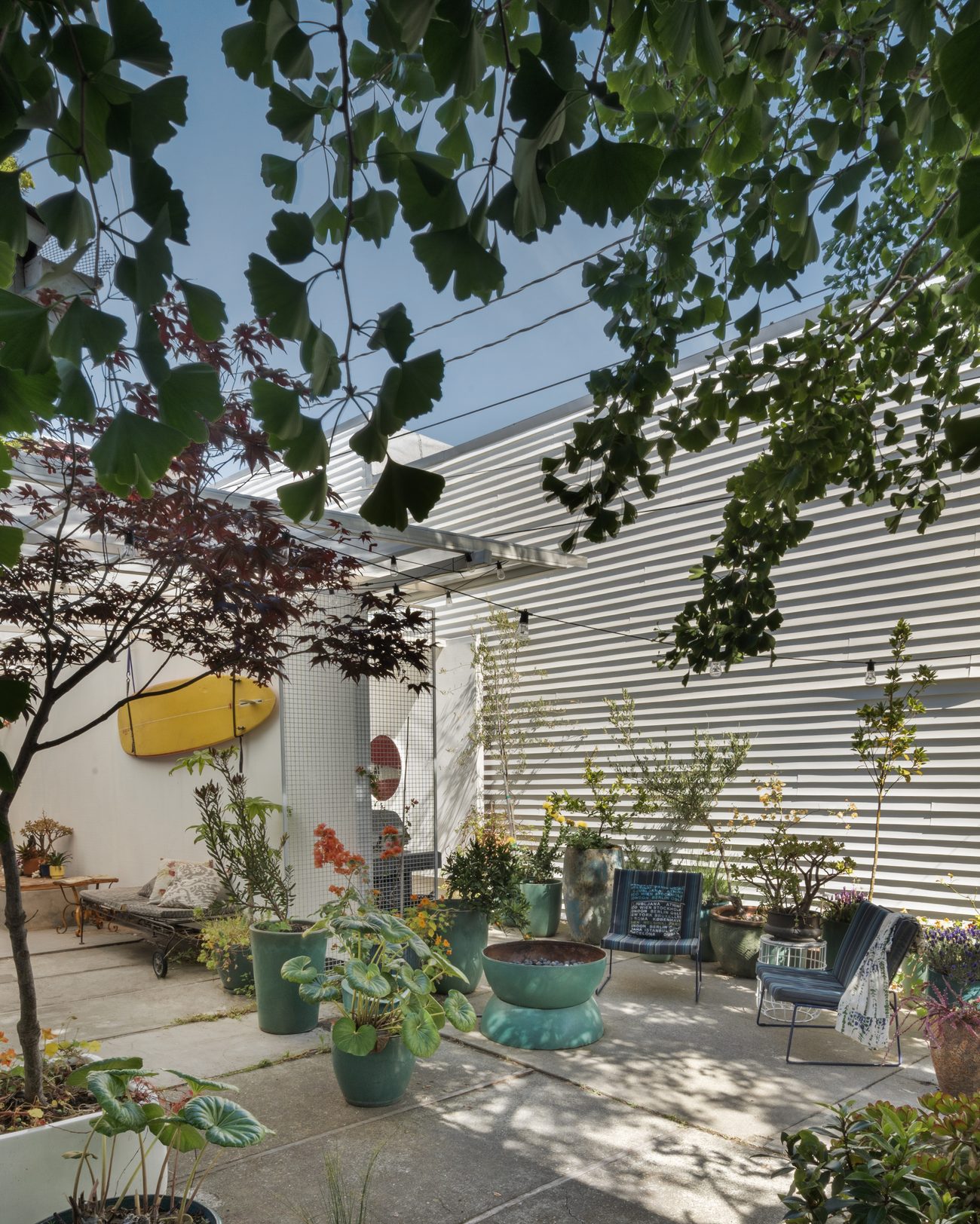
Weather permitting, she and Werney take the party outside to the patio, where he turned a metal buoy into a firepit. There is a small front garden, too. “Whenever I work on the garden, everybody stops and we talk,” she says of her convivial neighbors.
Later this year, she and fellow Mission District denizens Yosh Asato, Beth Miles, Susan Zsigmond and Mu-Ping Cheng are launching a digital magazine, Shotwell, that will spotlight “the people who live in the neighborhood, things that are happening and the history,” Petersen says. Consider it an ode to a place that brings her much joy and inspiration. “You go for a walk, you hear music from the windows. There are all these festivals and parades. You hear different languages every day,” she says. “It’s very lively here.”
der. Weather permitting, she and Werney take the party outside to the patio, where he turned a metal buoy into a firepit. There is a small front garden, too. “Whenever I work on the garden, everybody stops and we talk,” she says of her convivial neighbors.
Later this year, she and fellow Mission District denizens Yosh Asato, Beth Miles, Susan Zsigmond and Mu-Ping Cheng are launching a digital magazine, Shotwell, that will spotlight “the people who live in the neighborhood, things that are happening and the history,” Petersen says. Consider it an ode to a place that brings her much joy and inspiration. “You go for a walk, you hear music from the windows. There are all these festivals and parades. You hear different languages every day,” she says. “It’s very lively here.”
View flipbook ↗