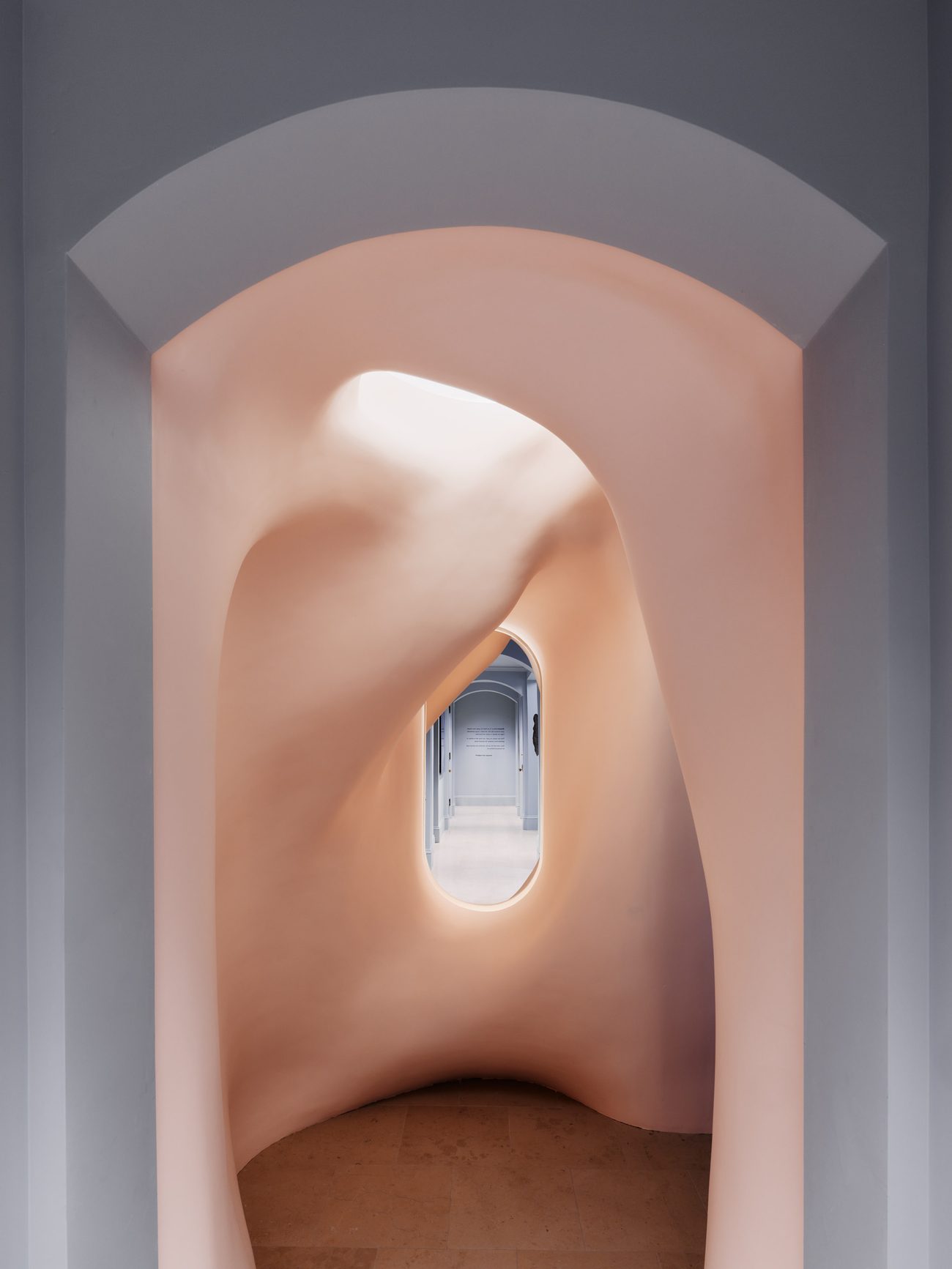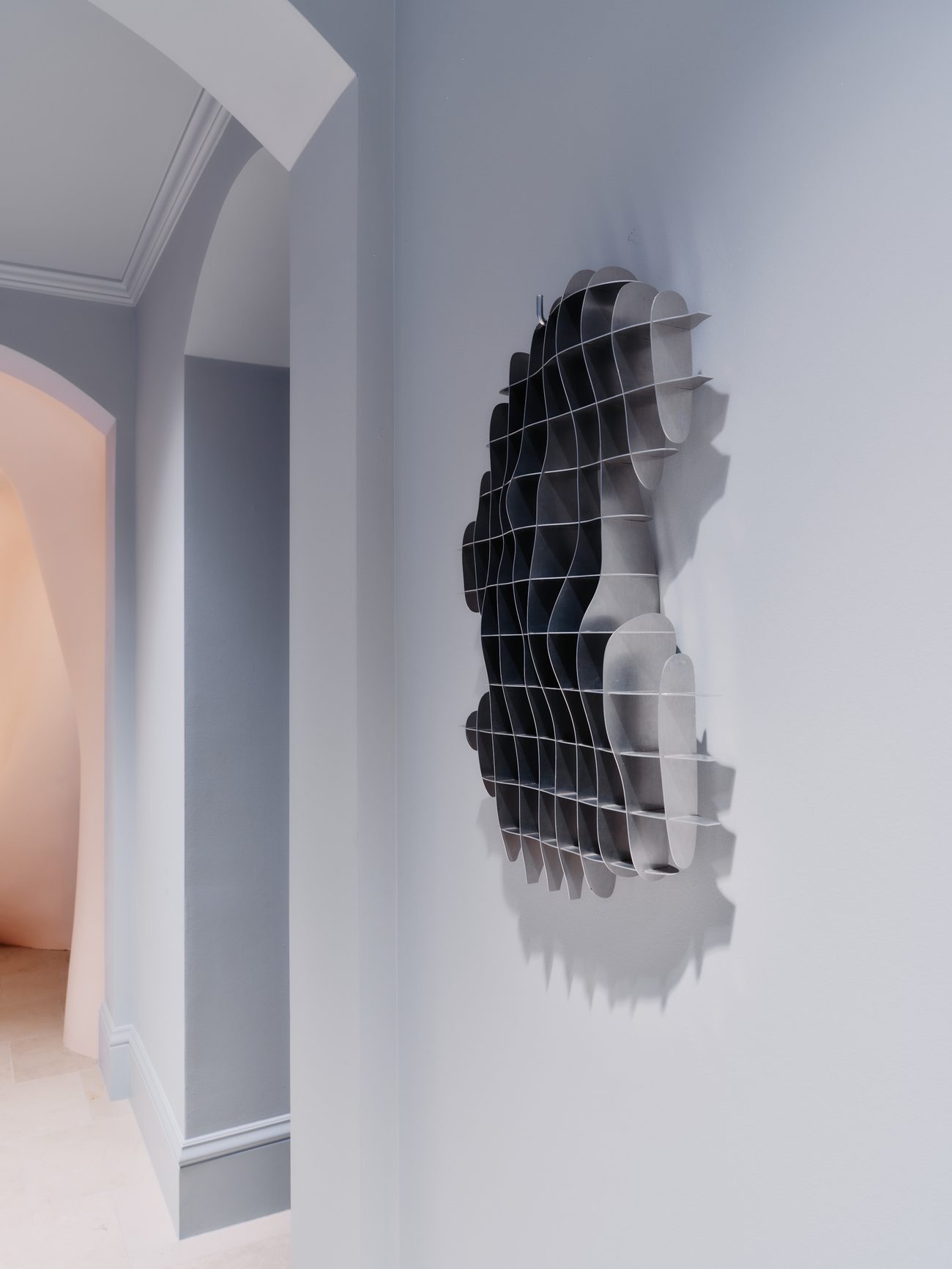
If last year is an indicator, the San Francisco Decorator Showcase, from April 26-May 26, will wow us, In 2024, architects Luke Ogrydziak and Zoe Prillinger of OPA designed a cool hallway that was both a futuristic portal to other spaces and an art gallery.
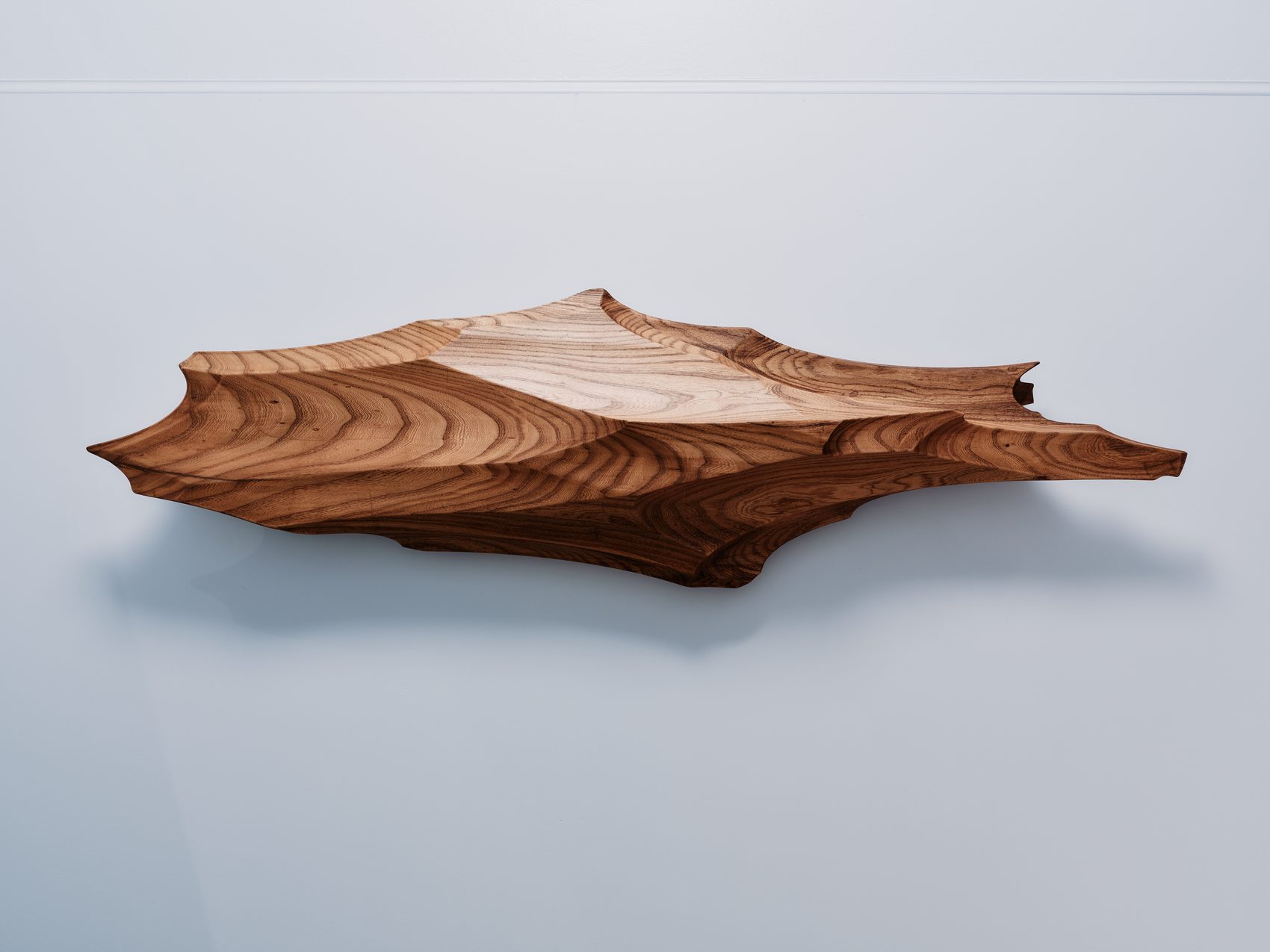
It contained 100 Cuts, an intriguing wall sculpture of laminated elm wood that had been gouged, one hundred times, by a robotic 5-axis CNC router that interpreted Ogrydziak’s text-based commands.
“We had previously conducted studies for a building facade in San Francisco that involved oversized wood tooling,” Ogrydziak explains. This ‘sculpture’ emerged from their experiment to create a texture that defied the typical geometric simplicity of modernism. Their goal was to give the wood an enlarged handmade, chiselcut texture. The essential question they posed was: “What are the actual operations involved in crafting wood?” They determined that the CATTIA software they used for their computer-aided design could replicate the random, scalloped gouging that one would expect from such a manual motion.
“The irregularity of something handmade is beautiful because it is irreducible to a simple description,” Ogrydziak says. In other words, the randomness of a human hands’s actions can’t be easily explained; you must witness it in action to grasp its complexity and unpredictablity. “We became excited about such geometries which develop complexity over time,” he adds. So, veering from typical computer-aided design norms, they took a tool designed for precision and programmed it to deliberately avoid precision. Ogrydziak’s custom formula allows the robot to adapt within a set of specific actions. Thus, each time it makes an overlapping mark, the process of gouging evolves slightly, and the end result is almost never the same. “designing this way expands the range of geometric possibility,” Ogrydziak explains.
“We developed a unique design “space” for the robot to work in, rather than a single solution.”
View flipbook ↗