Stephen Milborrow, 66, grew up in South Africa before arriving in Silicon Valley in the early ‘80s, armed with several degrees and quickly establishing himself as a telecommunications engineer. Later, he moved to Petaluma, and about 20 years ago, he felt it was time to start drawing and painting again, as he had during one phase of his education.
“I was always interested in both engineering and art,” he recalls, remembering what drew him to both disciplines when he was barely ten. “I saw a drawing of a rooster by Picasso and felt its totemic power.” In the family’s collection of Time Life books on space and a variety of other topics, he also discovered an article about a three-wheeled robotic tortoise by William Grey Walter, activated by electrical commands. “It was perhaps an early example of AI, and it was very inspiring,” Milborrow reflects. “I wanted to create something like that. It has always been a part of who I am.”
He continued to think about it. “I started painting images of robots, humans, and animals in landscapes,” he says, depicting them as sentient beings. Perhaps that helped define what he wanted to do: build a drawing machine with a ‘brain’.
“I had this idea of building a machine that could draw pen and ink portraits on paper,” Milborrow explains. Despite spending many hours on figure drawing, portraiture was never his forte, so he wanted to explore how expressive a machine-drawn portrait could be.
When the pandemic struck, he felt an urgency to complete the project he had been tinkering with for years before he became unable to write a bunch of complicated code.
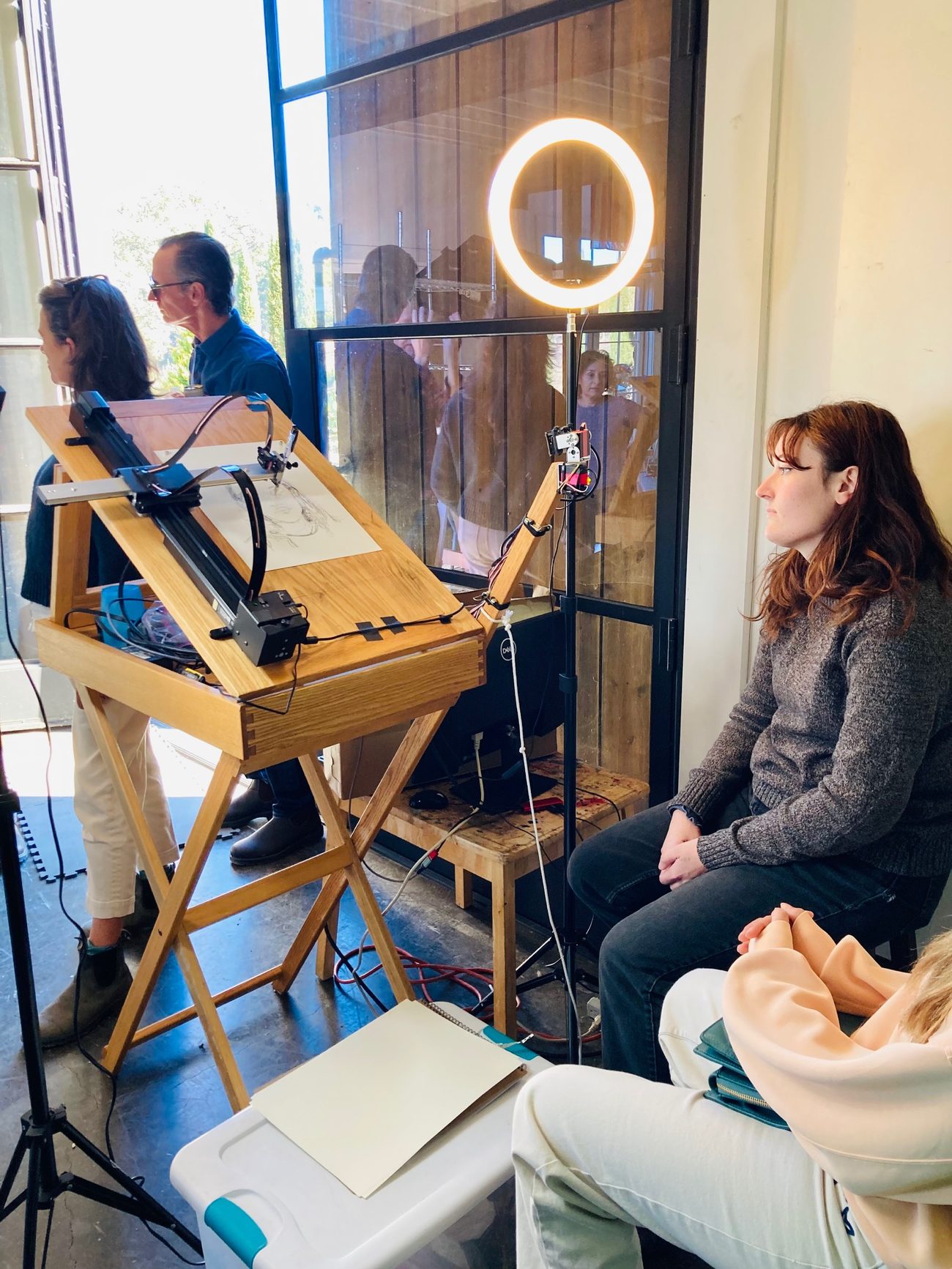
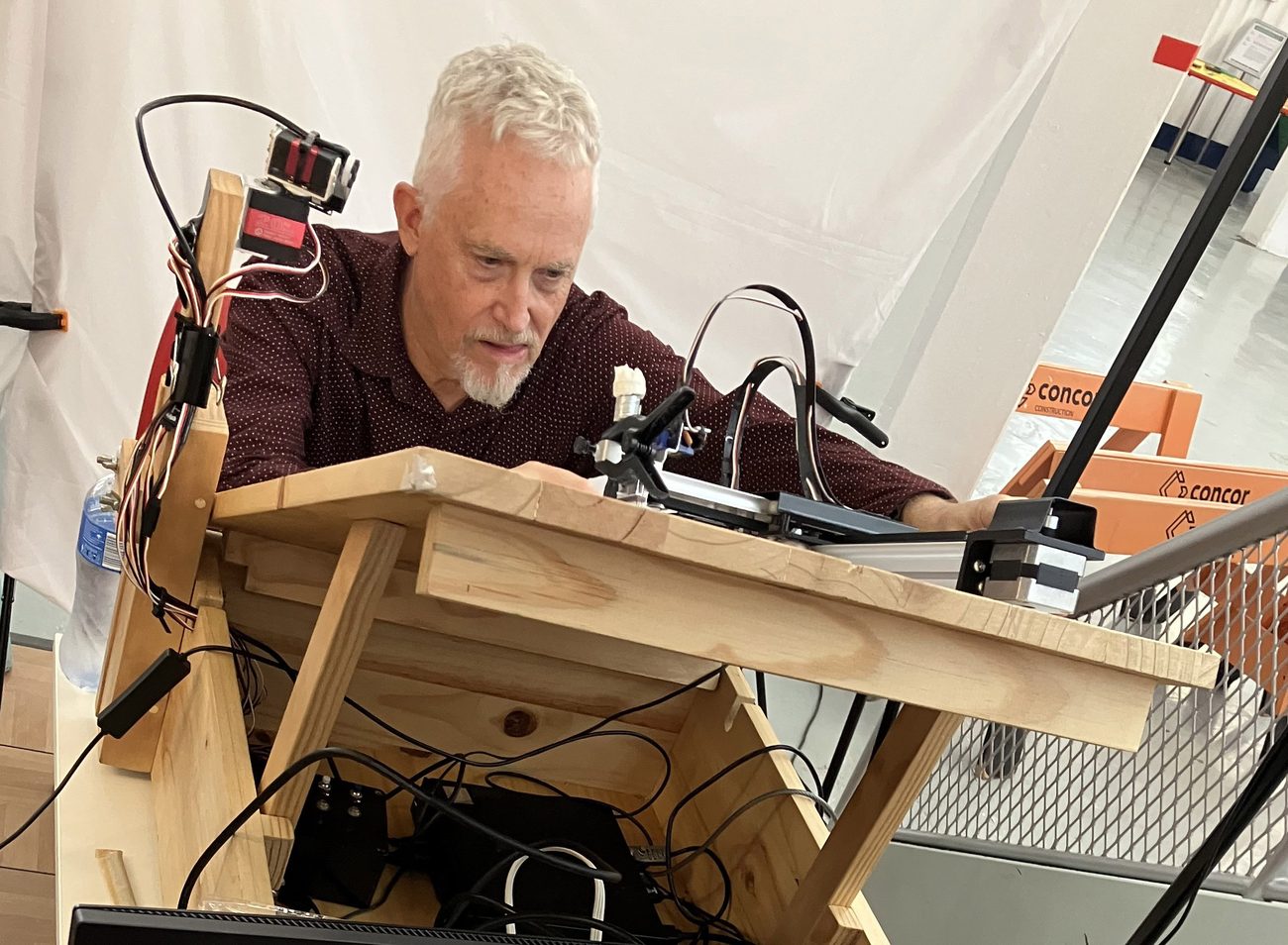
A year later, he had a robot that could actually observe a subject and draw in real-time. “The machine essentially comprises a computer running the coded software (the brain), a swiveling video camera (the eyes), a moveable arm to which any pen can be clipped (the hand), and a drawing surface on which the fine-toothed paper it draws on is placed,” Milborrow describes. The robot starts fresh each time and records no data.
“A computer drawing is a fairly obvious idea, but there are ideas in the code I wrote that are perhaps novel,” says the inventor modestly.
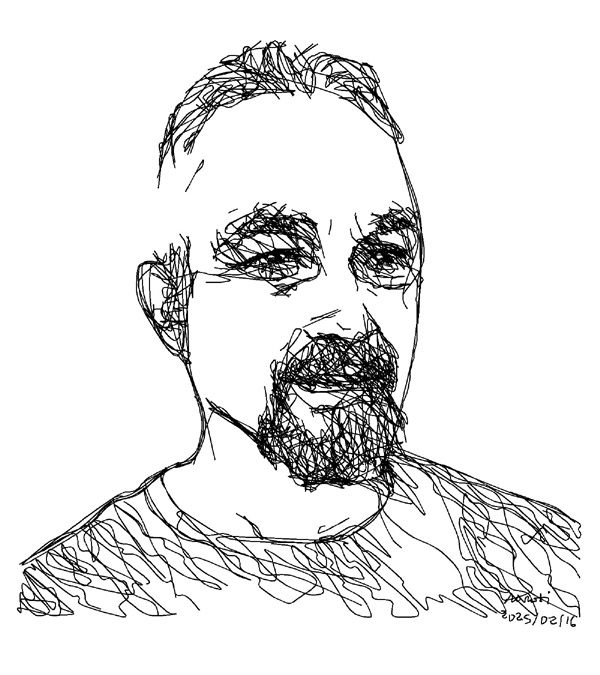
That’s why he was reluctant to call it a mere ‘artbot’ and instead named it Nonoti, after a life-sustaining river near his native Durban. The machine ‘recognizes’ the subject’s eyes and mouth and scratches out tentative positions for them. “When a sitter moves, the machine responds to changes in the subject’s pose or expression, which gives the drawing a sense of life,” Milborrow observes. The monochromatic images, produced in about 10 minutes, are expressive, scratchy likenesses that are decidedly not photographic. “The drawing takes place over time, and mistakes are made and corrected,” Milborrow says. “That history is recorded on the page, just like in an actual drawing. The struggle is visible.” It’s real. @nonoti.machine
View flipbook ↗