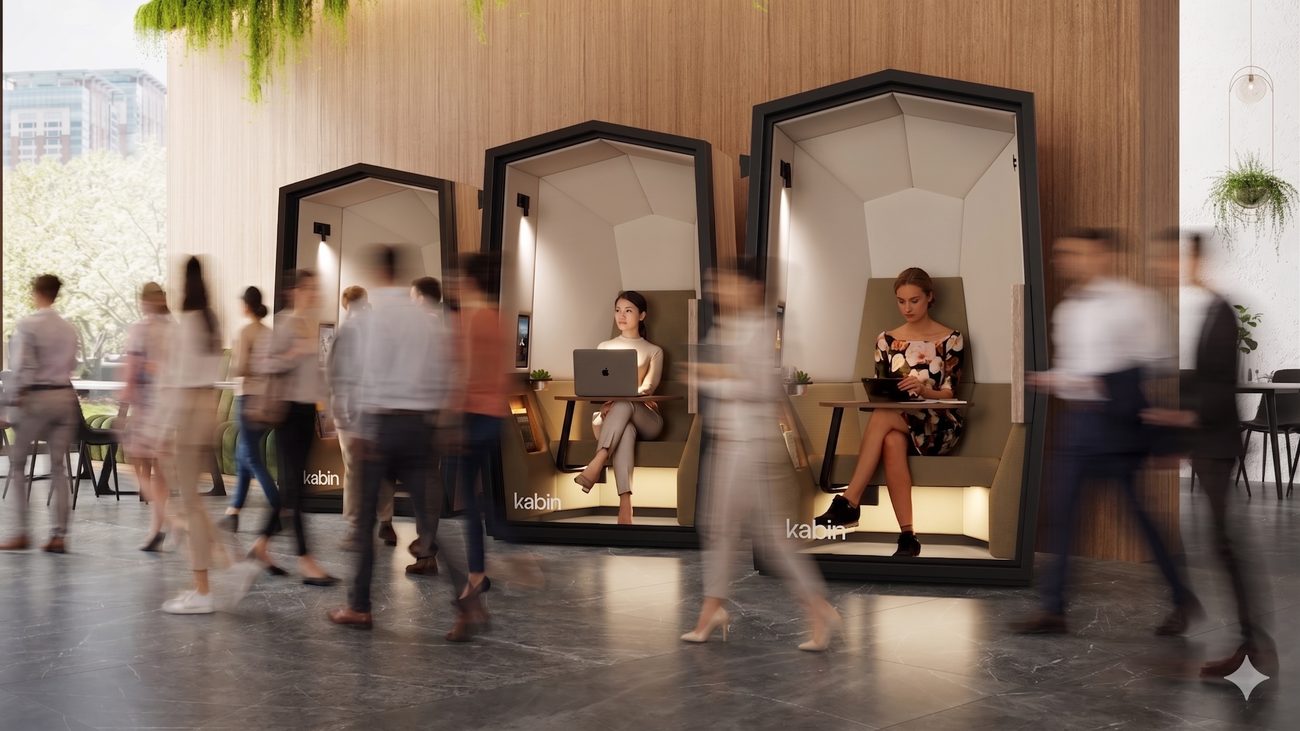
Walter Craven’s privacy cocoon is much more It’s a workspace that adapts to you For creatures that carry their own refuge — turtles, snails, and hermit crabs — industrial designer Walter Craven’s Kabin might feel familiar. Conceived as a contemporary antidote to the open office, the technology-enabled pod offers a private retreat within airports, hotel lobbies, and other high-traffic environments.
Users can customize temperature, lighting, airflow, and music through a multilingual touchscreen interface. For subscribers, the system remembers personal preferences, creating a consistent experience wherever a Kabin is located.
Craven, who began his career in Berkeley and relocated to the United Kingdom in 2019, developed the concept during the pandemic. Struggling to work in a noisy living room, he designed a personal workspace that evolved into Kabin — a privacy platform and not just furniture.
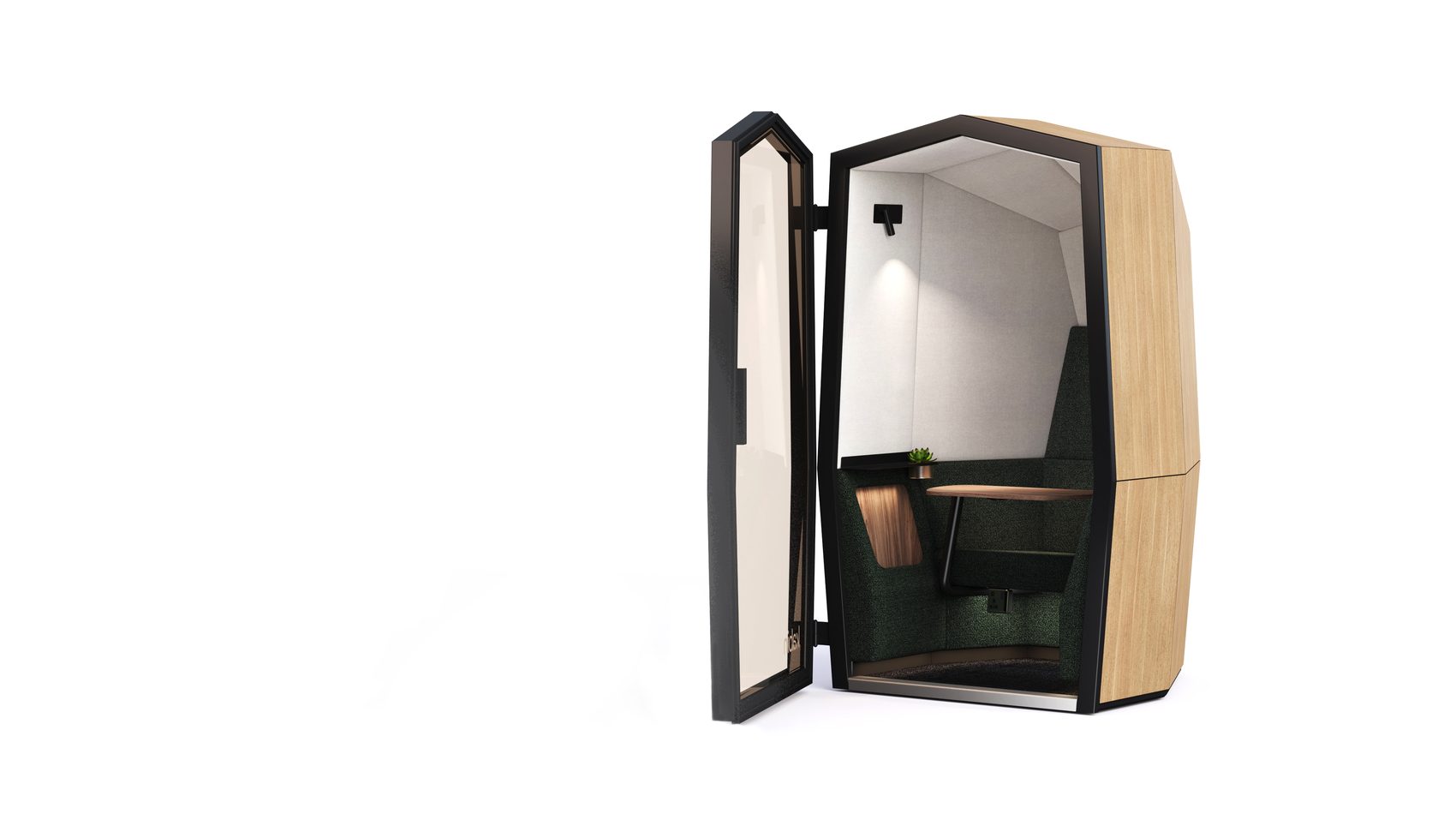
Designed for uninterrupted work, confidential calls, or a moment of solitude, the steel-and-wood phone booth-like structure houses upholstered seating and acoustic insulation. A lockable glass door maintains visual openness while preserving privacy, keeping screens and conversations shielded from passersby.
The platform continues to evolve. New additions include curated, timed sessions for deep-focus work or meditation inside.
kabin.space
View flipbook ↗