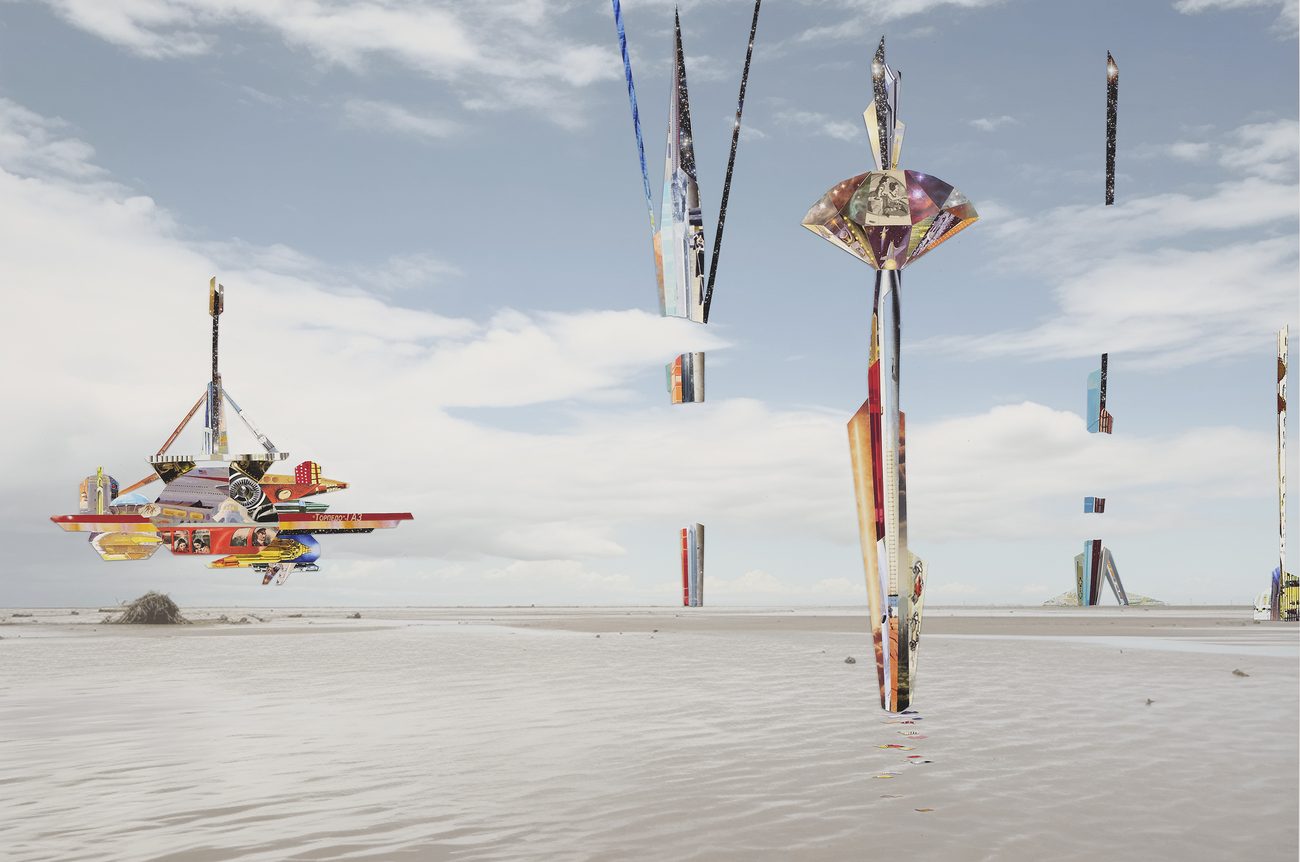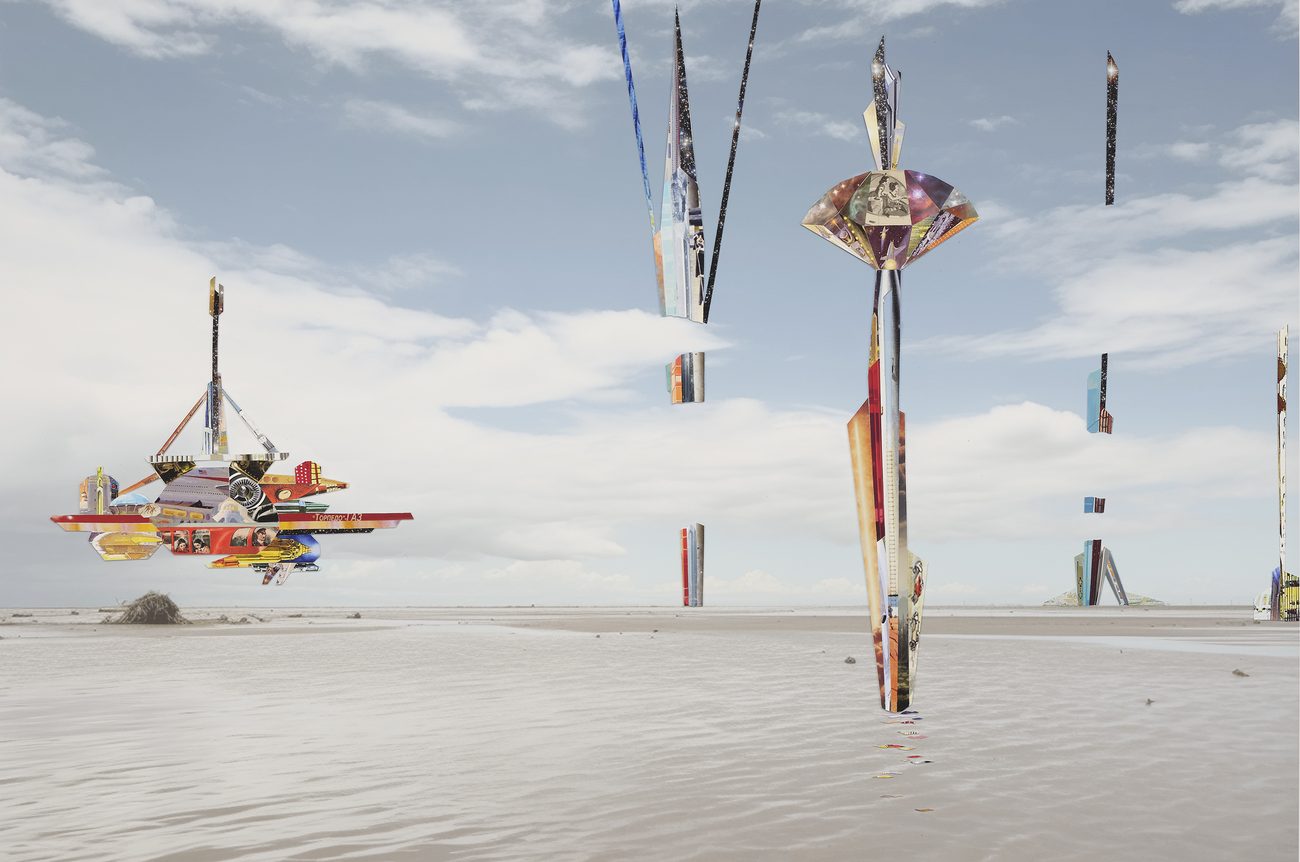
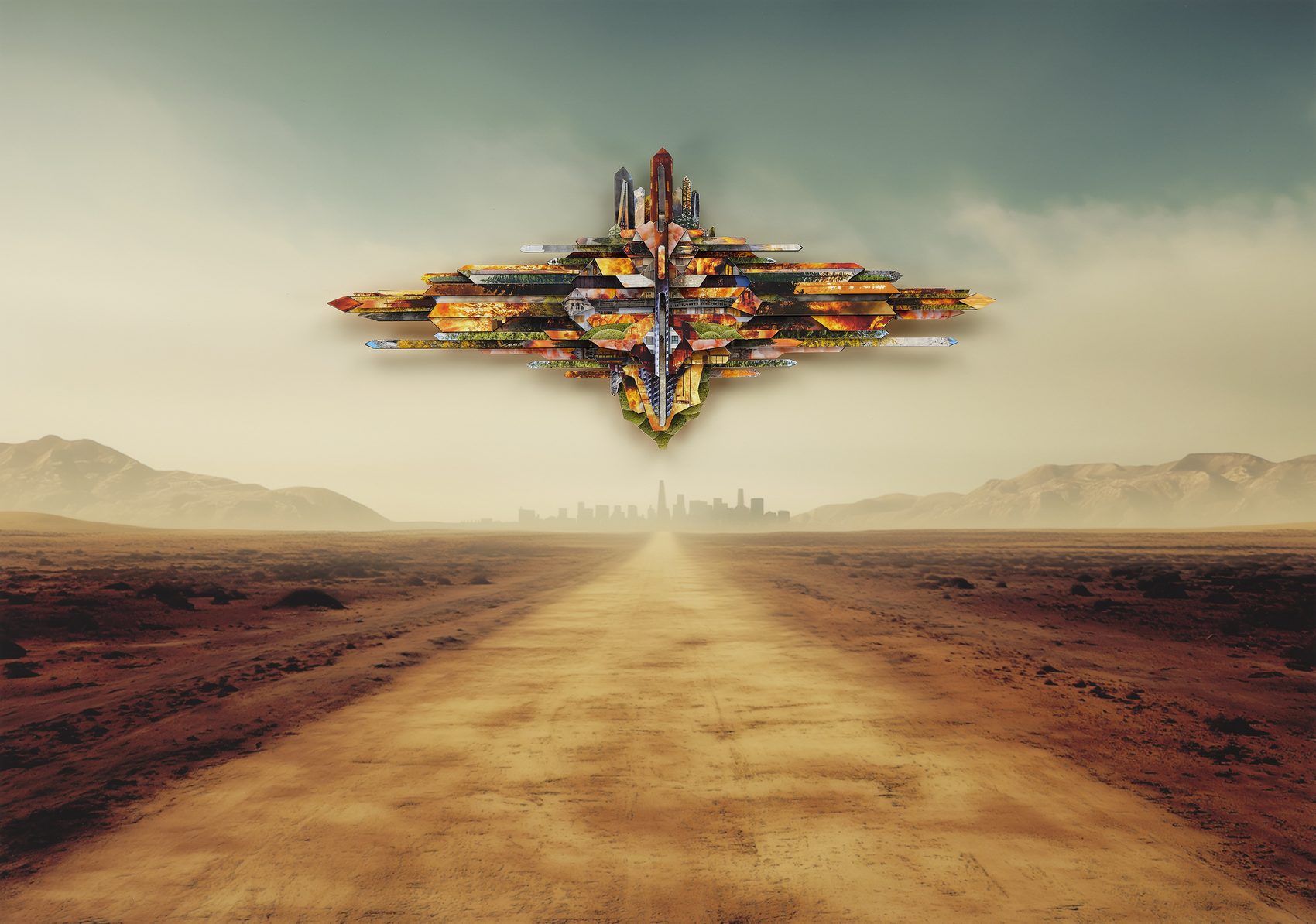
As a child in a household of physicists and scientists, artist Andy Hope — whose show Yesterday’s Tomorrows is currently on view at the Catharine Clark Gallery in San Francisco — was steeped in the utopian and dystopian visions imagined by pioneering science fiction writers of the 1940s through the 1960s.
His grandfather, with whom he lived, was deeply involved in radar research at the Houston Space Center. Yet Hope’s own pursuit of applied physics at Stanford eventually gave way to a deeper urge: to reconcile the discordant predictions of post-WWII writers and scientists through art. For a time, he channeled that urge into designing buildings and furniture. But the clashing forecasts — of Earth’s inevitable demise by bombs and pollution, or the boundless colonization of space — proved distracting. Instead, he gravitated toward cultivating more hopeful visions of his own.
“I have not seen a compelling representation of space living,” Hope said. “We’re trying to solve problems we’ve created with new technology. Instead, we need to salvage our own unique planet before we go into space and ruin others.”
In Hope’s otherworldly landscapes, lost spacecraft and mysterious constructions drift through imagined terrains — structures that echo the conceptual floating cities envisioned by Archigram, the visionary British architecture collective of the 1960s. Across more than a dozen collages and sculptures, Hope fuses past and present visions of the future. He meticulously layers printed sci-fi imagery from the ’60s with contemporary deep-space photographs, integrating stained glass, 3D-printed parts, and background elements generated entirely by AI.
cclarkgallery.com
View flipbook ↗