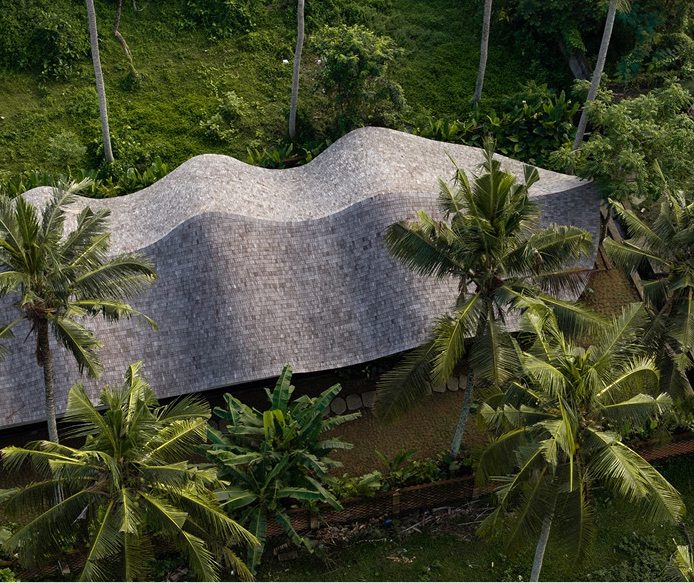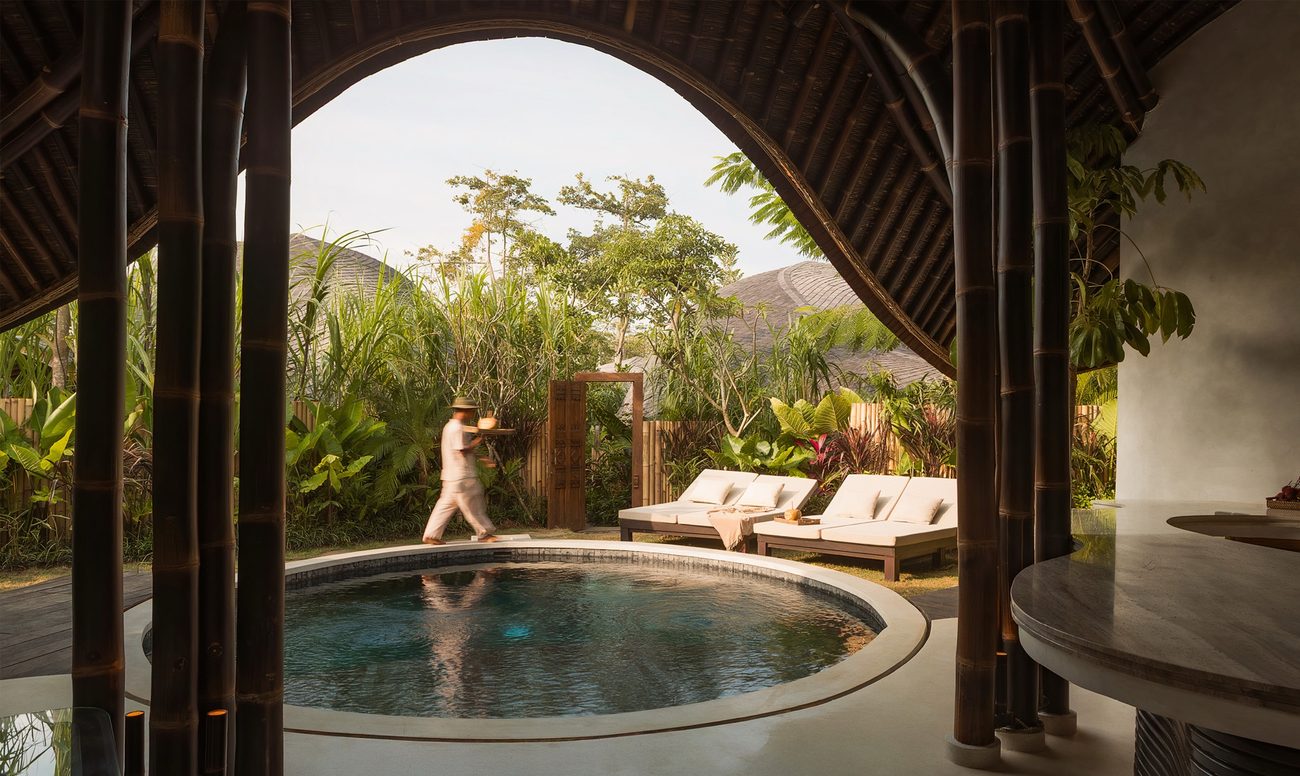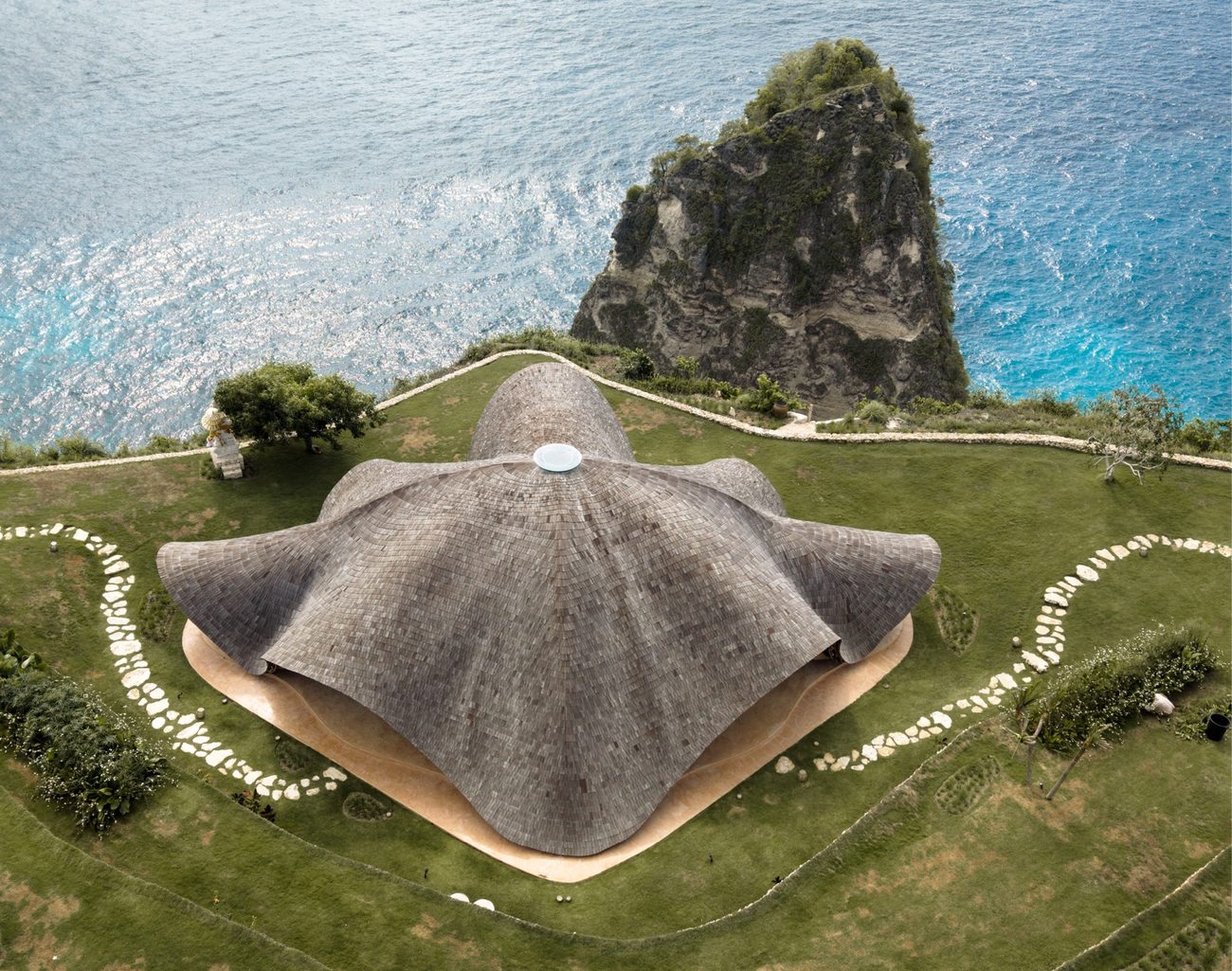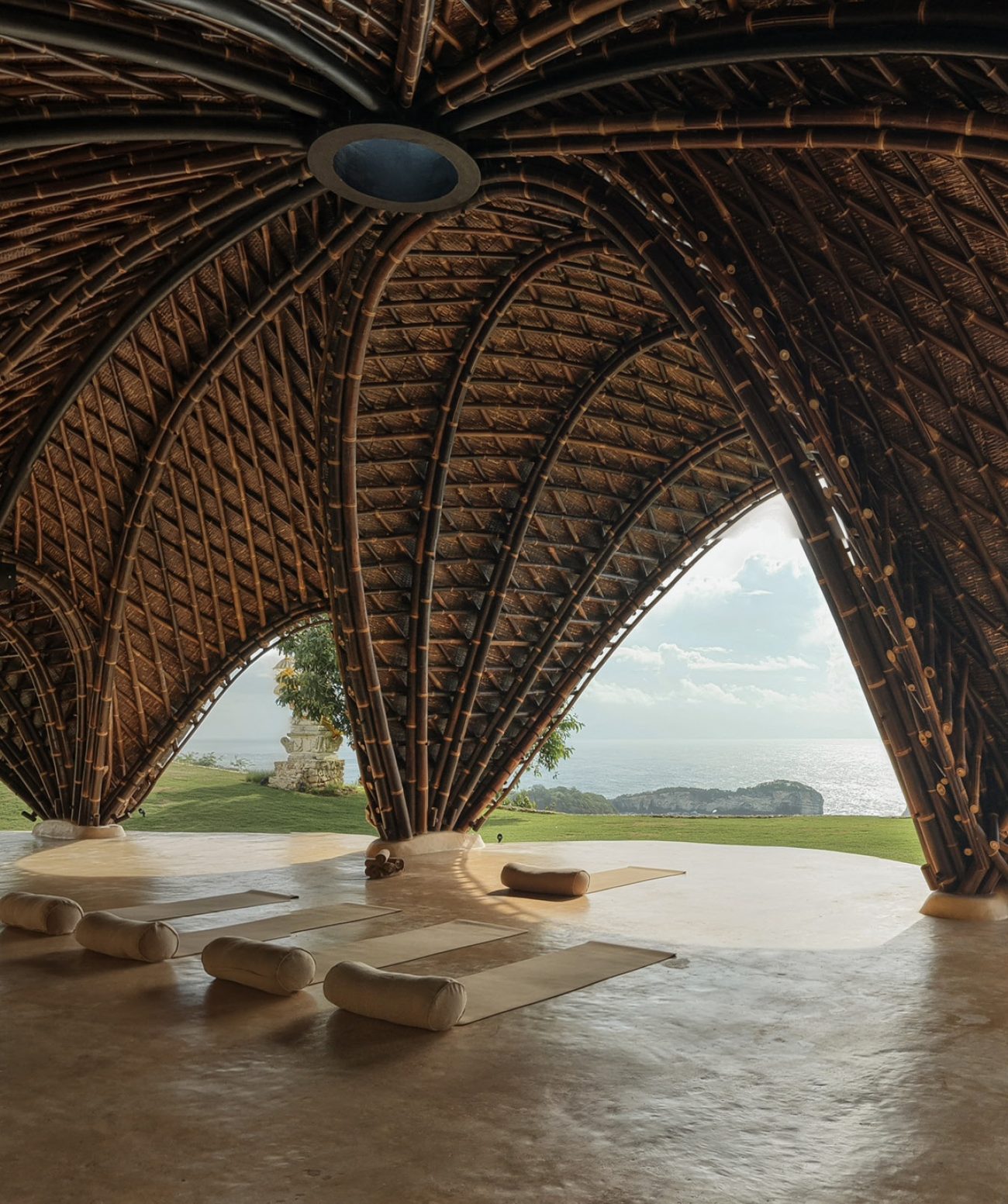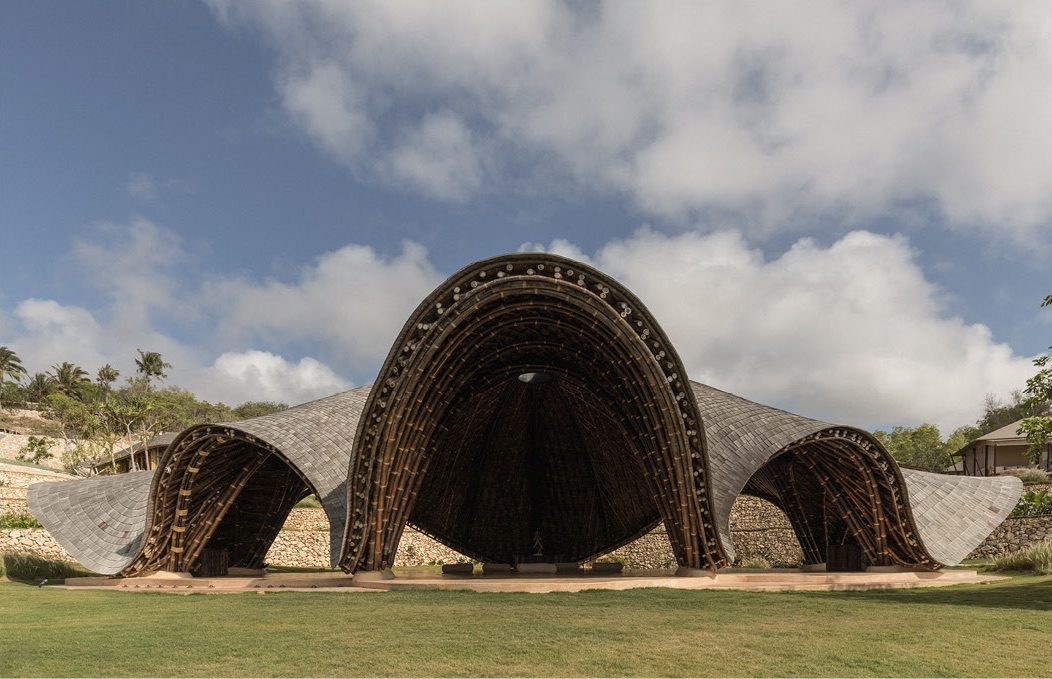
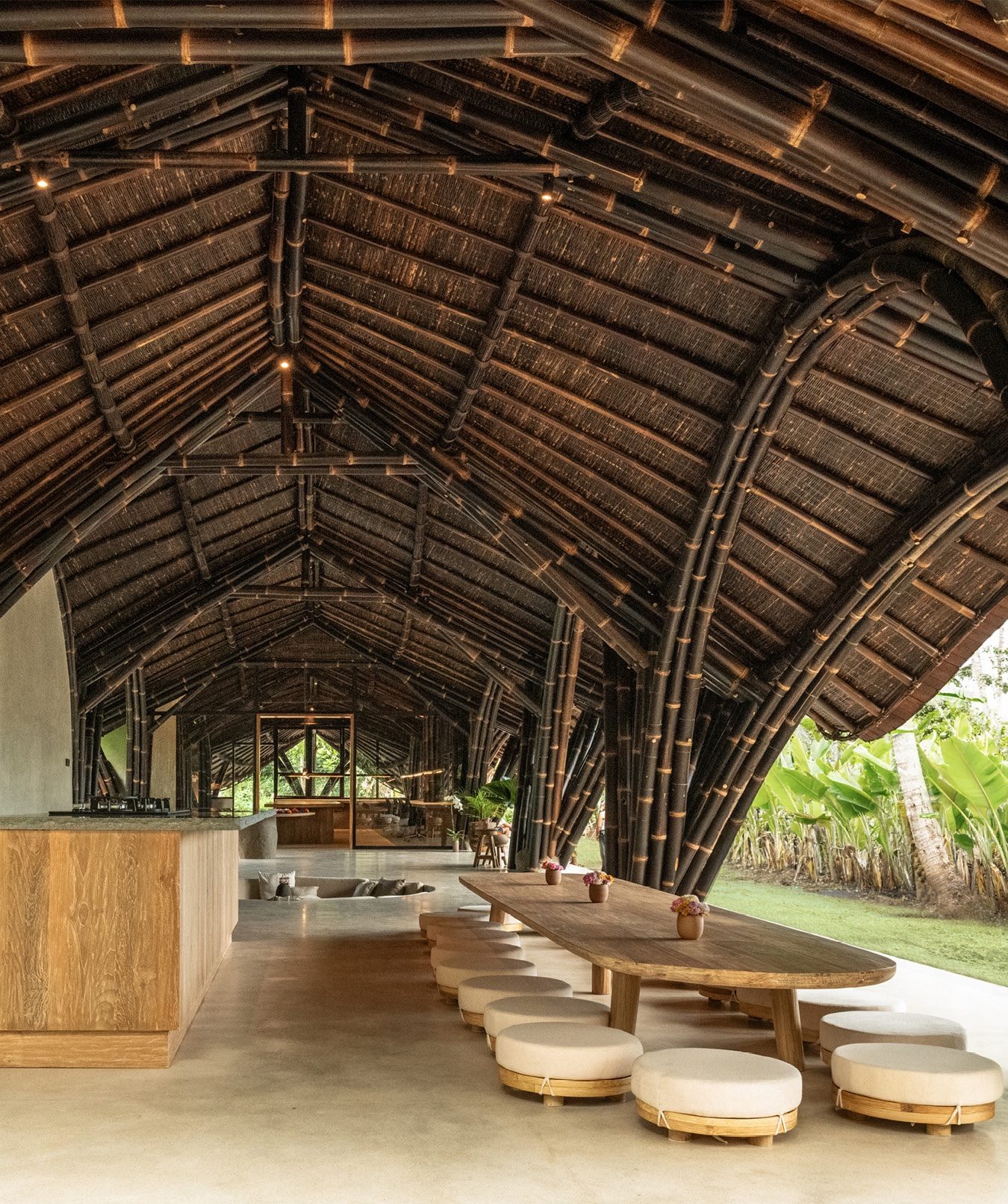
In Ubud, Bali, where we recently joined Taiwan Bamboo Society on a field trip, bamboo architecture seems to grow almost as quickly as the material itself.
Some species can shoot up four feet a day, producing mature, harvestable stalks within a few years. Lightweight, strong, and renewable, bamboo appears to offer a compelling alternative to timber. Yet its greatest strength is also a limitation: it thrives in the tropics, making its global architectural potential dependent on climate and context.
Bali has become a living laboratory for its possibilities. Beginning in the 1970s, Irish designer Linda Garland helped pioneer bamboo’s contemporary use, adapting traditional Balinese techniques for furniture and interiors while developing borax-based treatments to extend its lifespan. Her legacy, carried forward by the Environmental Bamboo Foundation, helped establish a movement that continues to challenge conventional construction.
John Hardy and his daughter Elora Hardy expanded that vision, with her studio, Ibuku, creating structures of extraordinary formal ambition. Its Arc at Green School Bali, a soaring, rib-cage-like basketball pavilion, demonstrates how bamboo can span space with a lightness and drama rarely associated with conventional building.
Among the practitioners advancing this architectural language is Chilean-born Pablo Luna, who joined John Hardy before founding Pablo Luna Studio in 2017. His work explored the biophilic interplay between buildings and nature, particularly in resorts and wellness retreats. “People loved our designs intertwined with nature,” he says. But the appeal of organic forms eventually prompted an awakening.
“I realized it was not enough to create designs inspired by the surroundings.”
For Luna, sustainability now means looking beyond a building’s appearance to the systems that sustain it: water, energy, materials, waste, and relationships with the surrounding community. Bamboo, he has come to recognize, is not a universal solution. “It is only an incredible material in the right context.”
That realization has shifted his practice. Today, many of his global projects use materials other than bamboo, applying lessons learned from its structural ingenuity and resource efficiency to different climates and settings.
Still, bamboo has expanded his architectural imagination. “It has allowed us to explore how to create experiences in an expanded palette of spatial possibilities,” Luna says.
Perhaps its most enduring contribution is not that bamboo can replace timber everywhere, but that it challenges architects to build lighter, think more systemically, and let place — not material idealism — guide design.
View flipbook ↗