
Aaron Green’s Palo Alto masterwork gets a stellar addition
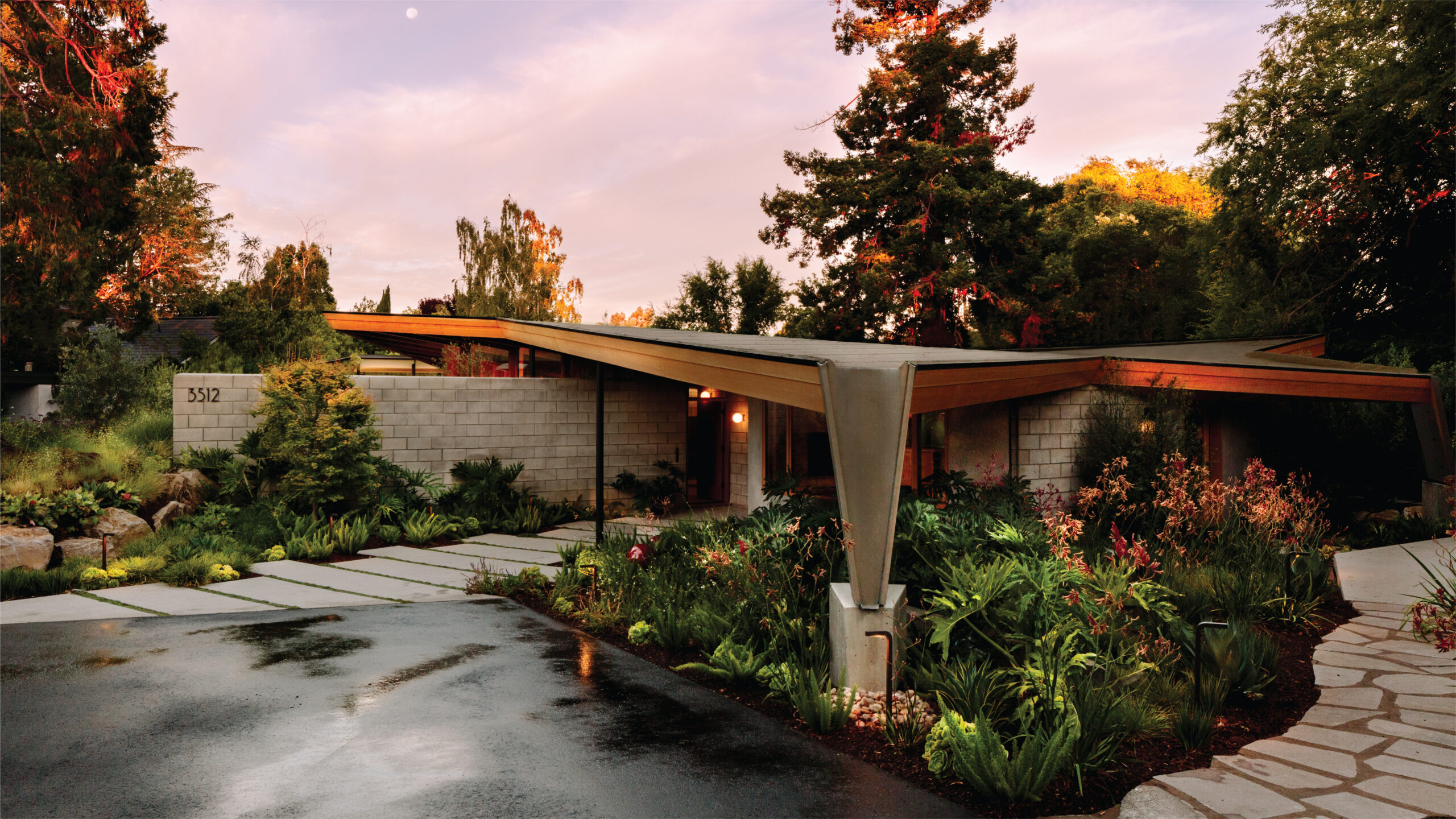
The flag-lot house at the end of a long driveway that Ayla Christman and her husband, Emlen Fischer, toured one Sunday morning in 2019 felt beamed in from another era — or another planet. Conceived in 1966 by Aaron Green, the Bay Area protégé of Frank Lloyd Wright who completed the Marin County Civic Center, the house unfurled beneath a dramatic triangular roof. Its scuppers dropped to the ground like the legs of a landed spacecraft — pure 2001.
“We would occasionally go to open houses,” Christman recalls. But as they walked down the lane and the odd structure gradually revealed itself, hunkered low into the earth and rambling in angled bends, “we knew we had to buy it.” Their children, just six and four, ran through it as if at home.
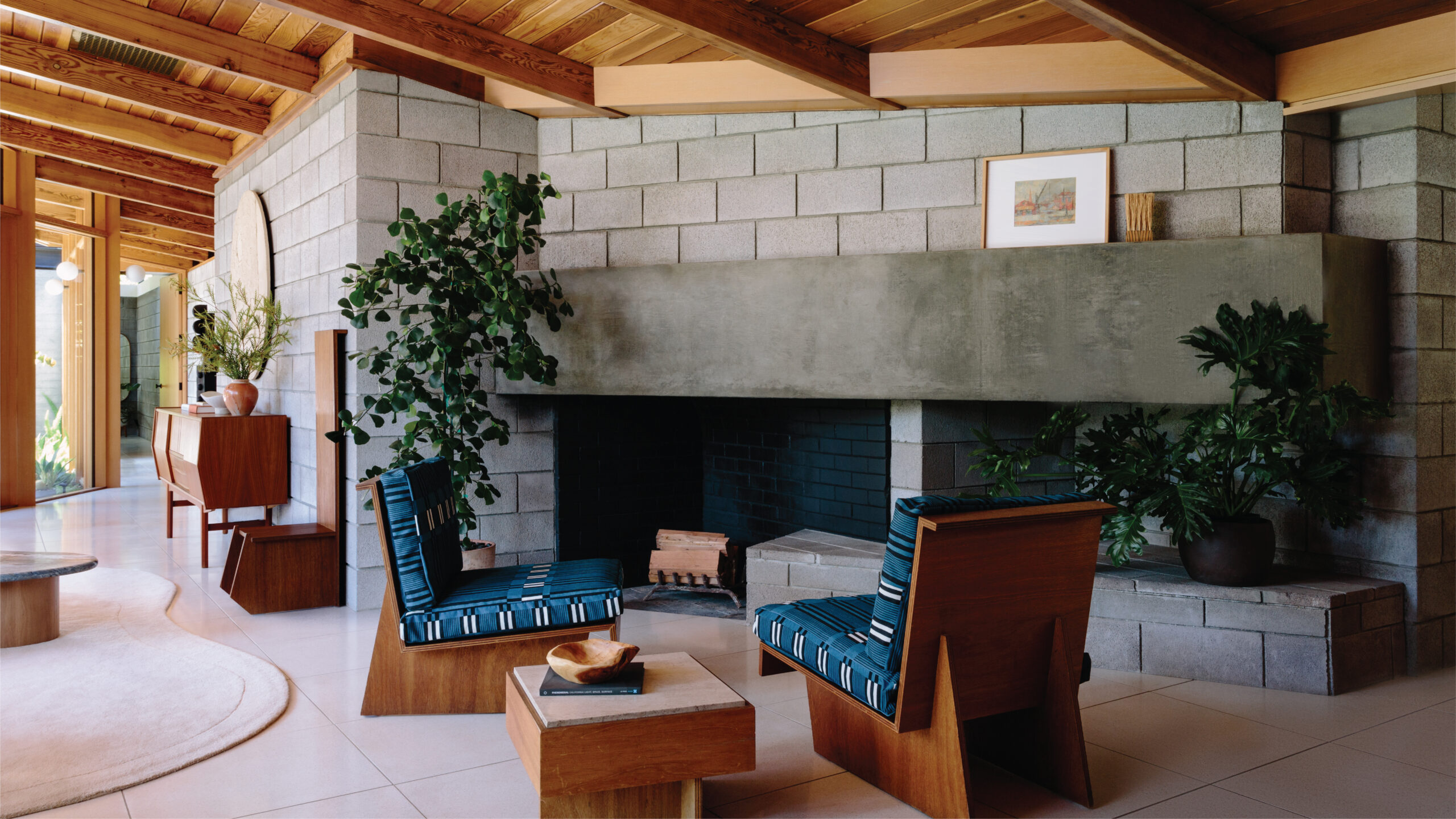
There was only one other bidder. “People probably wanted something more turnkey,” Christman says. The exposed wood, cinder block, and dark concrete bore signs of neglect, though nearly a dozen apricot trees thrived. Fin walls pierced from interior to landscape. A rainwater swale meandered through mulch and grasses. “If it had been a flat grassy lawn, it would not have felt the same.”
Inside, time had paused. Original furniture remained. Appliances had not been touched. “It was a portal back in time,” she says — and she wanted to be its next custodian.
The family lived in the 1,590-square-foot house long enough to understand its limits. “Bigger was important, especially after navigating the pandemic,” Christman says. Despite its indoor/outdoor ethos — glass doors in warm wood frames opening to gardens — a feeling of confinement lingered. A restorative road trip to the Grand Canyon clarified what they needed. They returned expecting a third child and an office was measured for a nursery.
Though Christman studied interior design in Nashville and works as an architectural photographer, the couple sought collaborators. They found interior designer Sarah Sherman Samuel through The Expert and chose Schwartz and Architecture after poring over websites.
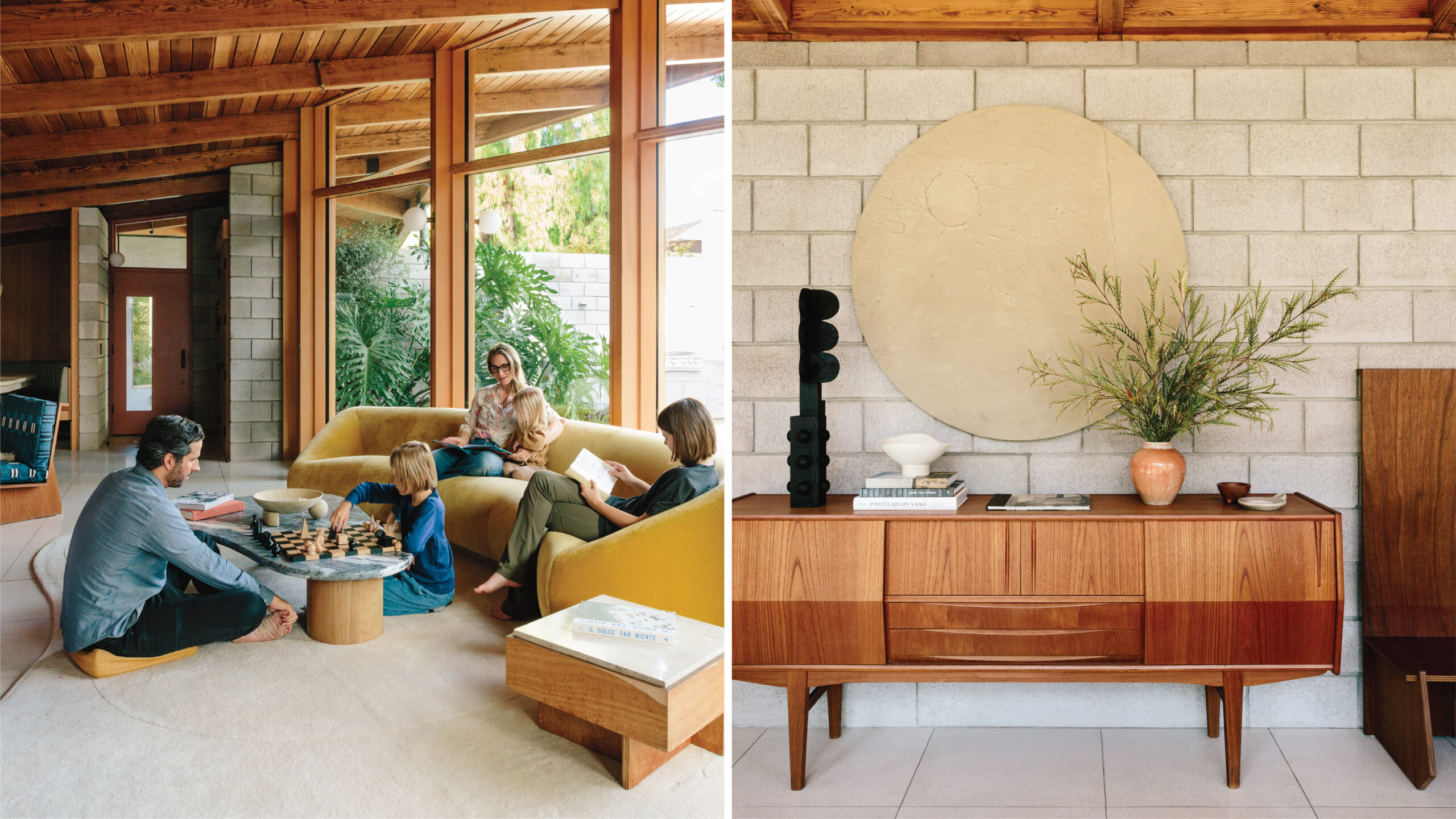
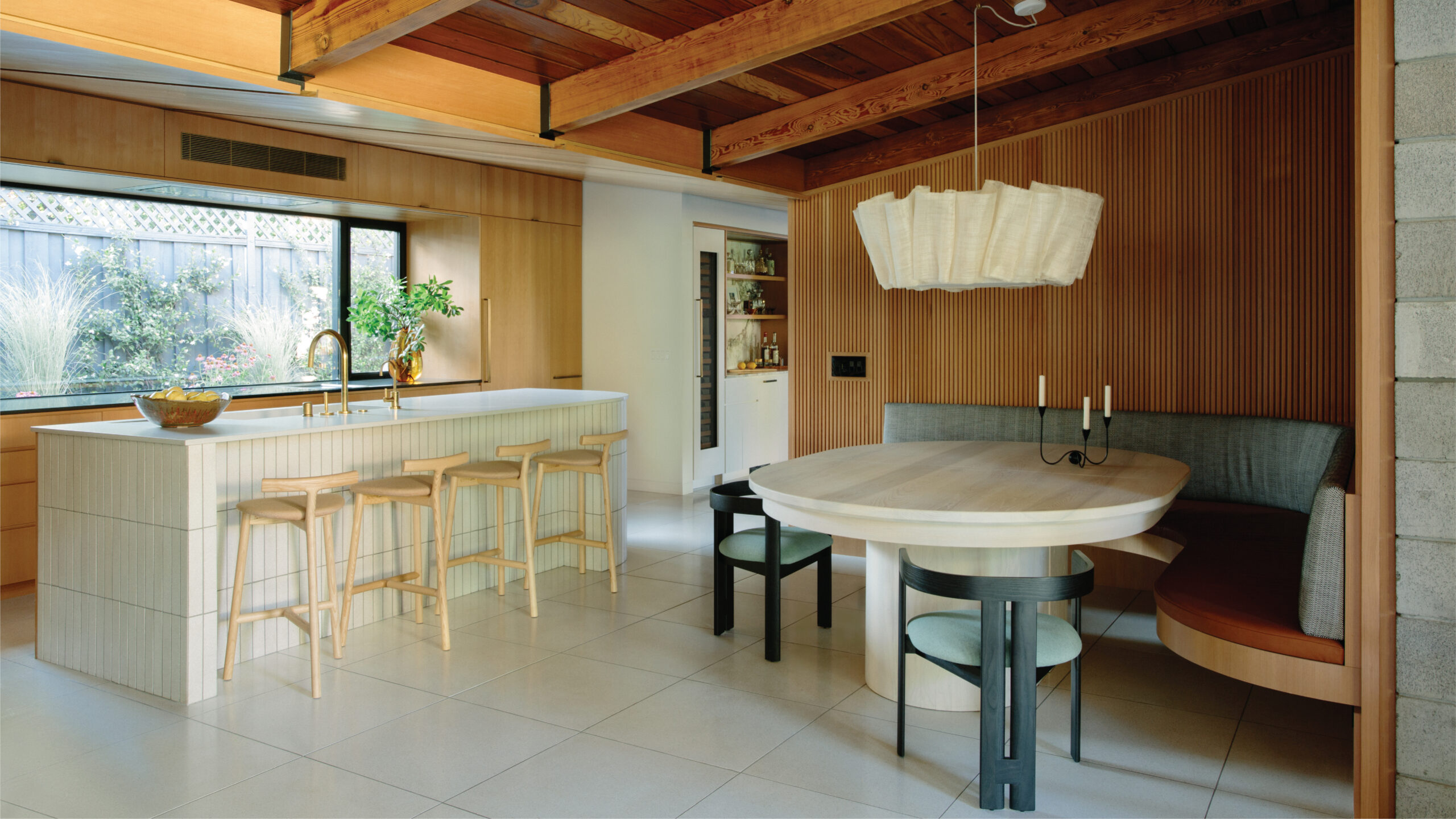
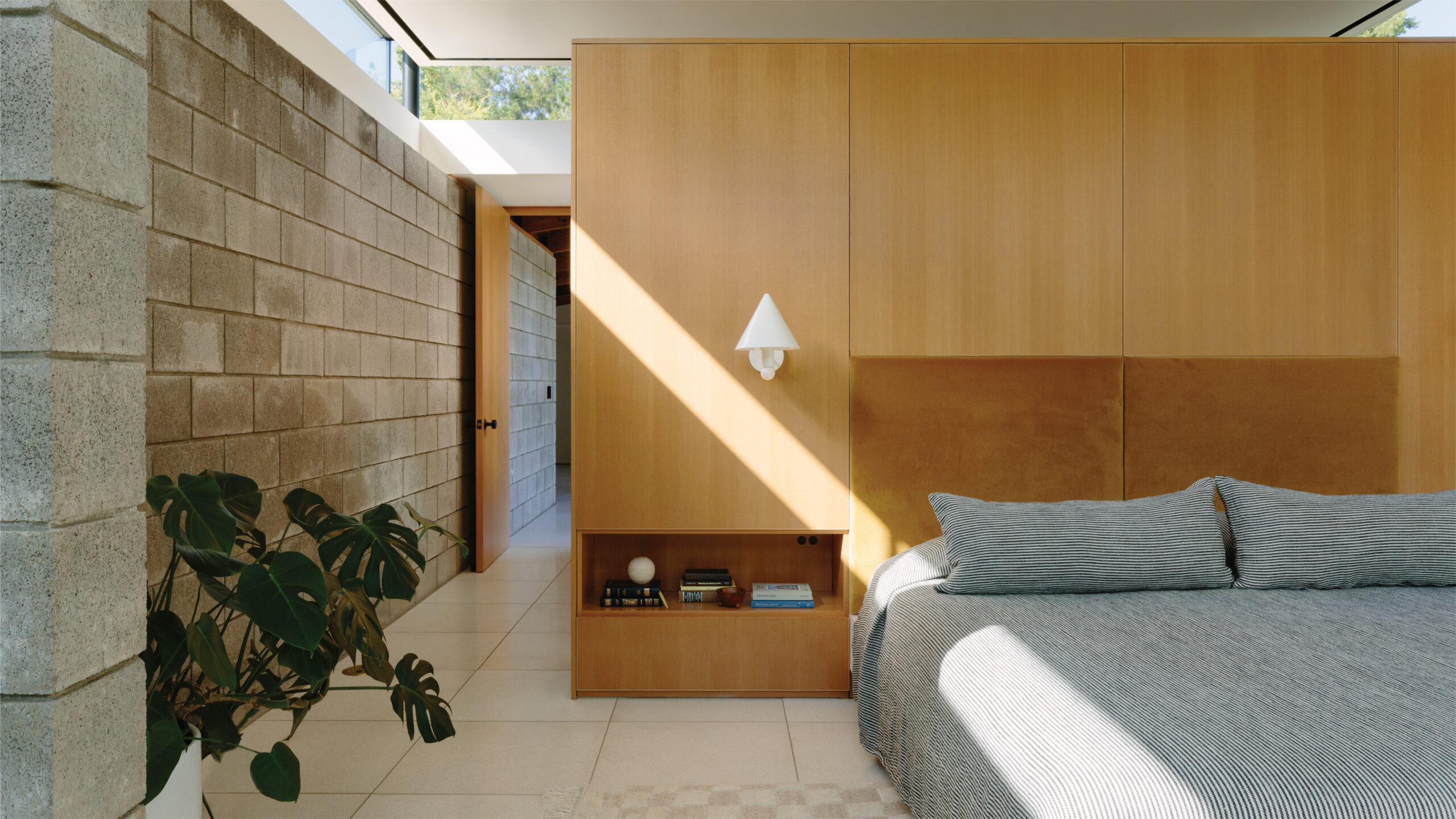
The couple had already renovated a first home together in Williamsburg, Brooklyn. So, they made most decisions themselves, guided by instinct and reverence for Green’s original vision. Earth tones, as Green might have favored — but lighter. Rust-colored floors gave way to pale tiles from Concrete Collaborative. Lively Scalamandré wallpaper animates the children’s rooms. Rounded carpets and furniture — several pieces designed by Samuel — soften the severity of cinder block and gray concrete.
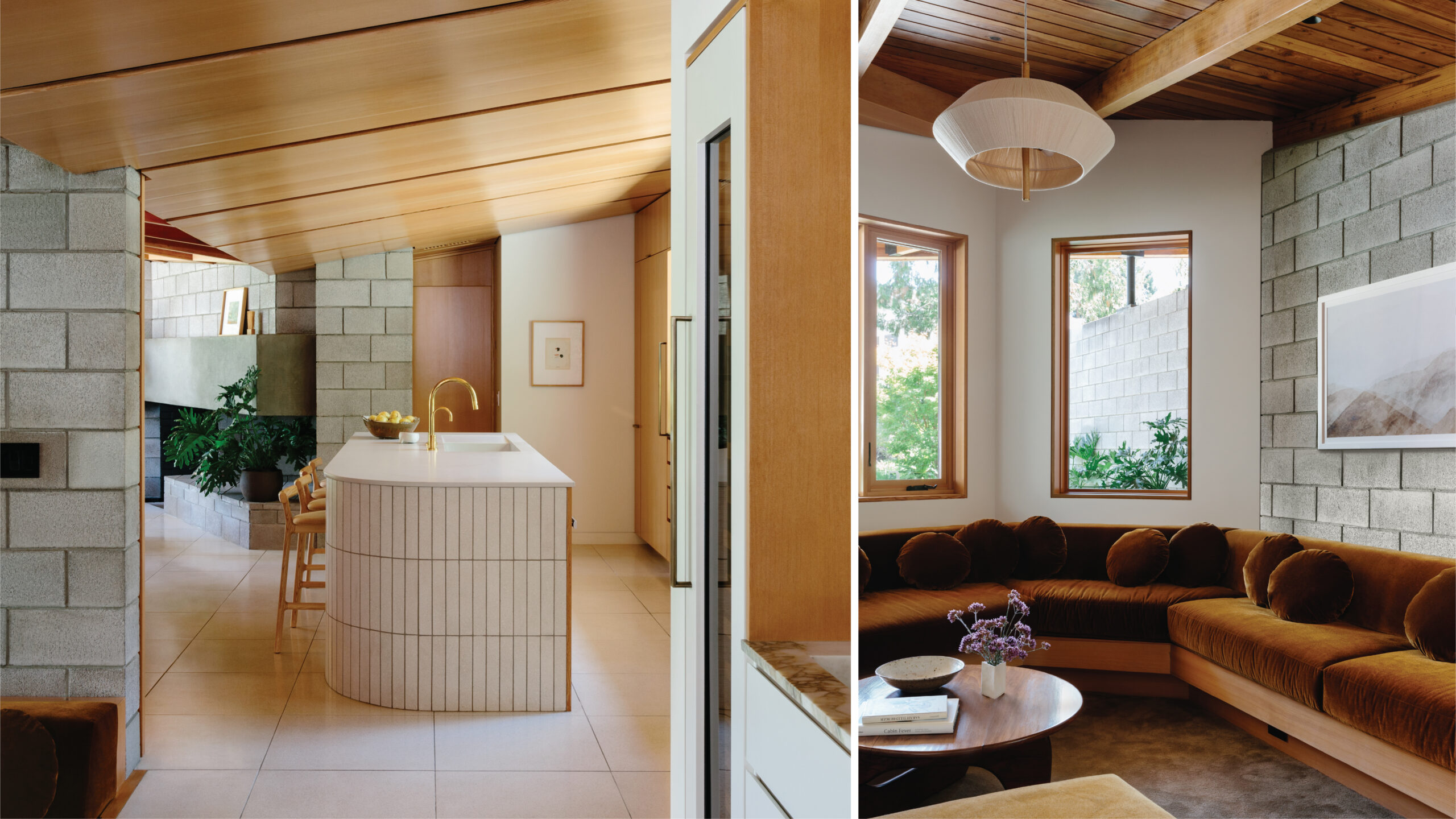
Samuel embraced the home’s choreography. “I liked working with the scale and compression of narrow passageways that open into rooms that feel even larger,” she says. Her charge was to soften without erasing: saving and upholstering Green’s designs, inserting gentle counterpoints. Her tour de force is the dining nook that replaces the original kitchen, its cinder block concealed behind a removable wood scrim that is tactile and warm.
Fischer, who works in finance and “does not think he is creative,” proposed two of the family’s favorite moves. A secret doorway now connects the children’s room to the principal suite. And a mounded driveway and carport were reclaimed as a sunken den. With builders Marrone & Marrone, Schwartz architects Christopher Baile and Wyatt Arnold realized the couple’s sometimes competing wish lists with notable diplomacy.
Baile was mindful that Green had left a resolved design; any addition had to feel distinct yet organic. Lowering the carport required new pumps and water strategies to manage the high water table but the effort was worth it. The den — subtly below grade — is where the family gathers. “Changing your relationship to the ground plane changes your relationship to the whole space,” Baile notes.
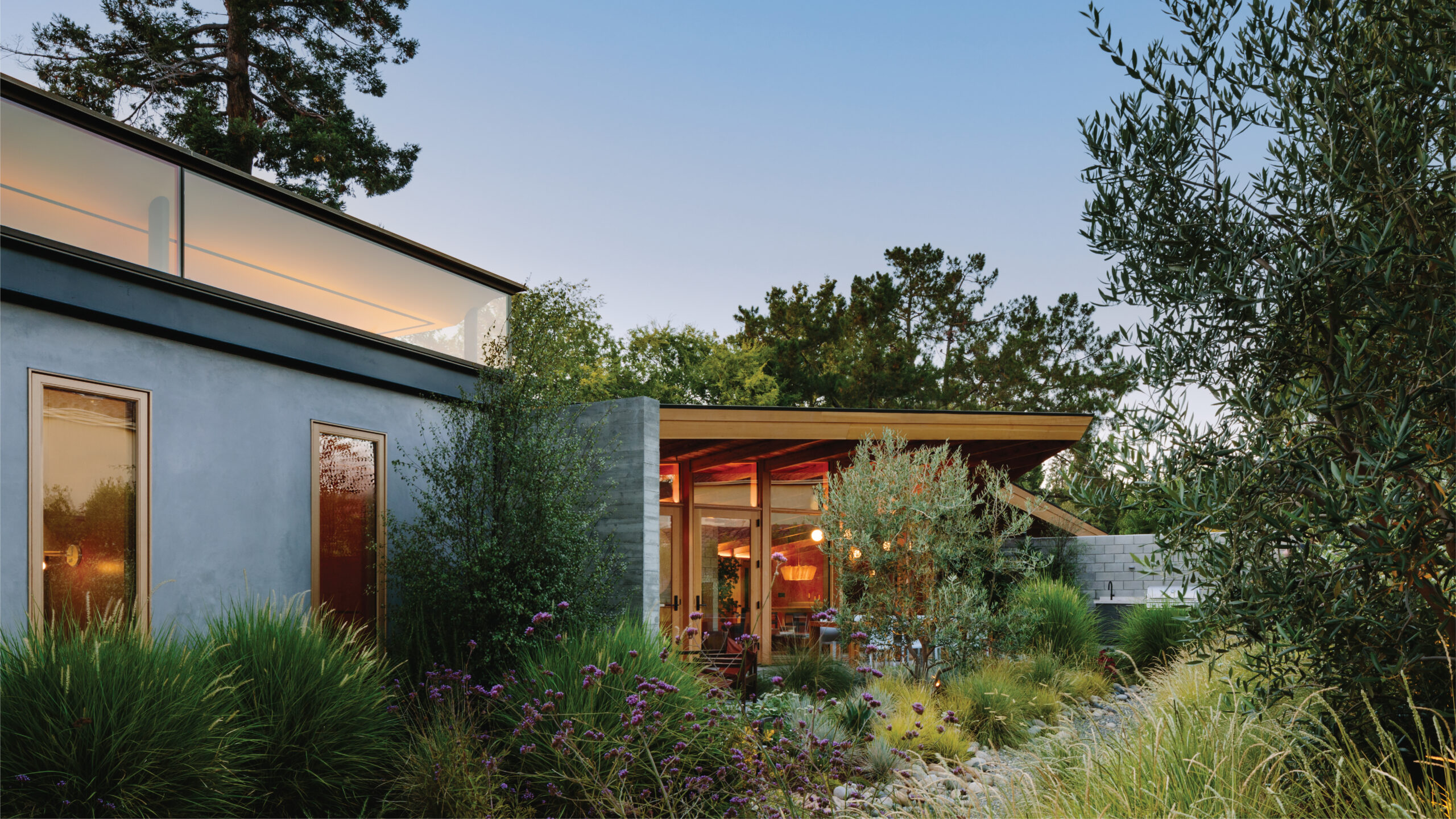
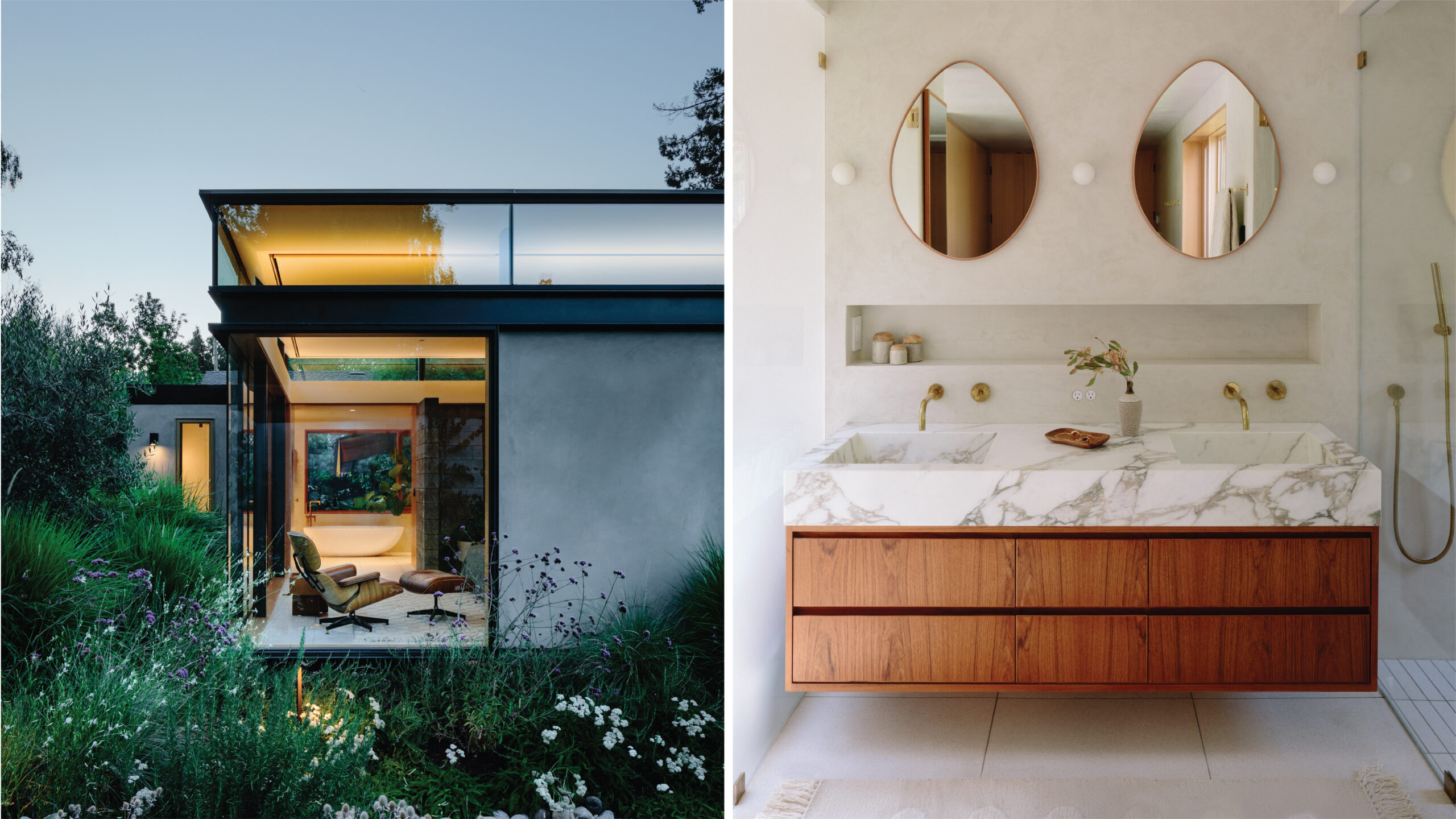
A rear addition along the building’s length was achieved by trimming the original downward-sloping roof beams and introducing an upward-sloping roof that reaches as far back as permitted. Hidden behind a new board-formed concrete fin wall, a rectilinear steel-and-glass principal suite with clerestory windows now captures more light.
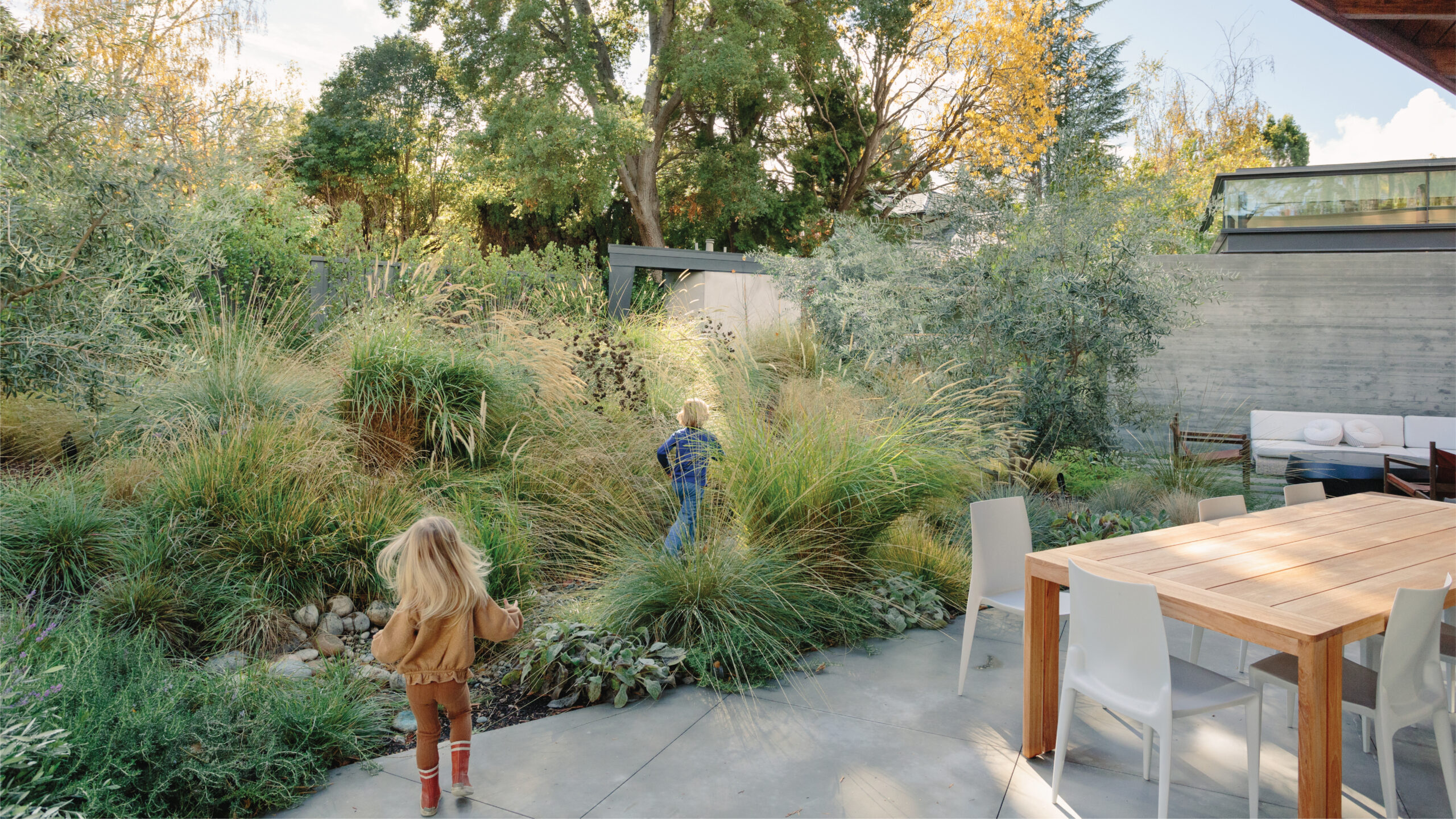
Landscape designers at Boxleaf surrounded the home with rosemary, lavender, sea grasses, and rhododendrons — a meadow-like frame that amplifies Green’s indoor/outdoor ambitions.
“I love living here,” Christman says. Now doubled in size, the house resists grandeur. “It’s not big. It’s the right size — with light, and friends, coming in from many directions.”
Photos by Ayla Christman