
In Oregon’s High Desert, A Less Wild Western Story
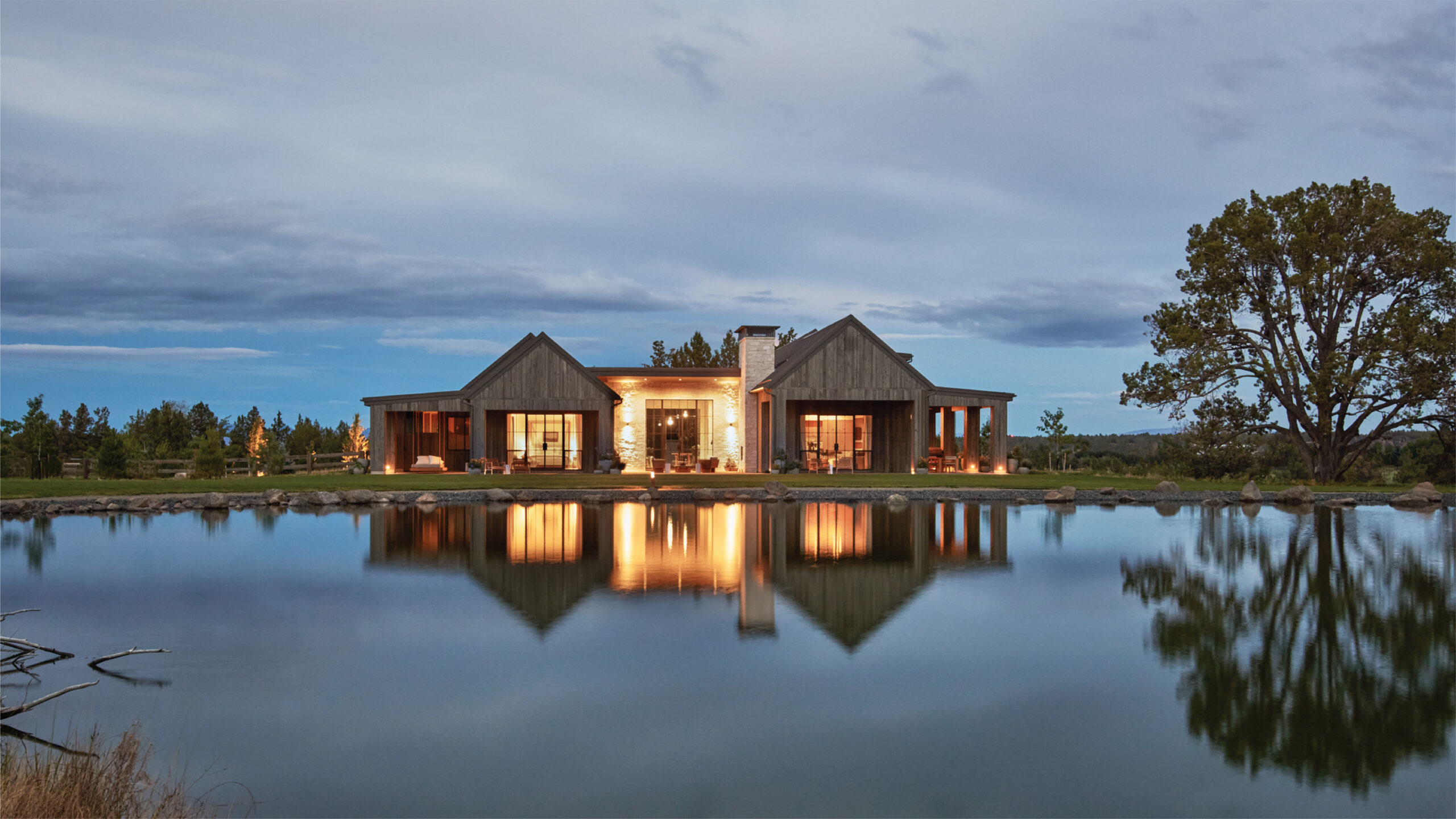
The high-desert compound outside of Bend, Oregon, that Julie Hawkins, of Hawkins Interiors, designed for an East Bay family is a longtime dream finally come true. “We began visiting the area over twenty years ago when our now-grown daughters were small,” says the wife. The family would stay at a resort, inviting extended family and friends to come and revel in the outdoors with them. “Bend is paradise for the outdoor type,” explains the wife. “We just fell in love with it.”
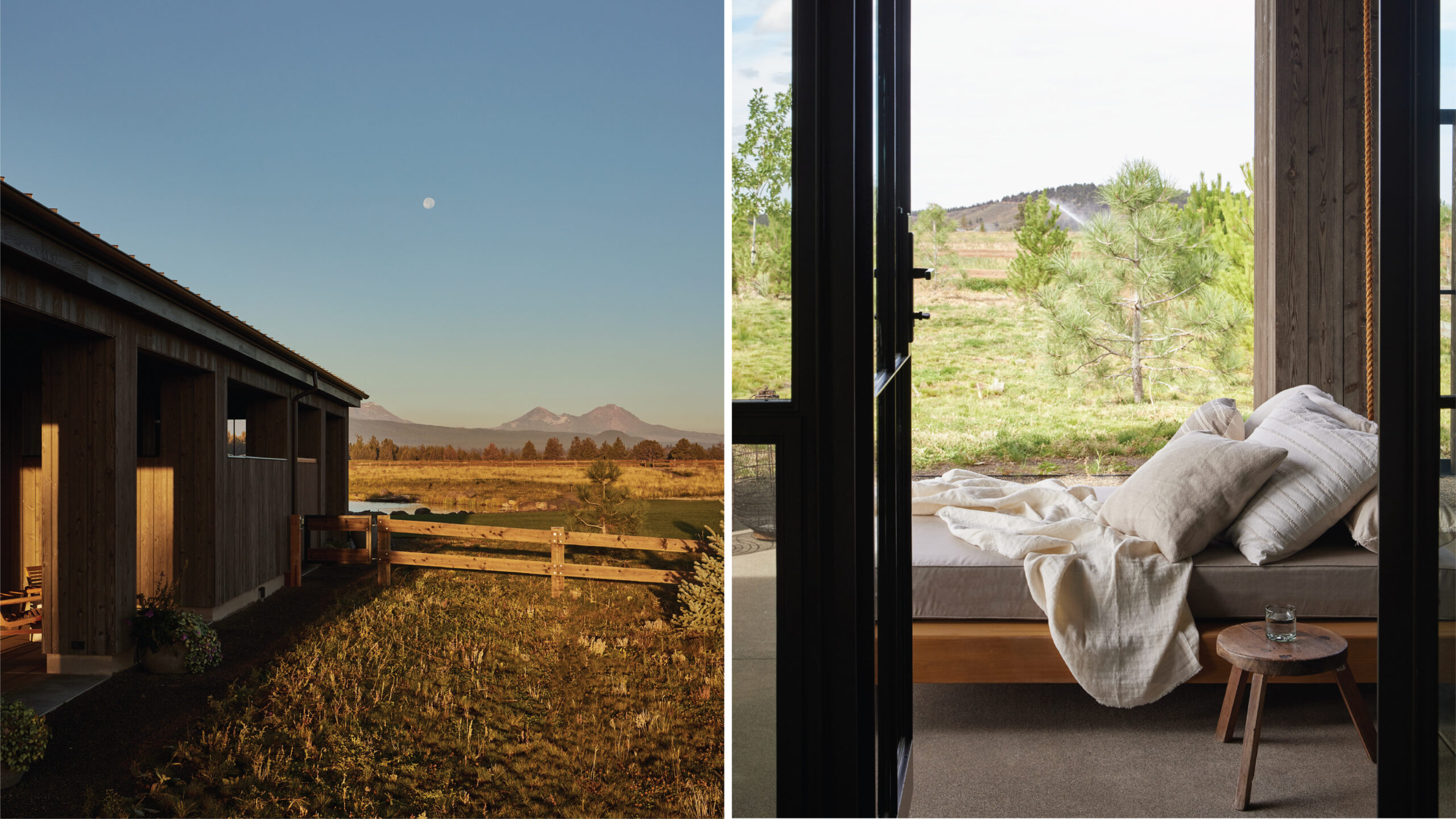
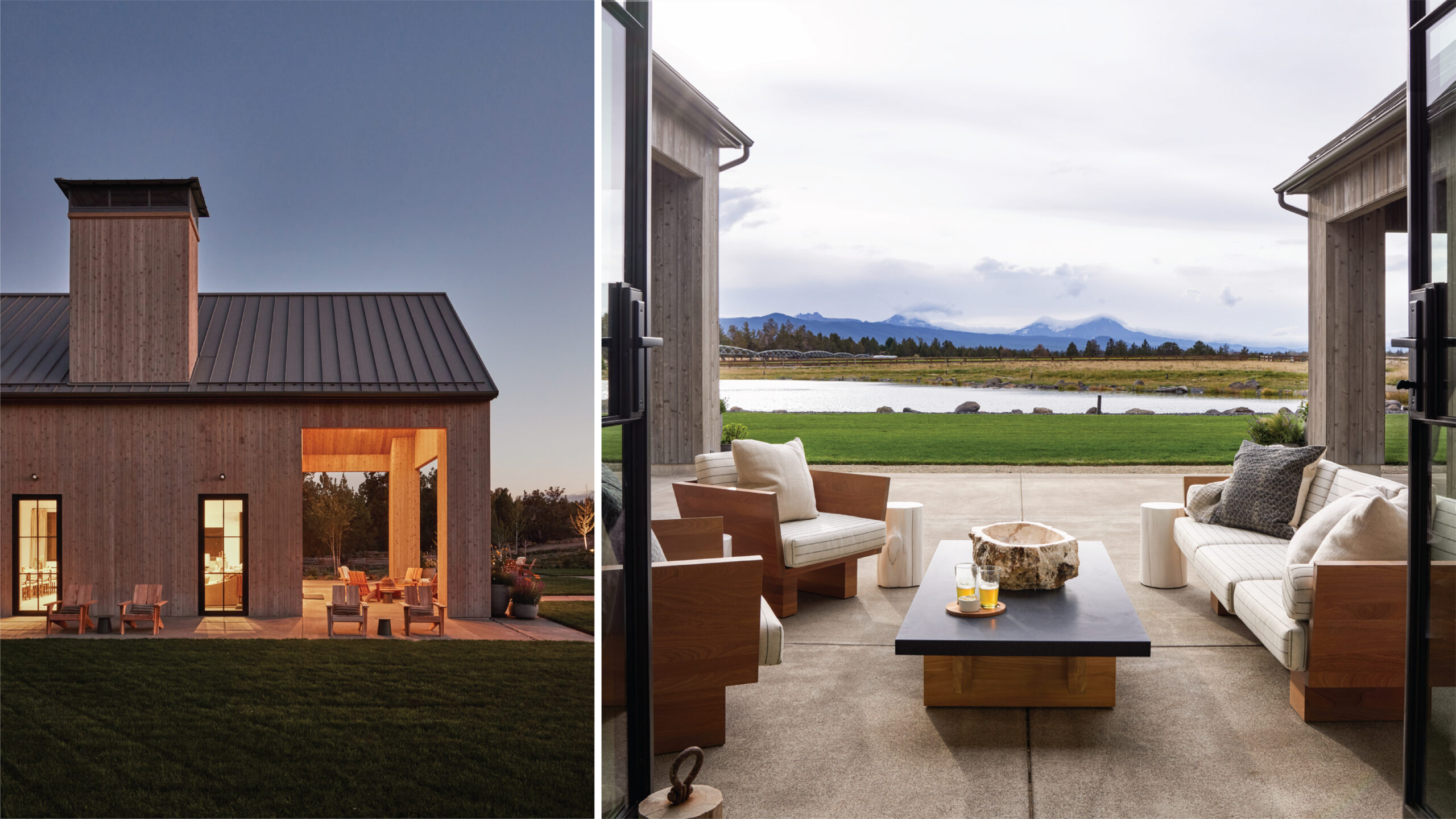
The region became the family’s favorite summer spot, and they found themselves wanting to spend more time there. So, they searched for a place they could call their own and knew they’d found home when they discovered a site with unobstructed vistas of Mt. Bachelor, Mt. Hood, Mt. Jefferson, Three Sisters, and Broken Top. “The mountain views are arguably the most special part of the property, which also seemed to be the perfect match as it allowed us to [construct] several buildings to accommodate family and friends all year long,” says the wife.
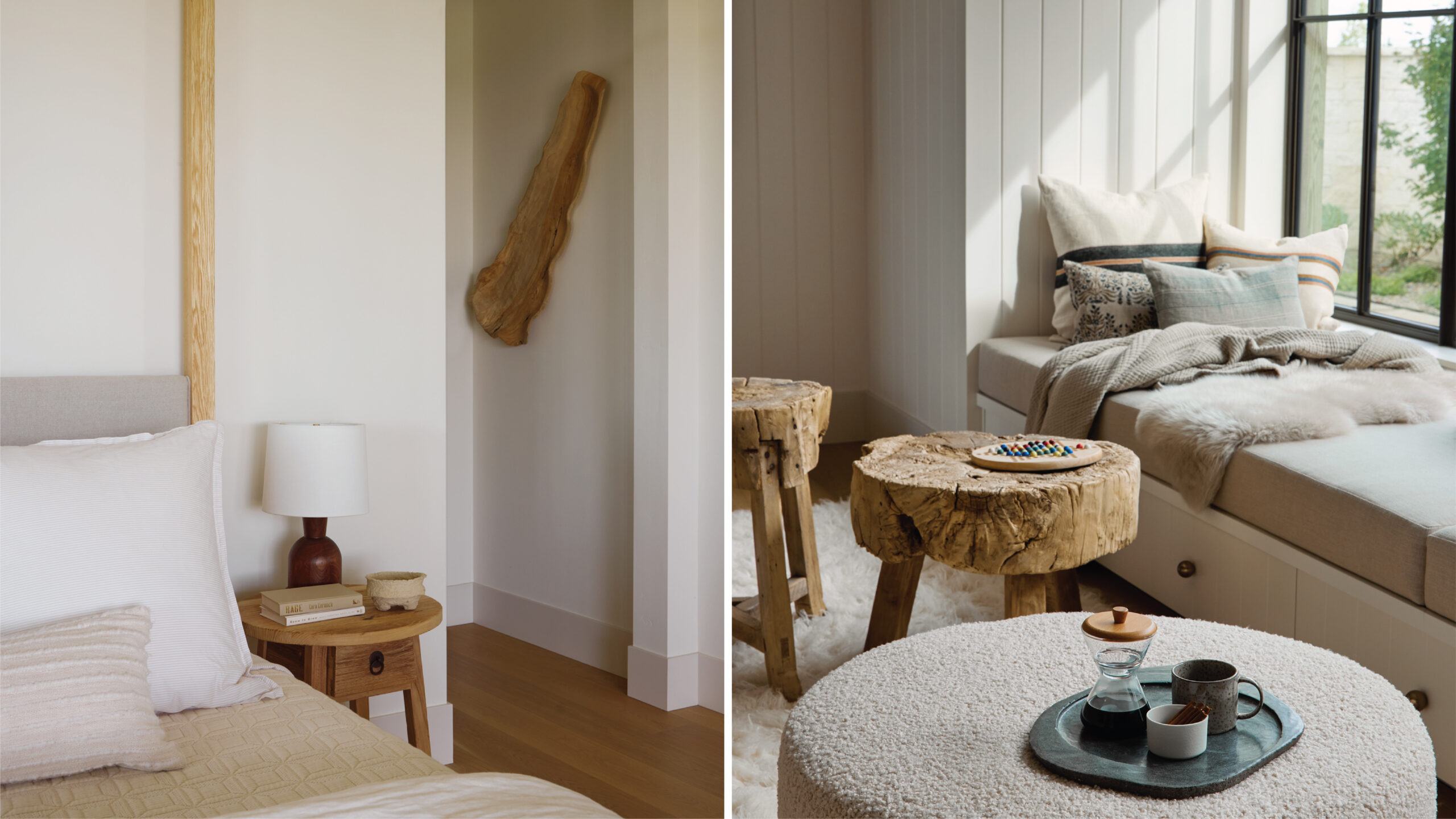
In creating an Oregon home away from their Bay Area home, the family wanted to employ the Northern California ethos of melding design with its natural surround—and saw Hawkins as the ideal candidate for the task. “I didn’t want to compete with nature,” says the wife, who was taken with Hawkins’s ability to balance texture, natural materials, understated forms, and subdued tones, giving the environment the spotlight. The design approach is one Hawkins learned while working for a decade under renown Northern California architect Howard Backen, who grew up in rural Oregon and studied architecture at the University of Oregon before becoming a master at weaving architectural design with nature.
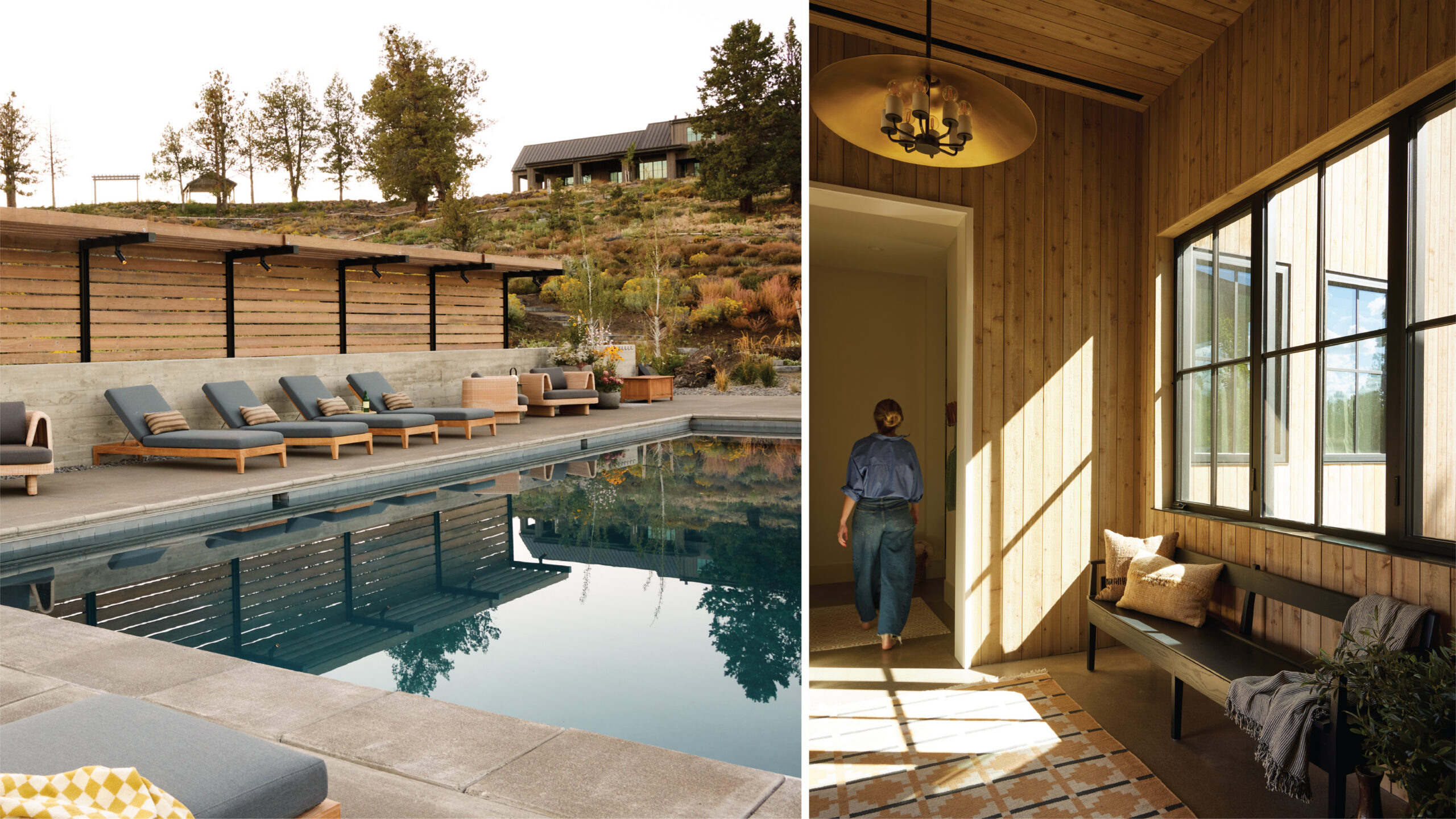
With the help of local architect Rick Wright of Wright Design Studio, Hawkins put her design expertise to work and imagined an idyllic property that comprises a main house, a guest house, and a recreation barn with more guest quarters. Inspired by historical agrarian architecture of Northern California, the buildings feature simple forms with cedar and stone cladding and gable roofs. The terrain—designed by Heart Springs Landscape Design—showcases junipers, red oaks, spruces, maples, aspens, and ponds filled with fish and frogs. There are hiking and biking trails, waterfalls, a fire pit, a pool and spa, a children’s treehouse, a teepee, yurt, and tent campground, a sport court, and a horseshoe pit. “The sky here gets so pretty and pink,” says Hawkins. “There are bald eagles, elk, and alpacas they tend to. It’s agricultural land so they farm it and even have a little orchard.”
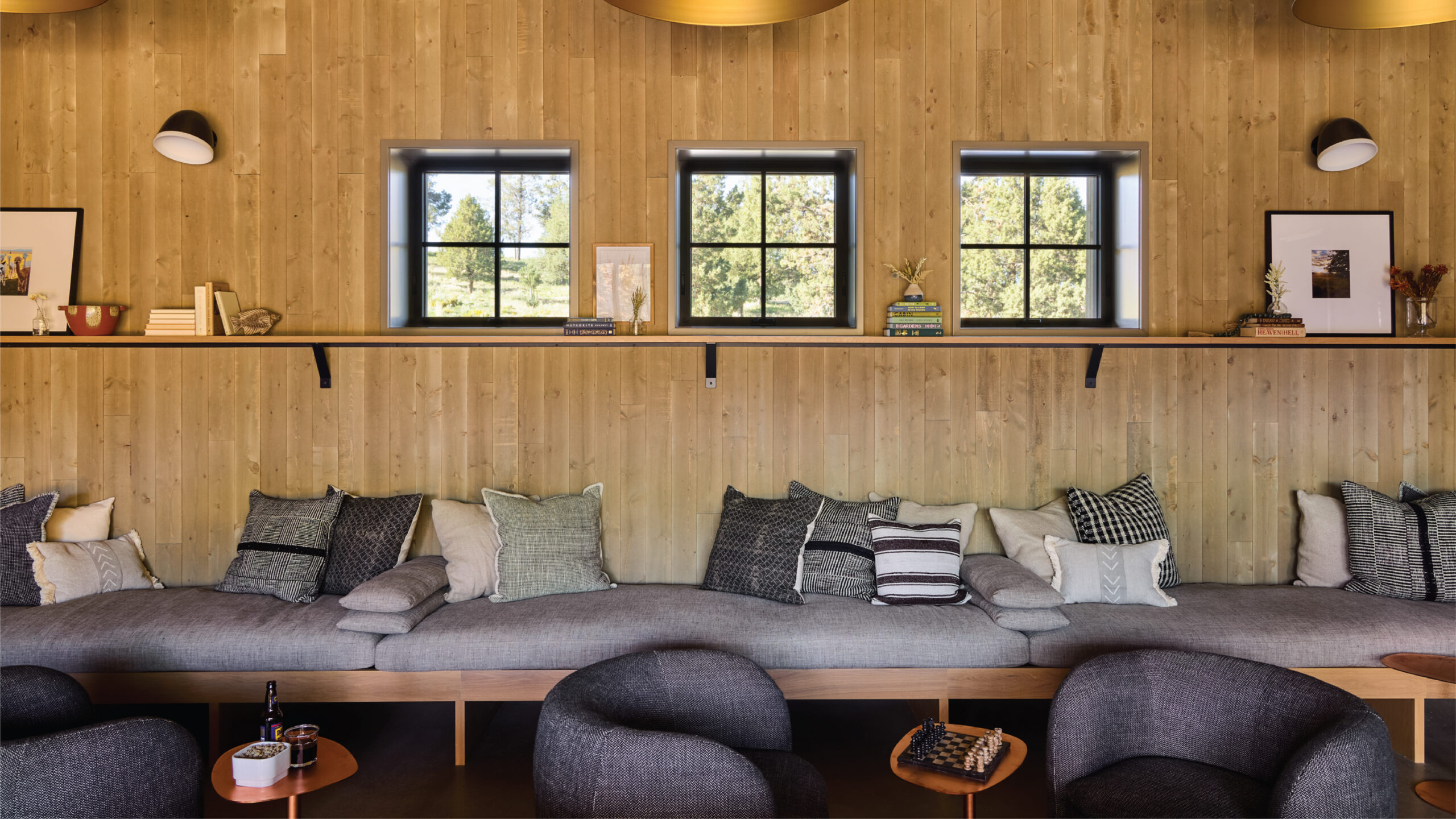
While the architecture for the main house and the recreation barn is similar, the main house interior displays a softer Scandinavian design style and a U-shape plan with outward-facing rooms that look to mountain views. In contrast, the interior for the poolside recreation barn is outfitted with an industrial-style aesthetic that’s surprisingly urban and invites full-time fun.
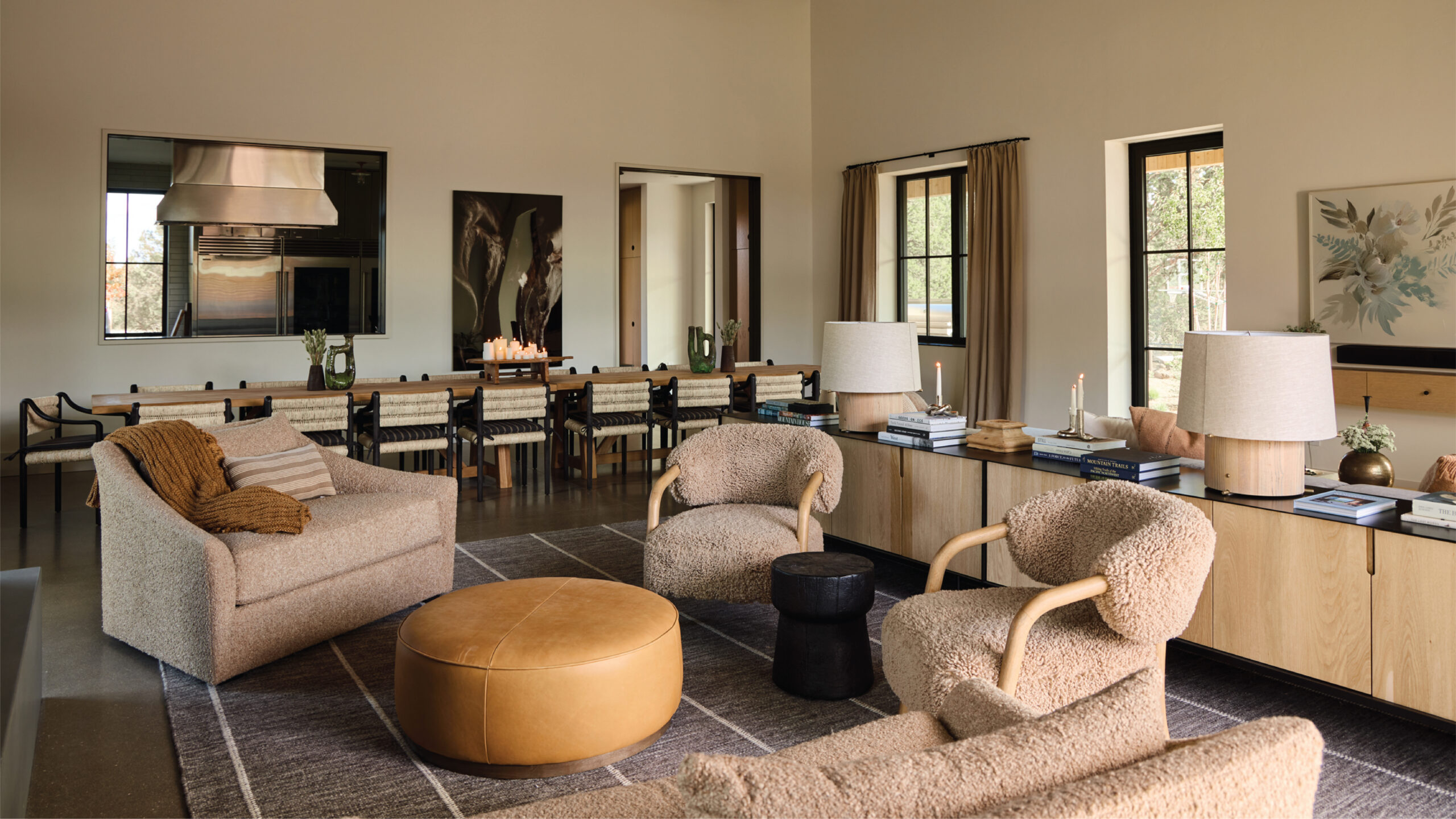
Hawkins prioritized durability for the recreation barn, opting for polished concrete flooring, moodier tones, including gray, black, white, and gold, and wood and steel elements. “Outdoor activity was the driving force for the recreation barn’s design,” she says. “The family wanted a bunk room, a stainless-steel kitchen, a big industrial-style bathroom, and a game room.” For the kitchen, the designer offset the stainless steel of the lower cabinetry with open wood shelving and white subway tile that runs from butcher-block counters to the ceiling. In the dining area, she placed two outdoor teak tables together, creating seating for up to twenty people.
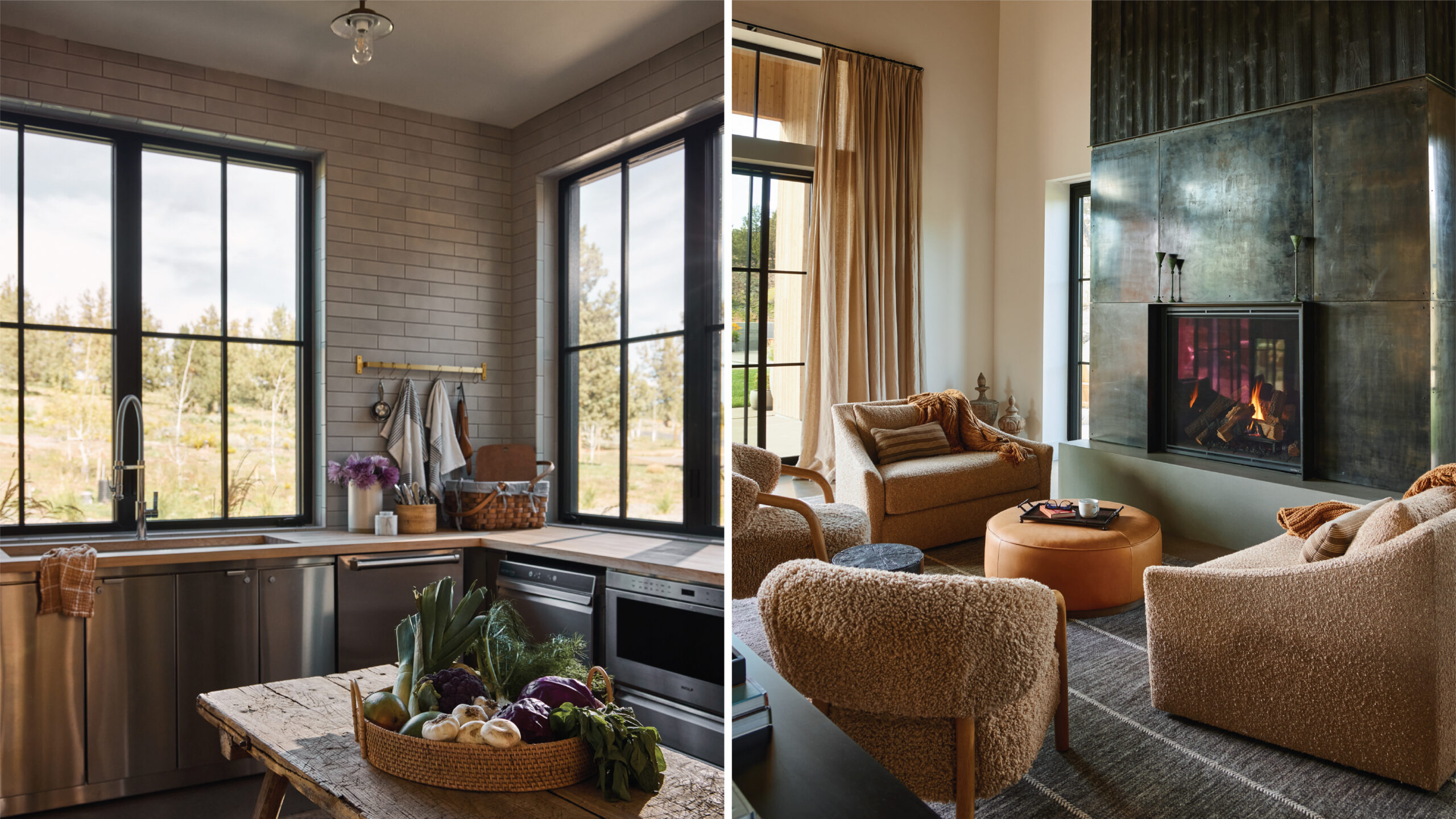
Hawkins installed a built-in alderwood sofa with cushions wrapped in charcoal gray tweed in the recreation barn’s game room, where she hung massive black-and-white portraits on metal of Jimi Hendrix, Dolly Parton, Frank Sinatra, and Hank Williams above a café-style table and leather-and-metal chairs. The great room, located at the opposite end of the barn, features more steel on the fire surround, which is also marked by a concrete hearth and charred wood siding. “Everything is minimalist for simplicity, but there’s a lot of varied texture,” says Hawkins.
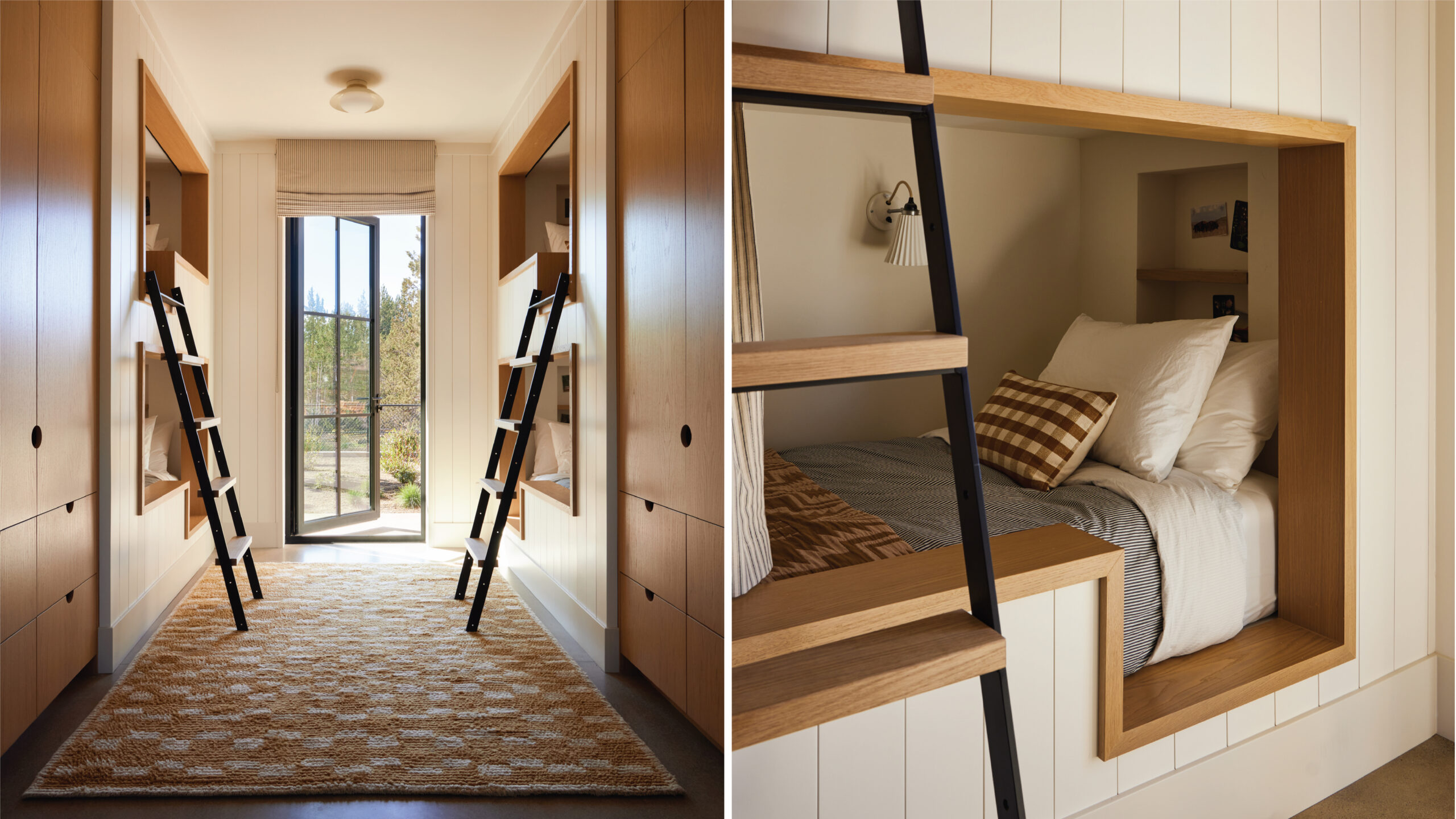
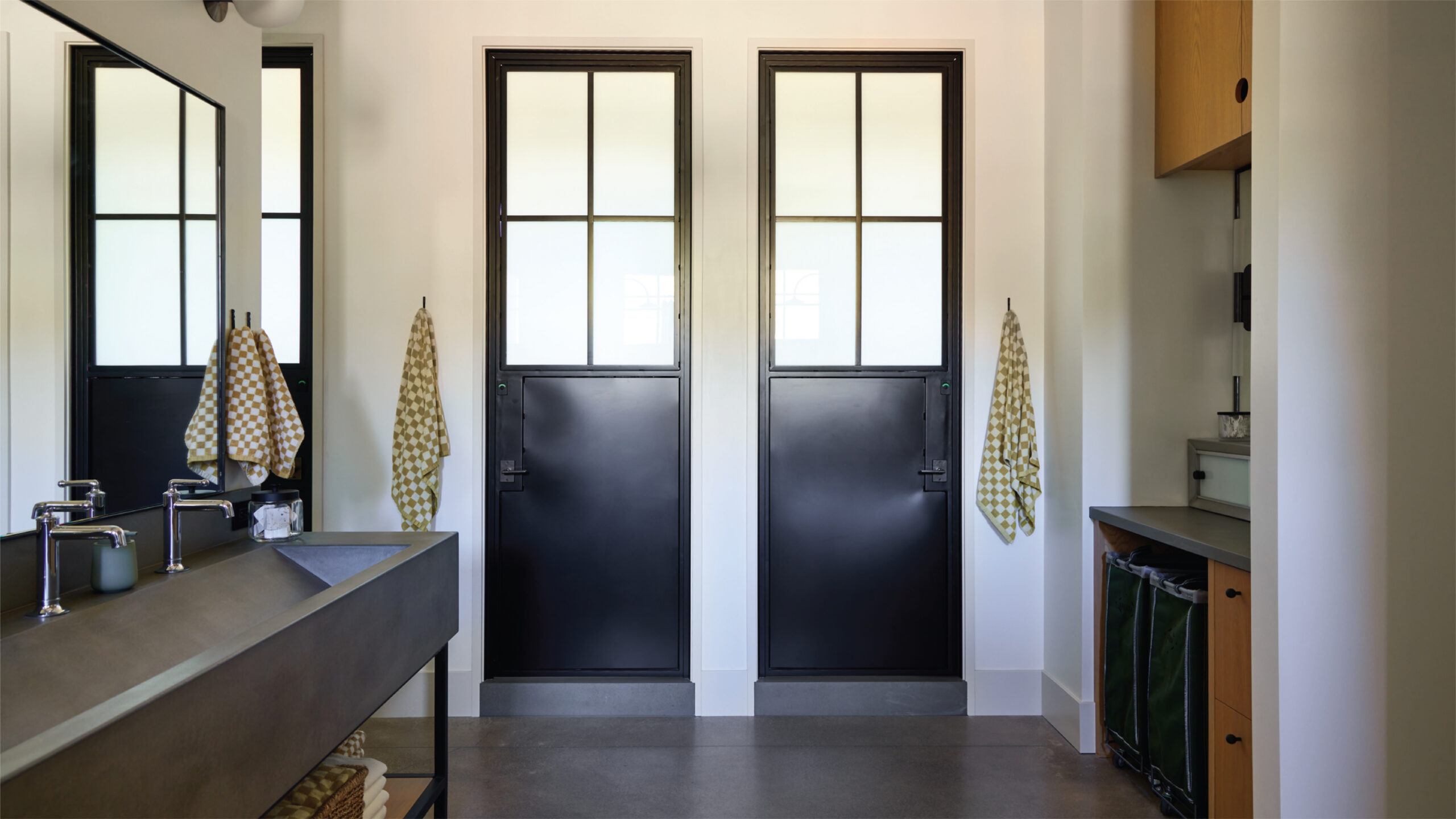
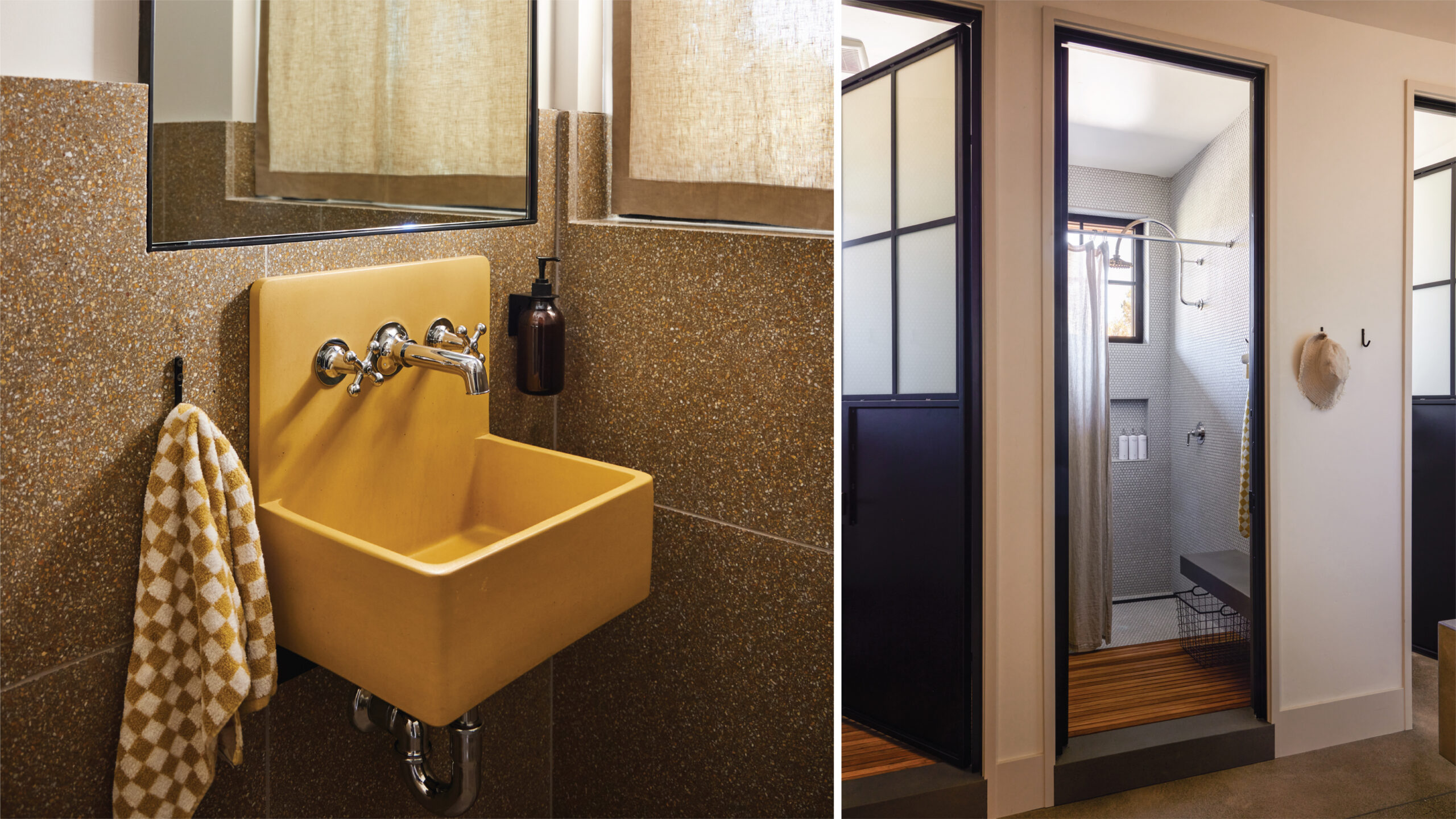
Each of the bunk room’s integrated shiplap bunk beds have reading lights and can be closed off with draperies. “Since this is Oregon, I had to do Pendelton blankets on the beds,” says Hawkins. When it came to the large locker room-style bathroom, the designer chose a custom trough-style poured-concrete sink, more concrete flooring, and steel-and-glass doors that access multiple shower stalls.
One of Hawkins’s favorite aspects of the design is the recreation barn’s entry. “I love the light and the way it hits the steel of the deep windowsill and the cedar siding that continues inside from the exterior,” she says. Her client loves everything about the recreation barn. “I love to tell people they’ll be sleeping in the barn and then see them discover what’s there,” she says. “I like to think of it as the perfect grownups’ summer camp and a paradise for kids.”
Photos by George Barberis