
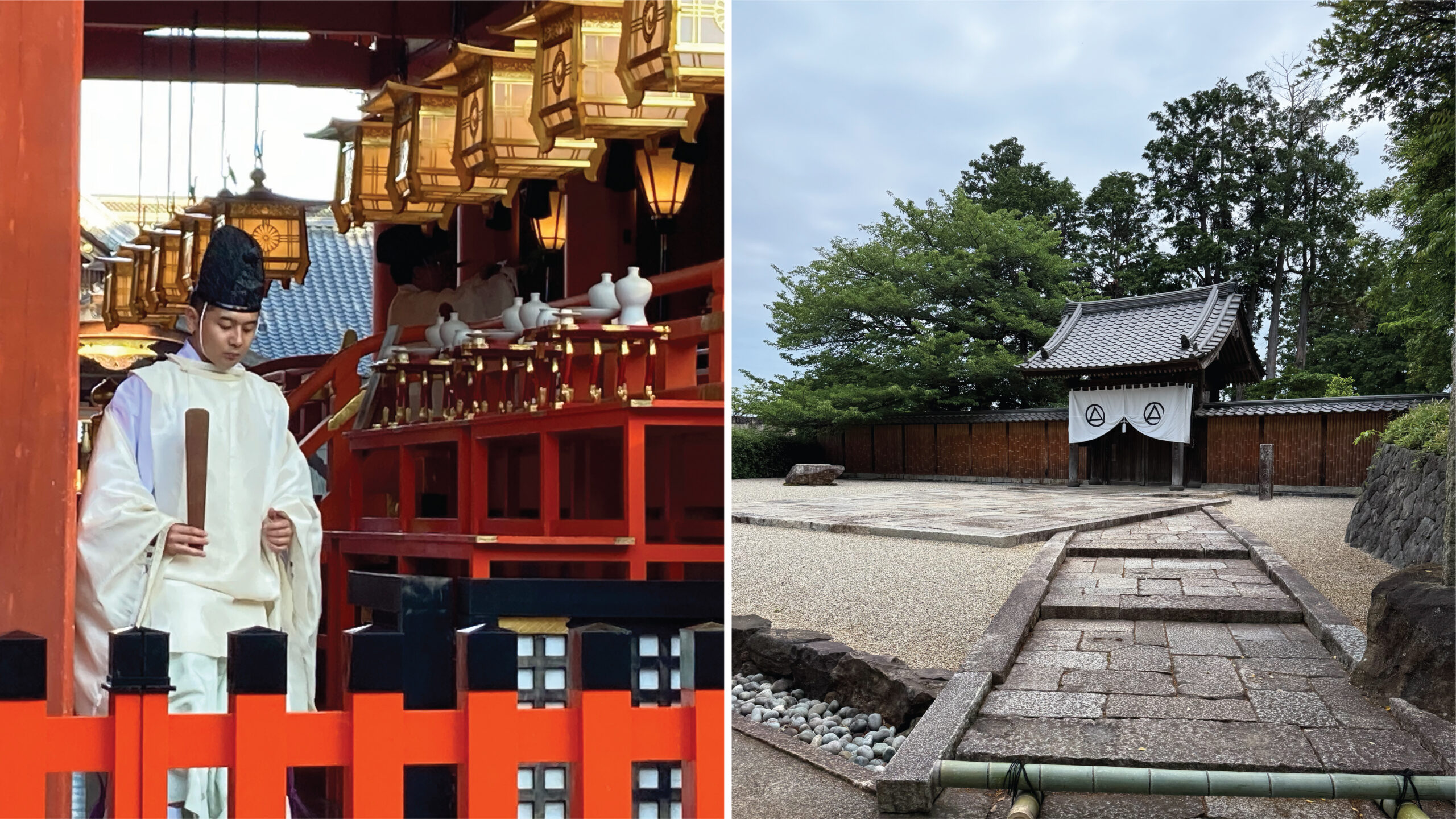
Within the past year, SHLTR has been on the move. In Japan and Egypt, immutable treasures prompted unexpected shifts in our design perspective and reaffirmed a familiar axiom: the old nearly always informs the new.
In Japan, amid Edo-period Tokyo and 11th-century Kyoto, pockets of modernity revive timeless spatial concepts.
The rigorous simplicity of temples and homes—their expert joinery, textural quality, and open-plan, multiuse rooms — fed directly into Modernism.
Today, those principles continue to infuse urban homes, cafés, and galleries even across the Bay Area.
Before departing, we spoke with Los Angeles architect Takashi Yanai, a Tokyo native and SFMOMA Architecture and Design Accessions committee member whose firm, EYRC, also has a San Francisco office.
He points to Japanese photographer Hiroshi Sugimoto, as an artist whose work—held in SFMOMA’s collection and represented by Fraenkel Gallery — moves fluidly across the Pacific, synthesizing old and new.
“He respects tradition but he is also modern,” Yanai says, citing Sugimoto’s 1997 triptych of Rudolf Schindler’s 1922 King’s Road house in LA. Schindler, who had assisted Frank Lloyd Wright on Tokyo’s 1923 Imperial Hotel, was himself shaped by Japan.
Sugimoto, born in Tokyo and educated in Pasadena, absorbed the Schindler-Chace house long before photographing it — perhaps so deeply that, without formal training, he has effectively become an architect.
A sculptor as well, Sugimoto translates mathematical ideas into pure forms. His Point of Infinity (2023), a 70-foot conical stainless steel needle on Yerba Buena Island in San Francisco, serves as a sundial.
In Tokyo, we encountered another “needle,” suspended upside down in an Omotesando lobby beneath the 2013 Sahsya Kanetanaka café—an exquisitely modern space grounded in teahouse traditions — designed by Sugimoto and architect Tomoyuki Sakakida’s firm, New Material Research Laboratory.
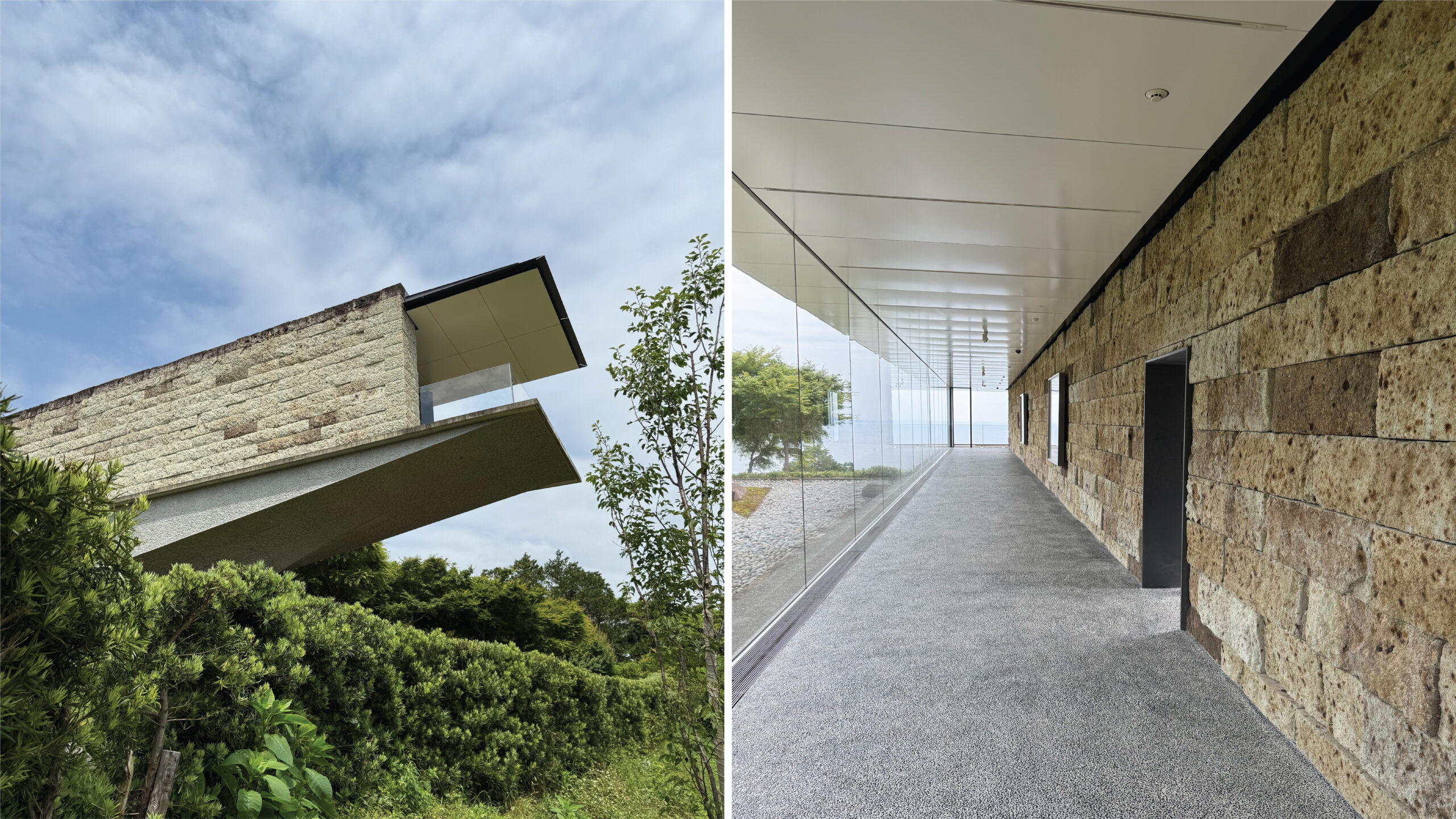
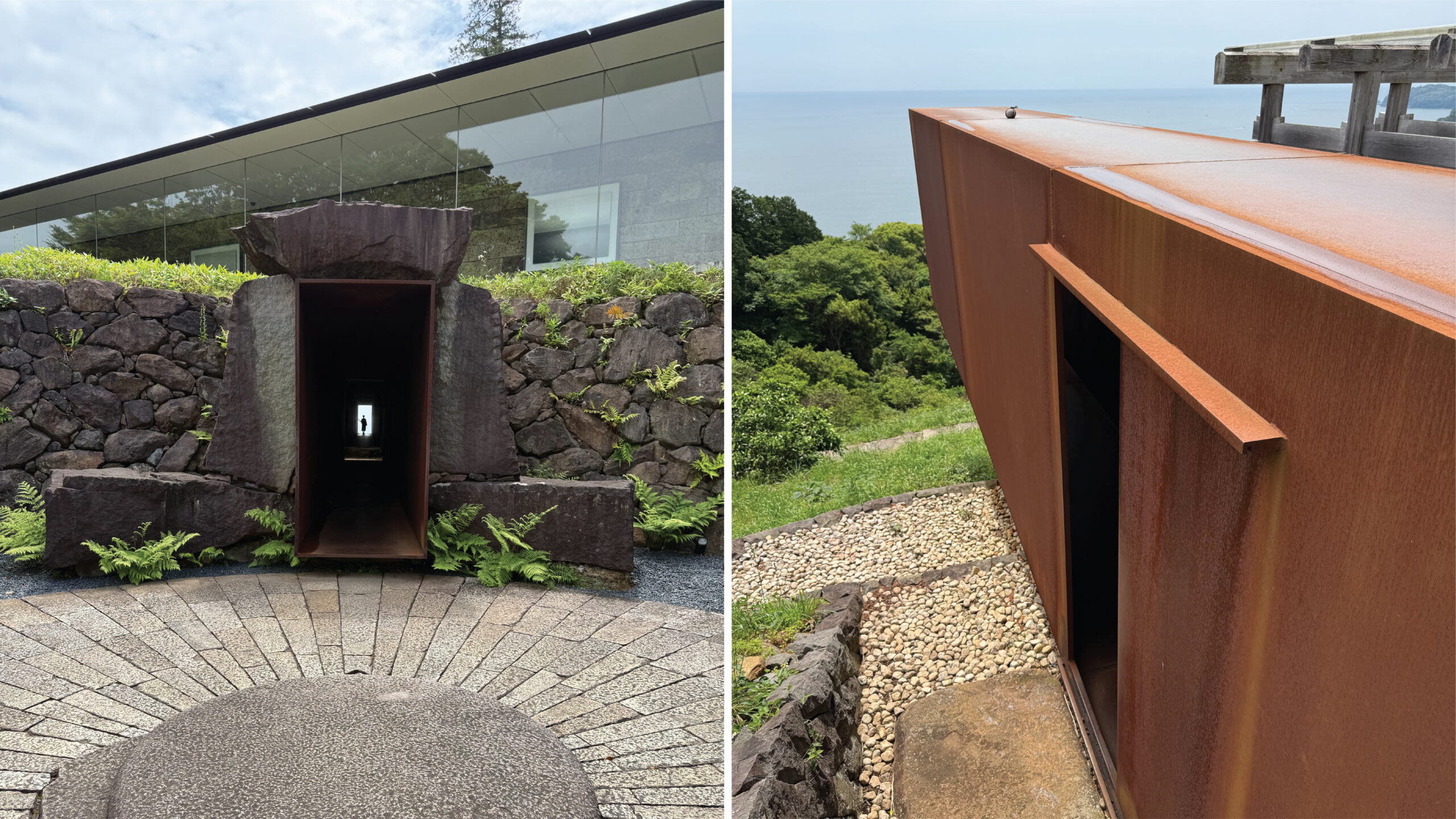
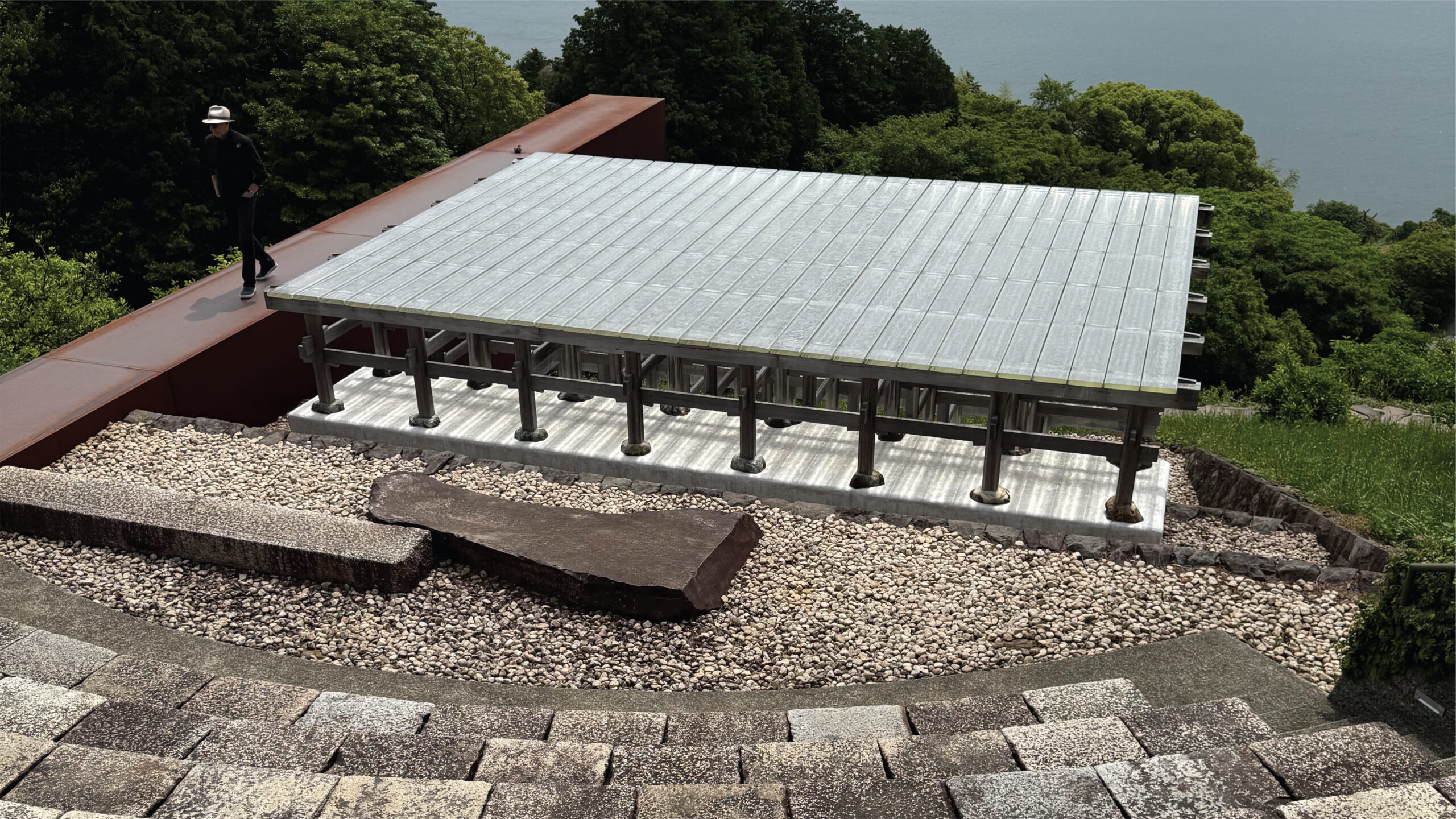
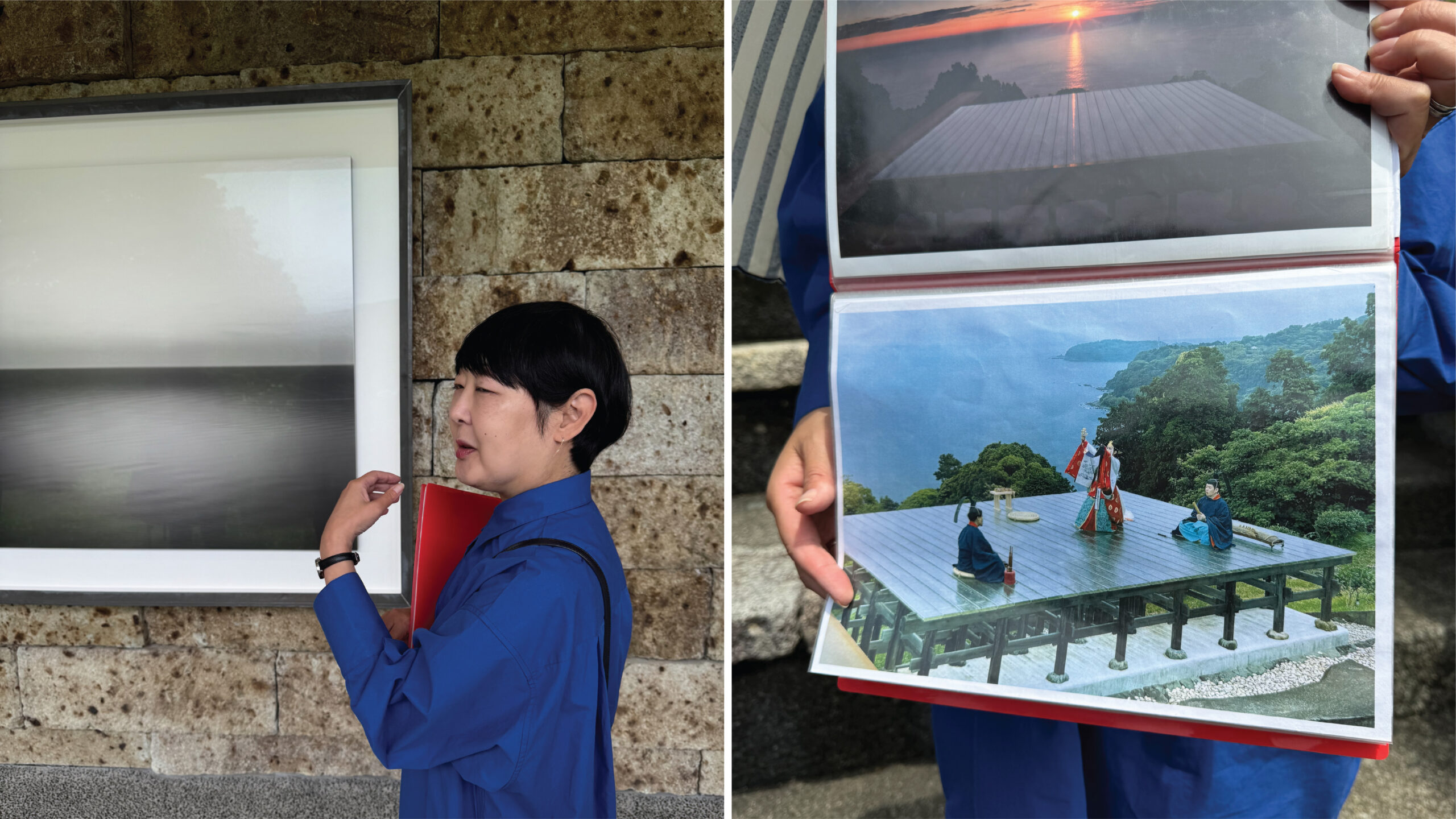
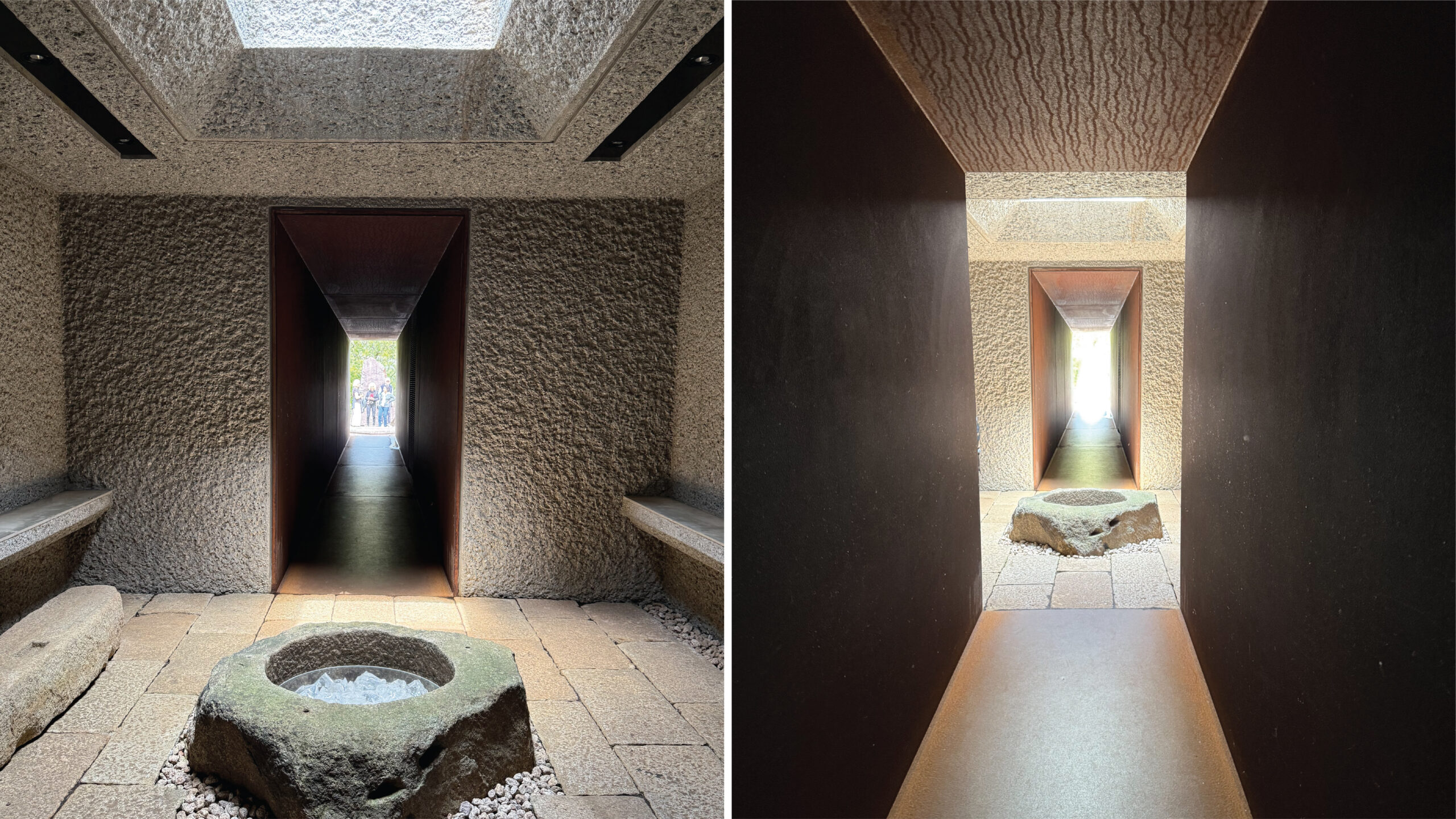
Most compelling is Sugimoto’s multi-acre arts enclave in Odawara, near Tokyo, which Yanai visited as if on pilgrimage shortly after its 2017 opening. Still absent from most itineraries, it remains a rare privilege to experience.
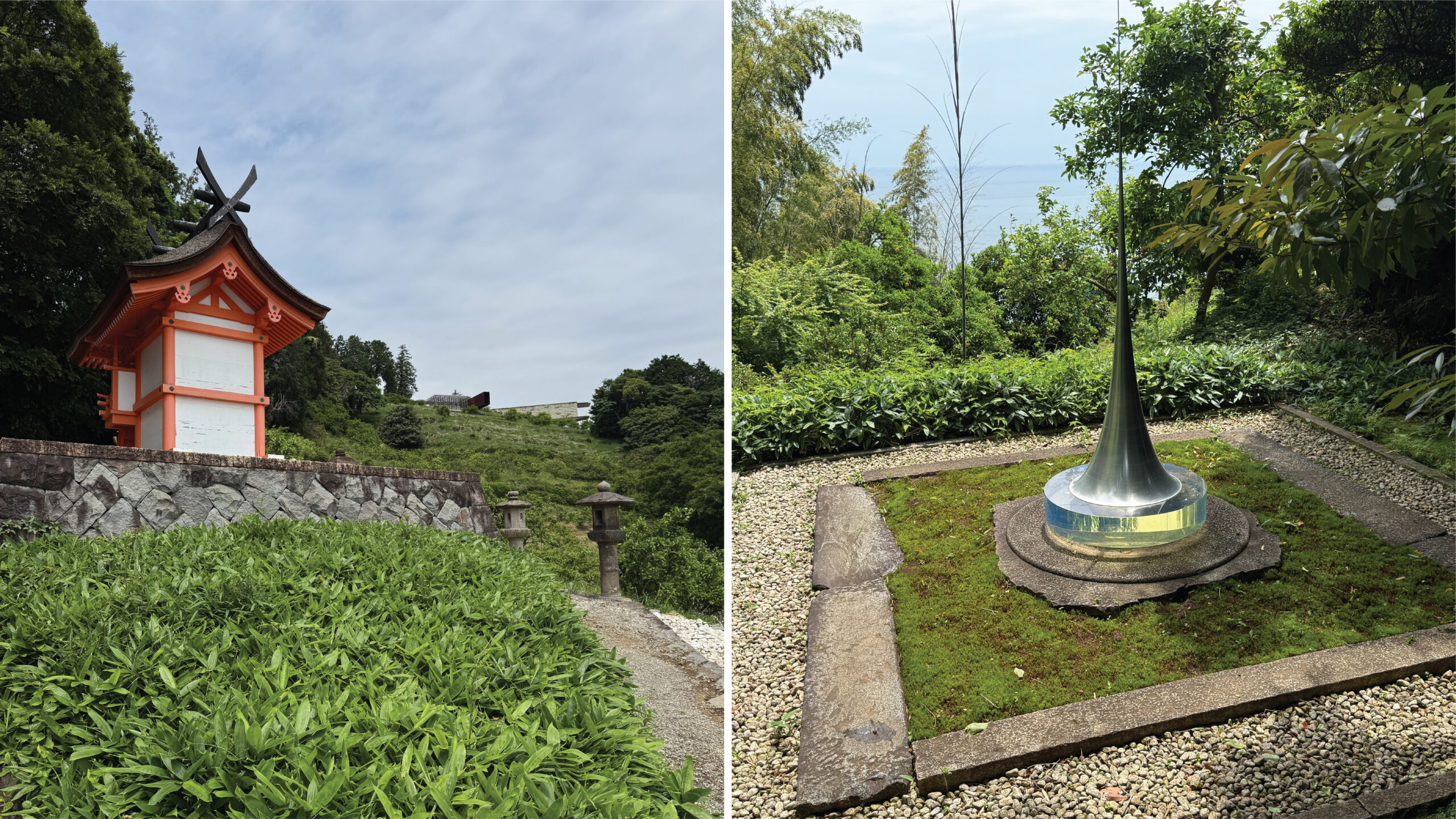
The seaside compound — land art set within former mandarin groves—is called the Enoura Observatory. It includes a long, sunlit, glass-walled gallery for seascapes; a Corten steel tunnel that channels the winter sun at the solstice onto a monumental stone; and scattered follies: an ocean-view glass stage for Noh performances, a teahouse, a café with stone tables and benches, and archways composed of ancient fragments Sugimoto collects. The result is both a diary of historic ideas and a site for experiments.
“At the Observatory, there’s a love of history without being historicist,” Yanai says. “Sugimoto is a big part of how I now think of myself as an architect.”
Photos by Zahid Sardar