

A spry widow decided to keep the old home she inherited. But, pushing 80, she had it redesigned to help her live there longer.
When Roberta Gordon was in her early 20s, she already knew her parents’ ranch-style home in San Francisco’s Westwood Highlands wasn’t built for aging. It had no elevator. Designed by her father, an electrical contractor, the 1960s house sat on a slope with a two-car garage at the highest point at street level. Steps led down to the 2,000-square-foot single-story residence, that had a rudimentary basement. “There were just too many stairs,” recalls Gordon, now in her mid-80s and widowed. “I saw my parents struggling — even after they added weird ramps.”
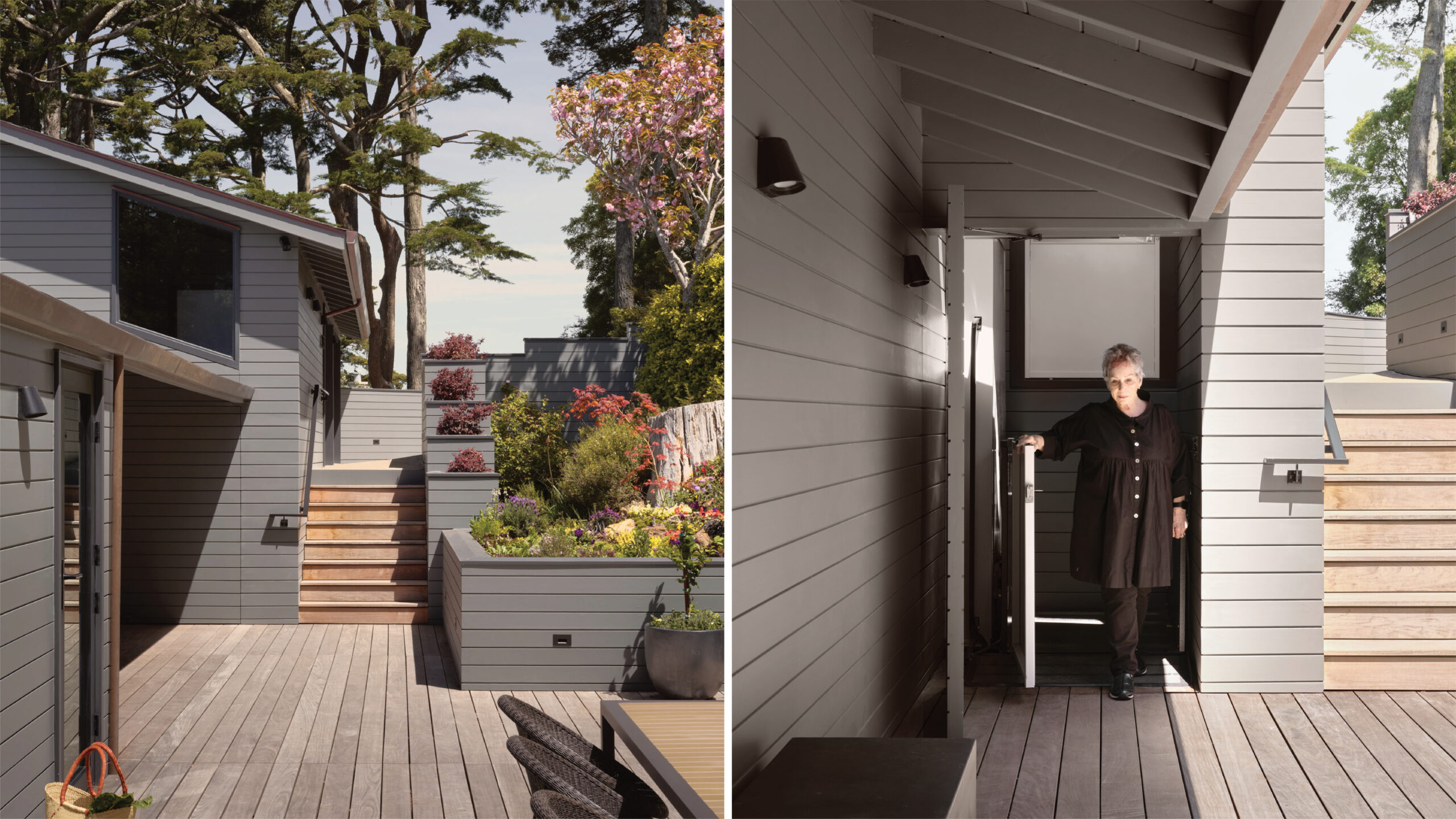
Still, when she inherited the home in 2015, it held more than architectural flaws. It held memory: a sunny south-facing garden, glimpses of the Golden Gate Bridge, and the basement where her parents tinkered in a workshop and hosted ping-pong matches. “It wasn’t well built,” admits her son Aaron, a general contractor, “but there was love in it.”
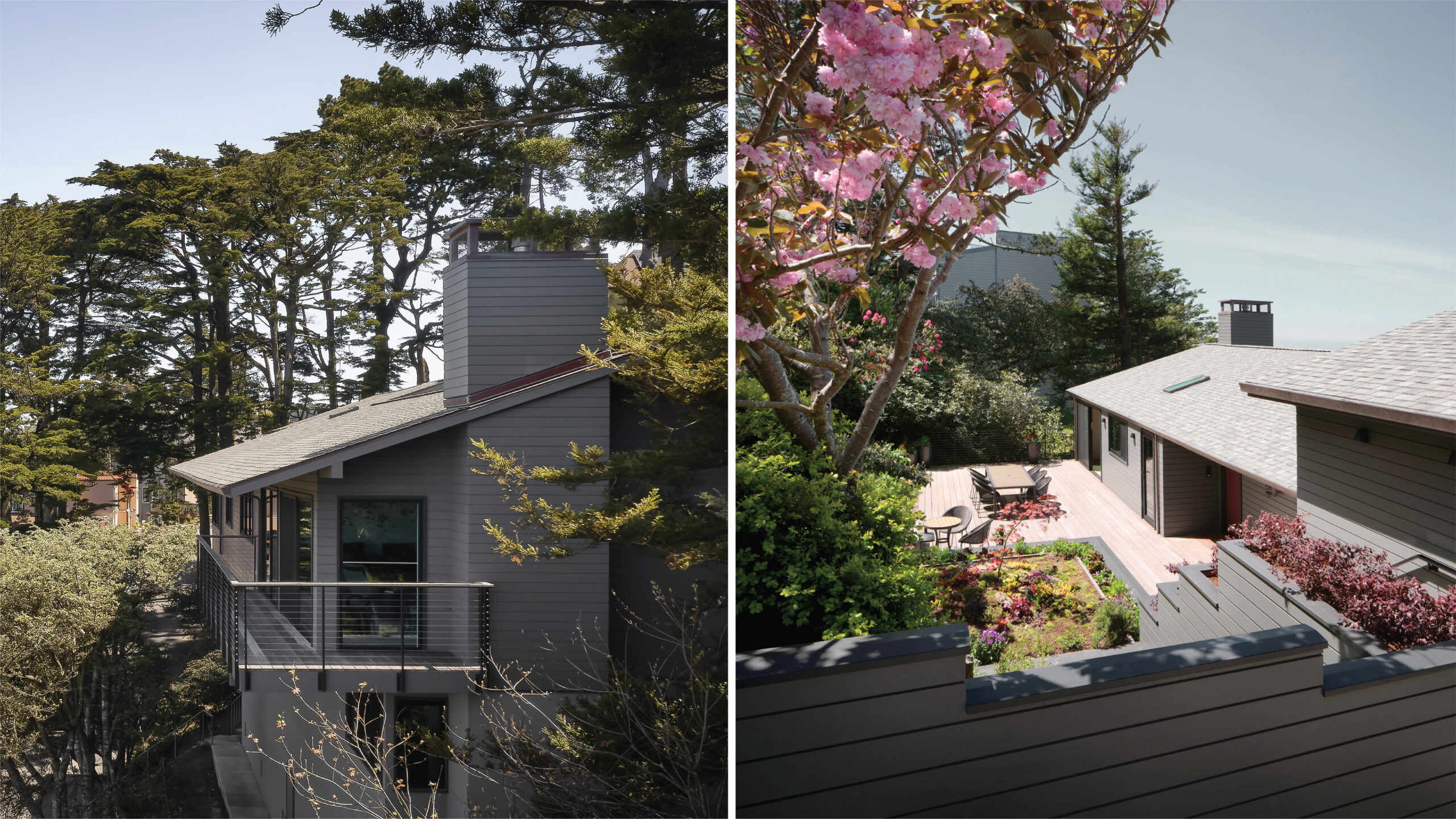
Gordon chose to stay — and to reimagine the house, not just for herself but for the generations who might follow, including her only grandson. Five years of careful planning followed, led by architect David Gast, interior designer David Bjorngaard, and Aaron, who brought both technical expertise and a personal connection. A penthouse addition was floated, then scrapped. Instead, they embraced a future-focused design — including the possibility of a walker or wheelchair. Gast convinced Gordon to convert part of the basement into an ADU — a potential home for a caregiver.

Accessibility shaped many decisions. A full elevator from garage to roof proved too complex and costly. Instead, a simple platform lift now connects the garage to the front door, with a second elevator from inside the house linking the main floor to the ADU below. Every finish was chosen for both looks and longevity: warm wood floors throughout and, in the bathrooms, groutless porcelain wall tiles with a stone-like feel, and durable surfaces like Lava Stone, QuartzStone, and Corian in the kitchen and dining areas.

By 2020, Gordon sold the home where she raised her sons and temporarily moved into the basement — a choice Aaron advised against, citing the chaos of living through a gut renovation. “It always costs more that way,” he says.
Construction wrapped in 2023. From the street, the three-bedroom, two-bath home still nods to its midcentury roots. But inside, it’s been transformed into an elegant, intuitive space designed to flex across decades. Smart features are subtly embedded: motorized window shades, remote-controlled cabinets, and touchless lighting. Hallways are wide enough to accommodate a wheelchair, and unnecessary doors have been removed to open up the layout.
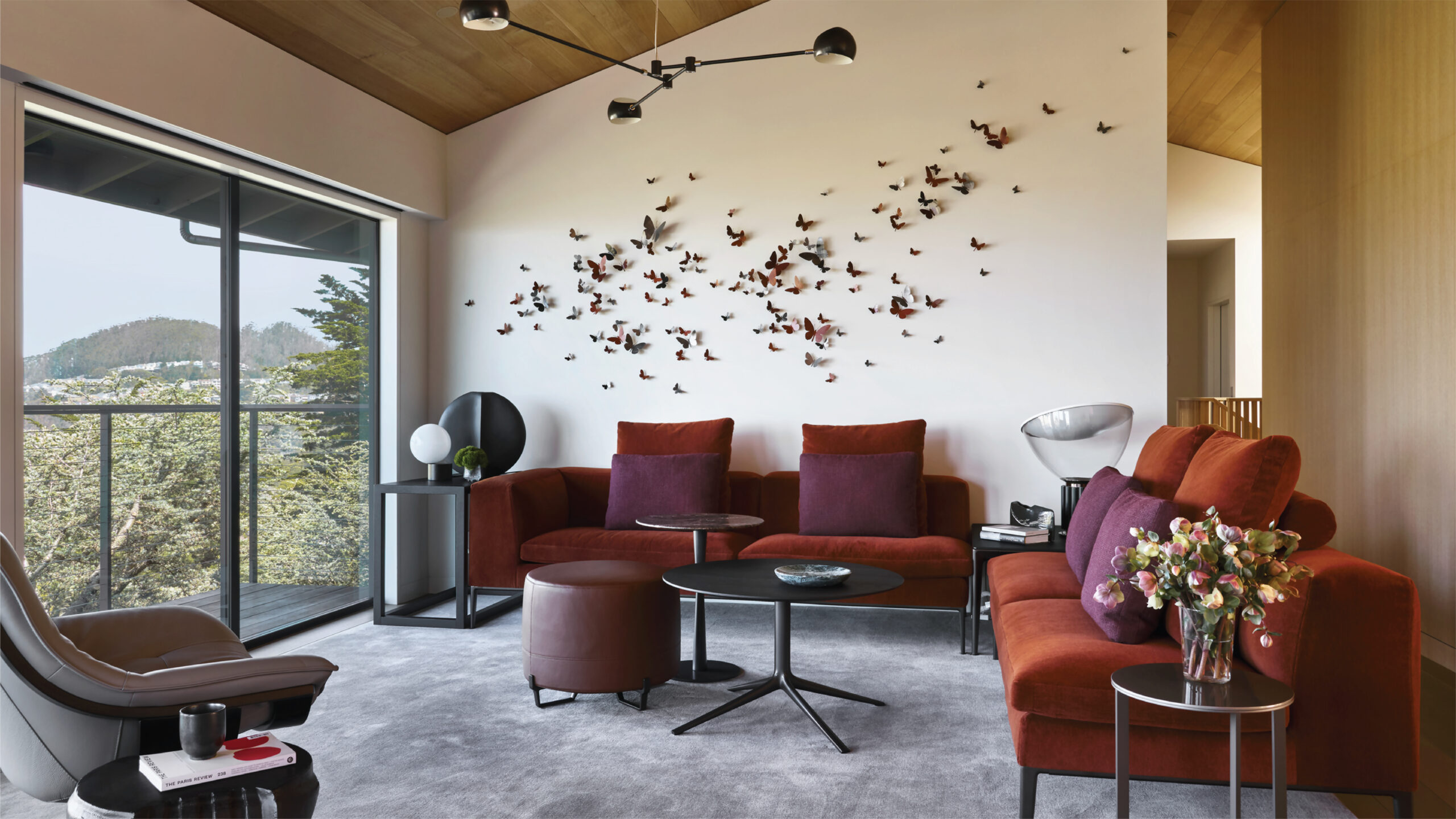
“When I had back surgery recently, I walked laps around the house for exercise,” Gordon says, smiling.
The public areas feel especially expansive. An extended bay enlarges the dining space, anchored by glass doors that open directly to the garden. Skylights and light wells pull in sunlight, while oak cabinetry and flooring add warmth. A sculptural ceiling rack keeps cooking pots within reach; a lowered counter doubles as a reading nook and coffee perch. Shared millwork in a central wall between kitchen and living room unifies the space and hides generous storage.
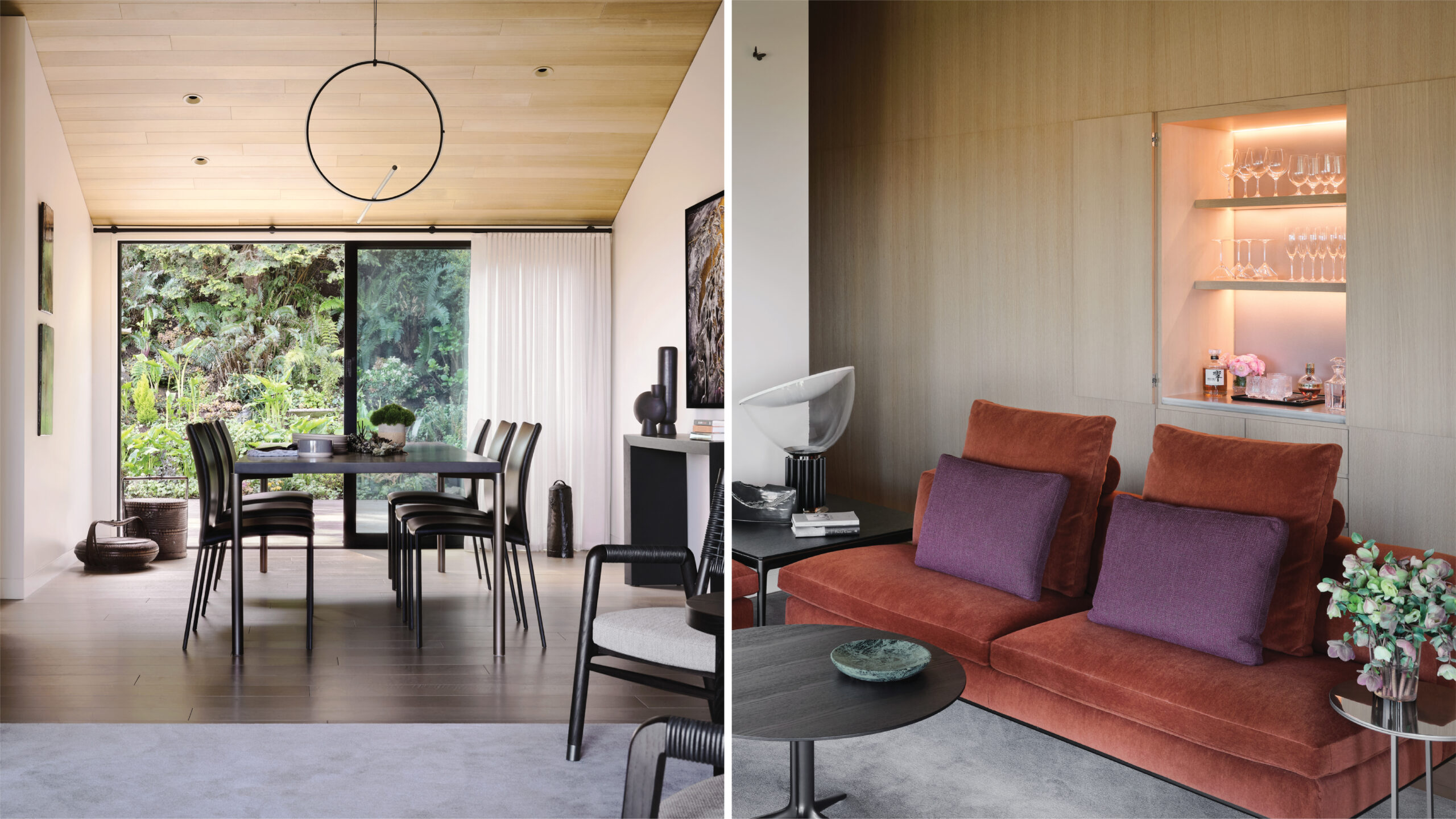
Though originally drawn to grayscale tones, Gordon was gently nudged by Bjorngaard toward something more personal. “She had these beautiful rust and saffron garments,” he recalls. “That became the color story.” The home’s palette now reflects her wardrobe — warm, earthy hues that soften the space. Even the burgundy front door echoes the garden. A custom bronze grab bar at the entry — shaped like a tree branch — offers support without sacrificing beauty.

In the bedroom, an adjustable, fully upholstered bed feels more inviting than clinical. A discreet floor-to-ceiling panel that looks like a wall covering but is actually a door that can be closed with a magnetic latch for privacy — if a future caregiver ever shares the home.
And in the living room, tall north-facing windows frame the trees and birds outside. “It’s like sitting in the landscape,” Gordon says.
Photos by Adam Rouse