
How two Pottery Barn veterans—now designer and client—brought Scandinavian mys to Healdsburg.
When Marta Benson, the former CEO of Pottery Barn Brands, retired in 2024, she and her husband, Adam Willner, began searching for a weekend retreat within easy reach of their home in Mill Valley. The goal was both practical and heartfelt: to create a multigenerational compound in anticipation of their first grandchild. Benson had imagined fog-softened mornings in Inverness, but instead a remodeled 1969 farmhouse on two acres near downtown Healdsburg surfaced unexpectedly—and felt immediately right.
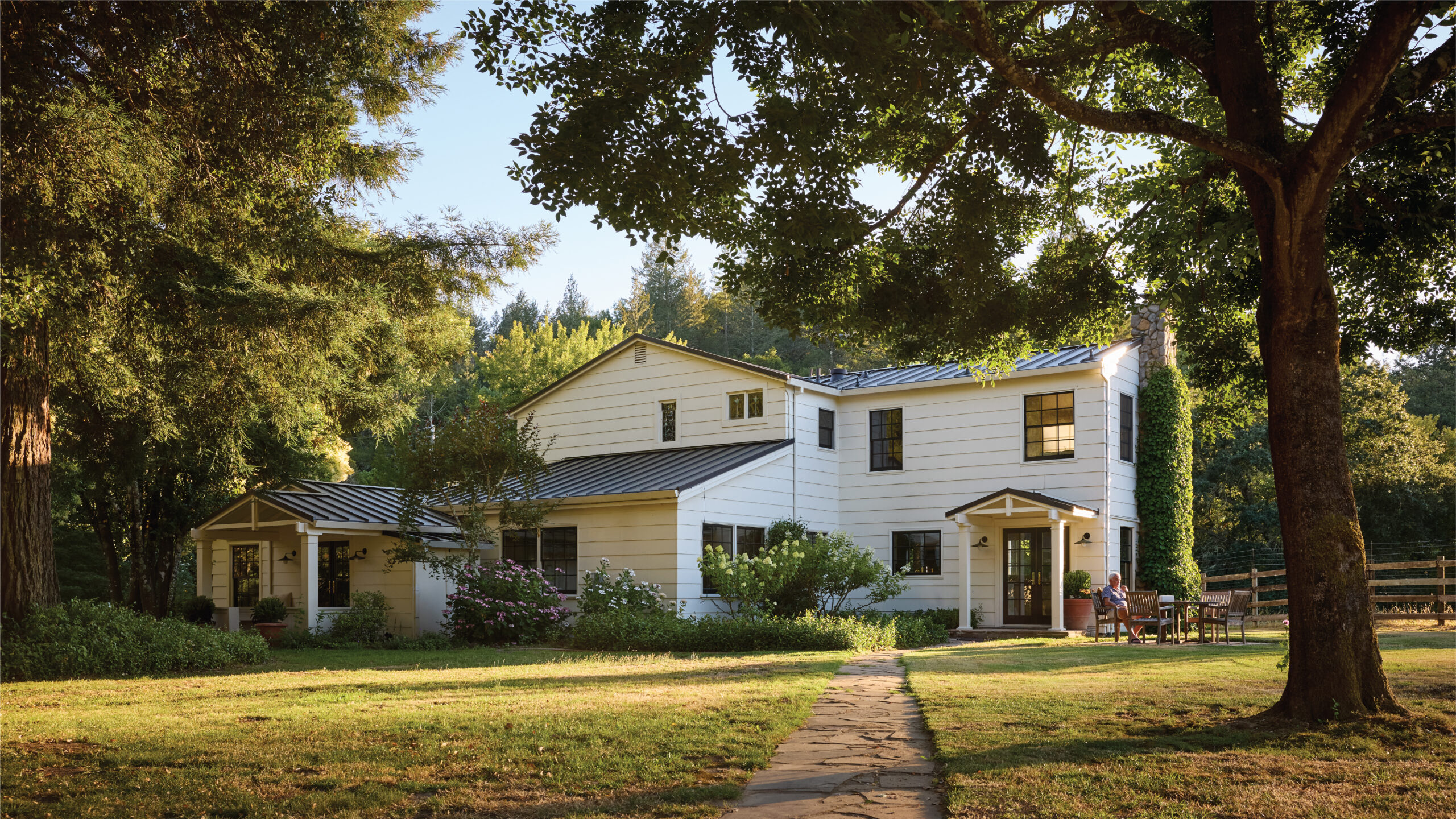
Surrounded by coastal oaks, redwoods, walnut, and cottonwood trees, the 3,500-square-foot, two-story L-plan house seemed settled in its landscape. Gardens planted by a previous owner wrap a swimming pool; an apple orchard slopes toward a creek. Sixty-acre neighboring parcels lend a sweeping pastoral backdrop without the burden of upkeep, and longhorn cattle occasionally wander up to the fence, reinforcing the rural illusion.
With covered entry porches, an ivy-clad stone chimney, white clapboard siding, and sloped standing-seam metal shed roofs, the farmhouse carries an uncomplicated vernacular that appears untouched by trend. It looks as though it has always stood there. For Benson—whose 35-year career in home furnishings unfolded within an industry not always aligned with sustainability—the property offered a fitting canvas for a renewed environmental focus.
Design, after all, is personal history. Benson grew up in Sausalito not far from the 1954 Round House in the Marin Headlands, commissioned by her father and designed by architect Mario Corbett. Though she never lived in the circular landmark, she inherited her father’s instinct for architecture that engages its site.
“At first, I thought we’d simply paint and furnish,” she says. But the scope quickly expanded—serendipitously alongside the launch of Jacob Feder’s independent design firm. Formerly Benson’s vice president of visual merchandising at Pottery Barn, Feder had just left to establish Jacob Feder Design. Within a week of purchasing the farmhouse, Benson agreed to mentor him in his new venture and became his first major client.
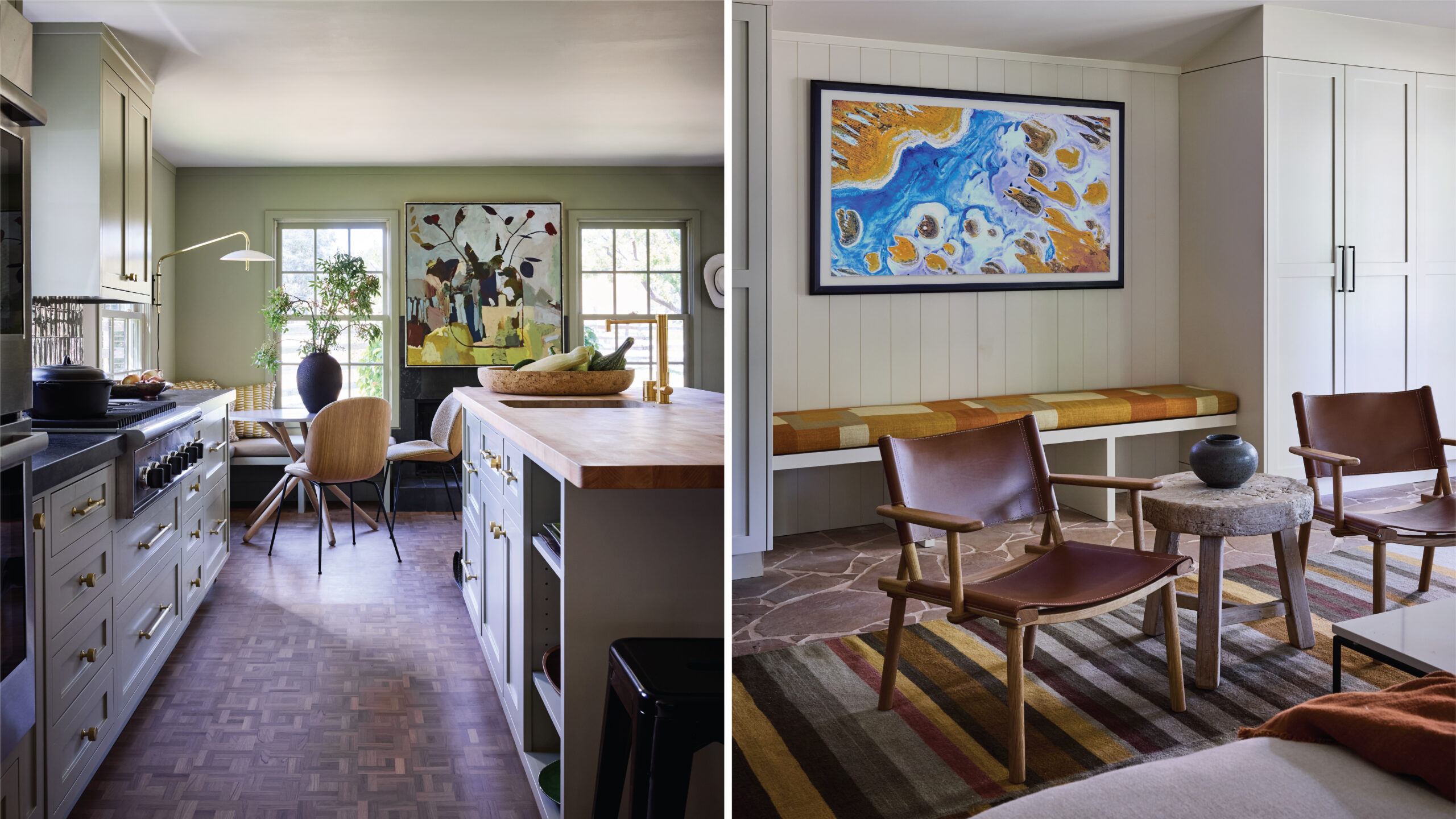
A light refresh evolved into subtle architectural recalibration. Two partition walls were removed, merging discrete rooms into a generous great room that integrates kitchen and living areas and opens directly onto a covered porch. The move brought daylight deeper inside and strengthened the connection to the orchard and oaks beyond. Indoors and out began to read as one continuous environment.
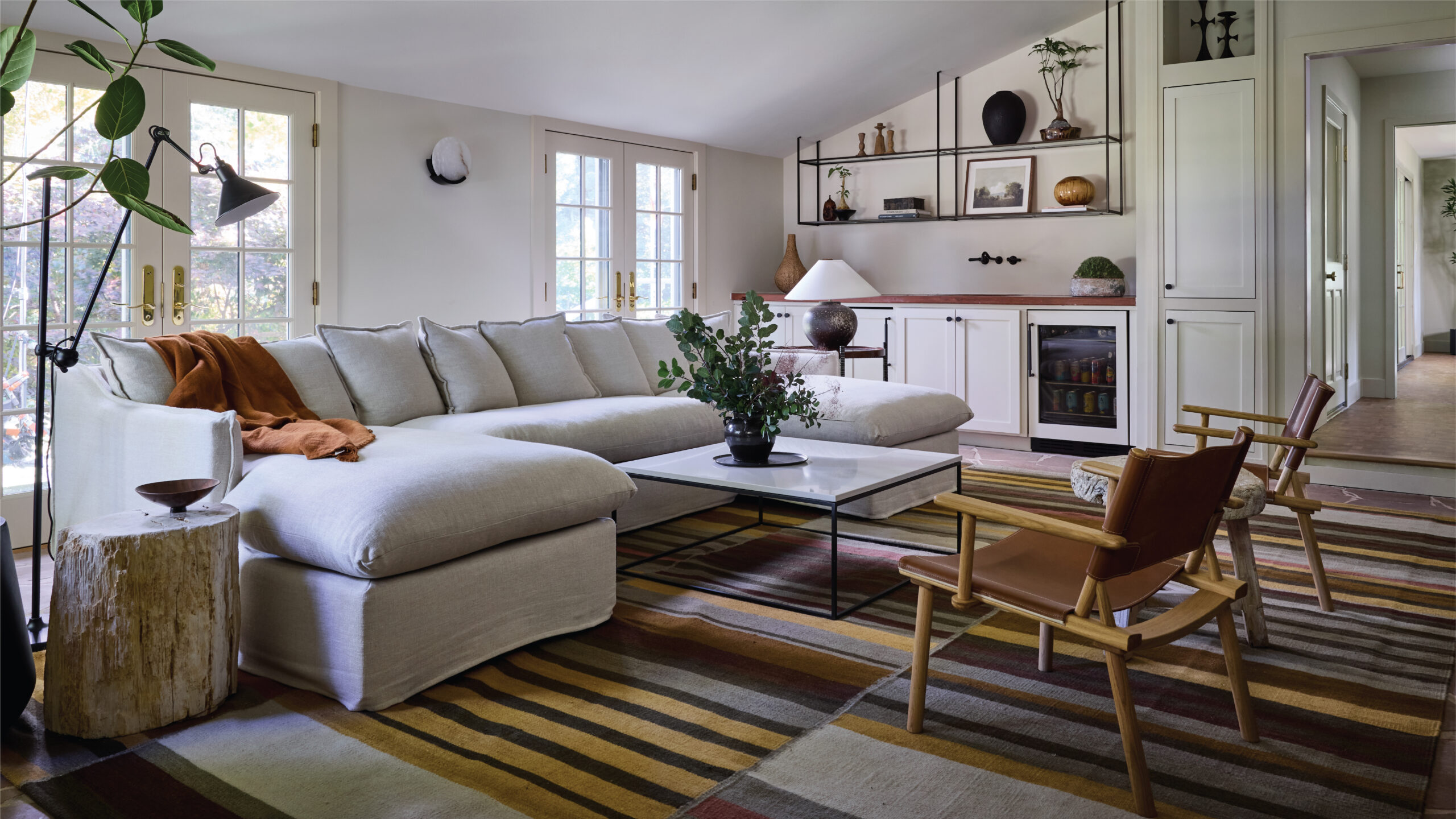
The collaboration felt quite intuitive. Feder, a Los Angeles native, grew up in a design-forward household; his father, a builder and early-adopter, installed solar panels and an intercom in their home in 1972. After studying art history, Feder worked in creative services at Ralph Lauren and later in Italy, before holding roles at Calvin Klein Home, Armani Casa, and Gucci. Years spent navigating the overlap between fashion and interiors sharpened his understanding of what he calls the emotional power of design.
Benson, who is part Danish, proposed Scandinavian restraint as a starting point. A recent stay in Stockholm at Ett Hem, conceived by British designer Ilse Crawford, left a lasting impression: rooms where old and new pieces coexist in cultivated ease. Benson wanted that same sense of rootedness—spaces that felt accumulated rather than prescribed.
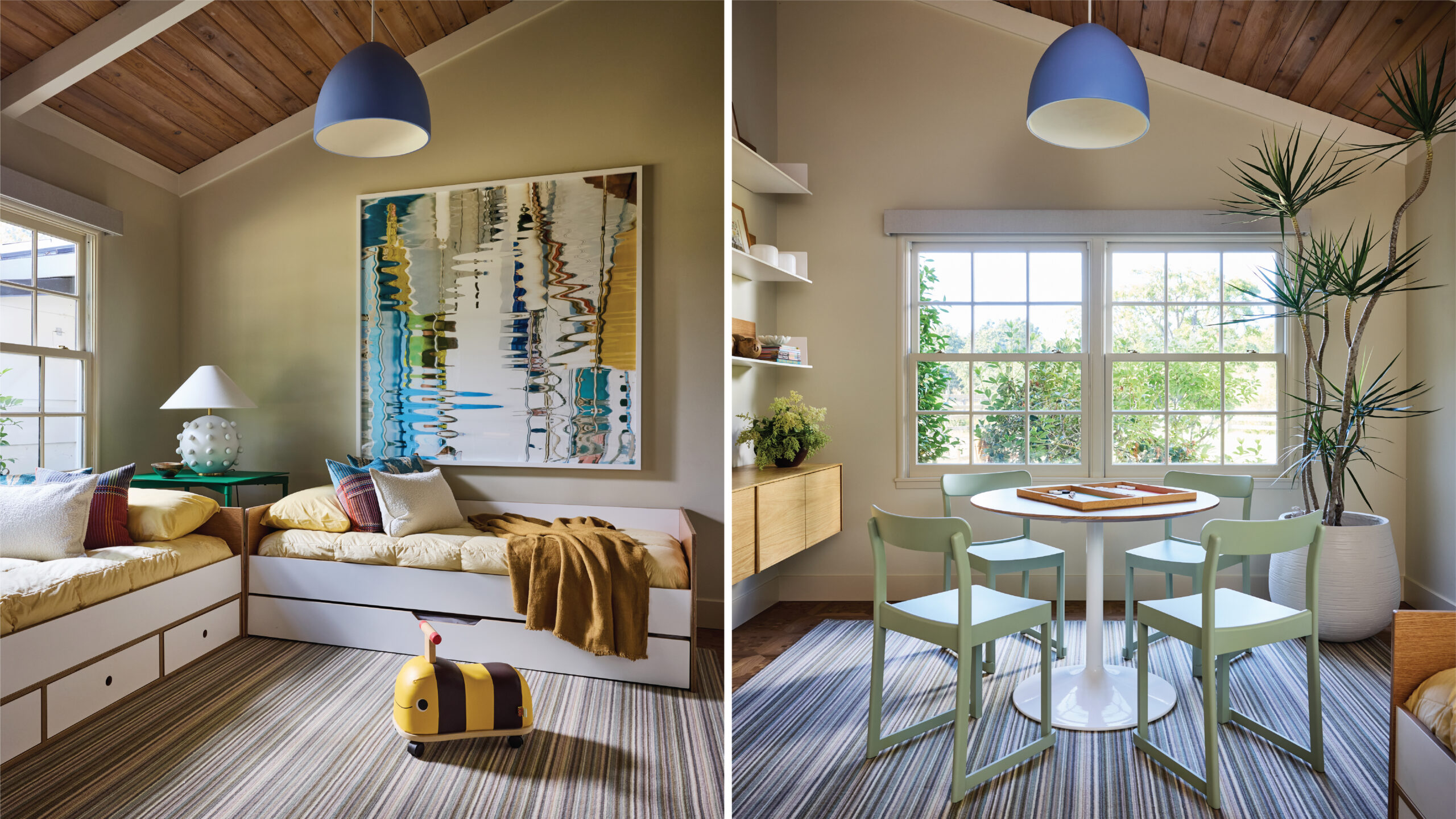
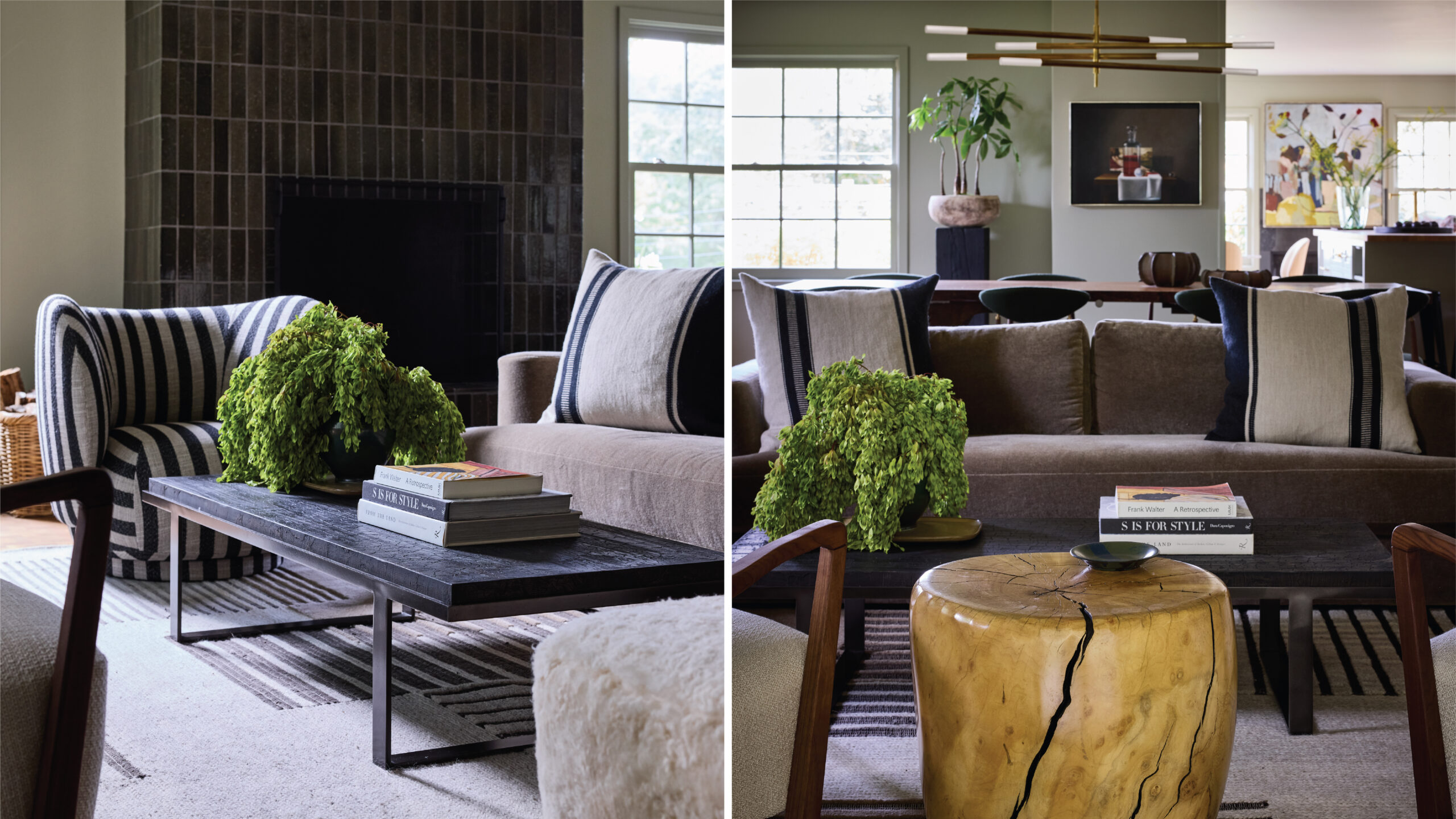
Sustainability became both guiding ethic and aesthetic strategy. Instead of only sourcing globally, Benson and Feder looked close to home, tapping Sonoma County and Bay Area makers. Macintyre tile, fabricated just down their country road, now wraps the restored fireplace in a quietly tactile surround. Abstract works from Dolby Chadwick Gallery—which also stages pop-ups at nearby The Madrona—hang in the living areas alongside an abstract landscape by Cloverdale painter Laine Justice, discovered at Sandy Erickson Gallery.
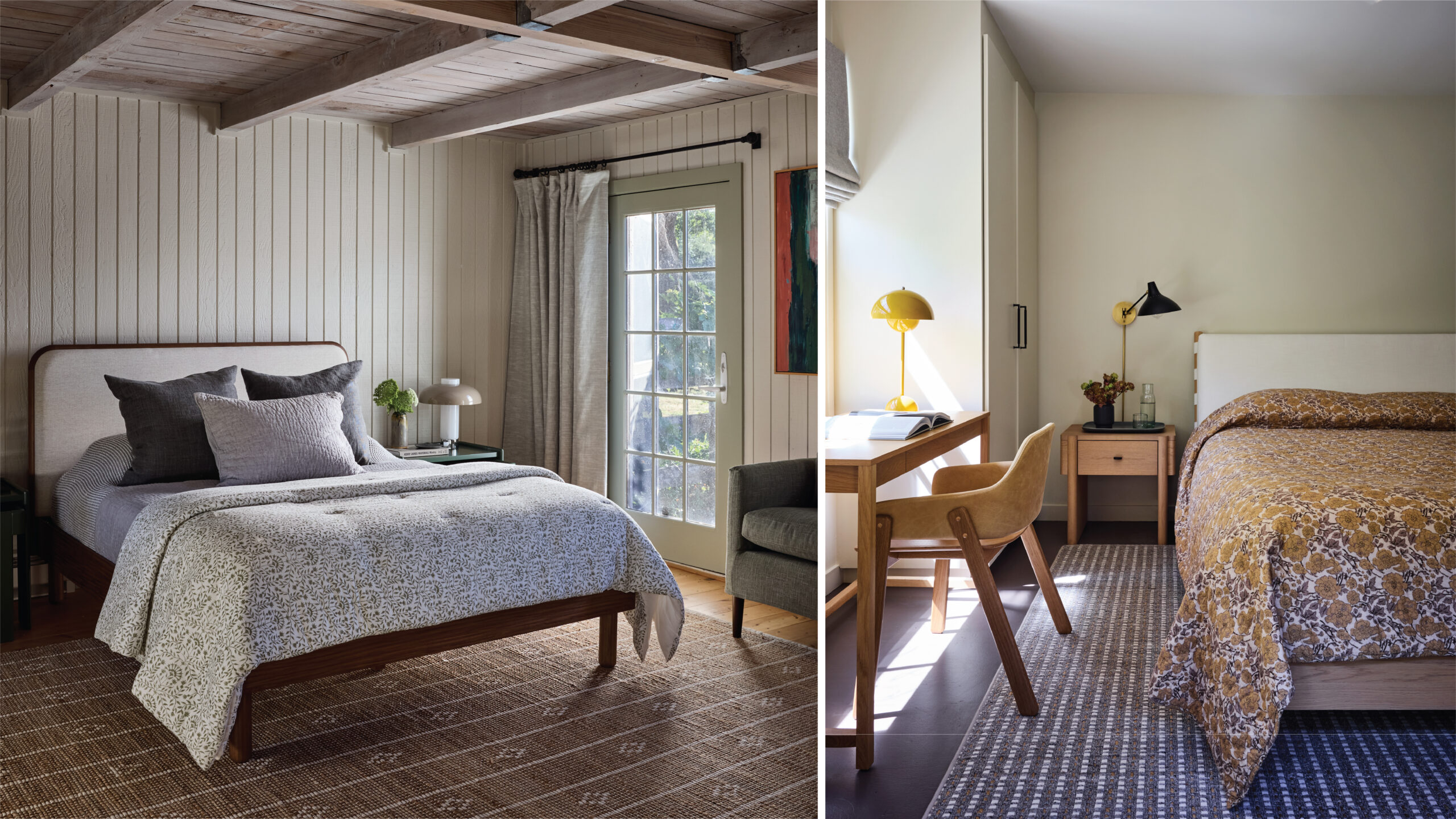
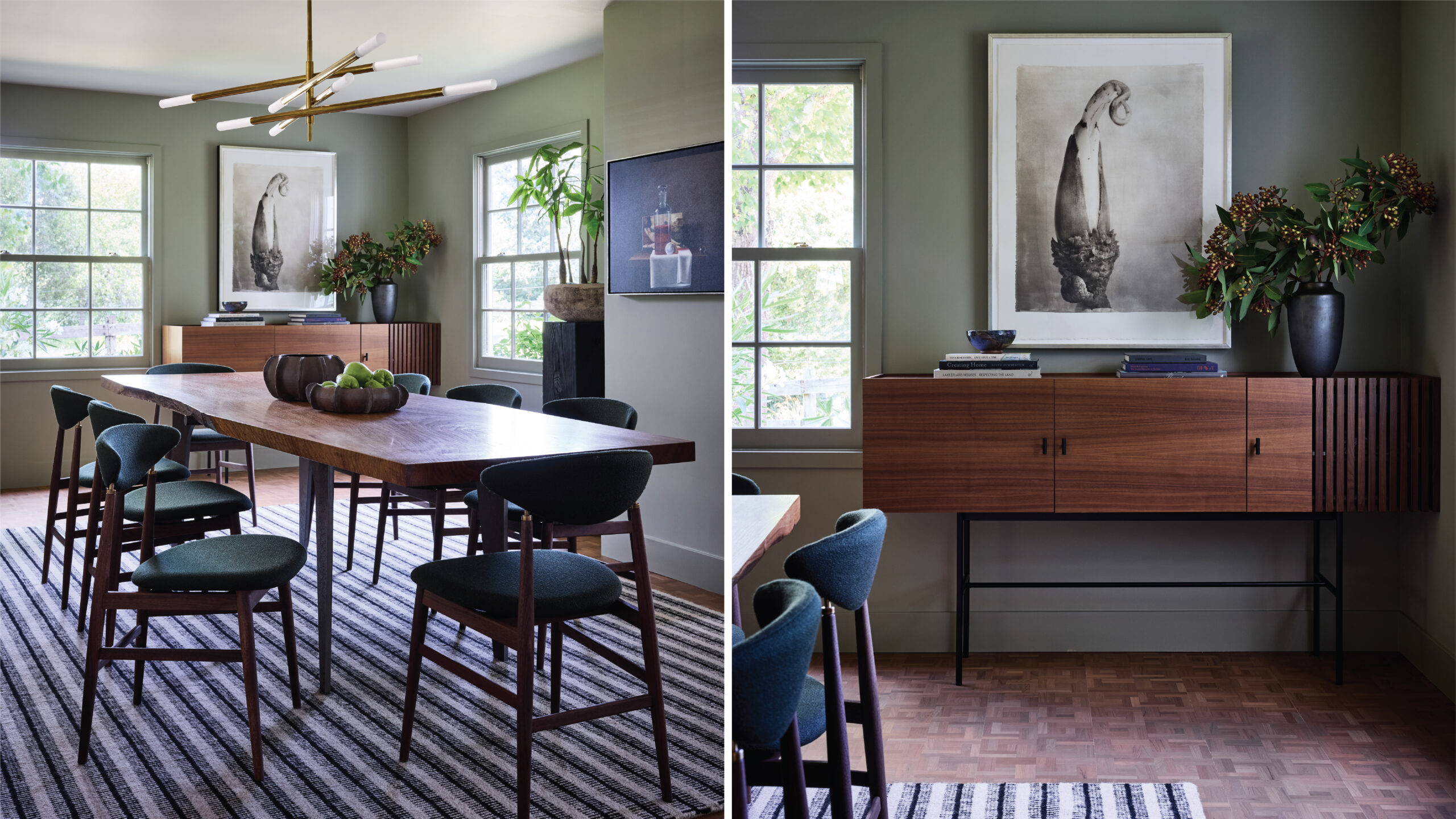
The dining table anchors the great room with a top crafted from sustainably sourced elm wood by Evan Shively of Arborica, a respected local purveyor of salvaged lumber.
“I described what I was looking for,” Feder says, “and Evan walked past hundreds of boards to the exact right one.” The moment encapsulates the project’s larger sensibility: attentive, collaborative, and deeply tied to place.
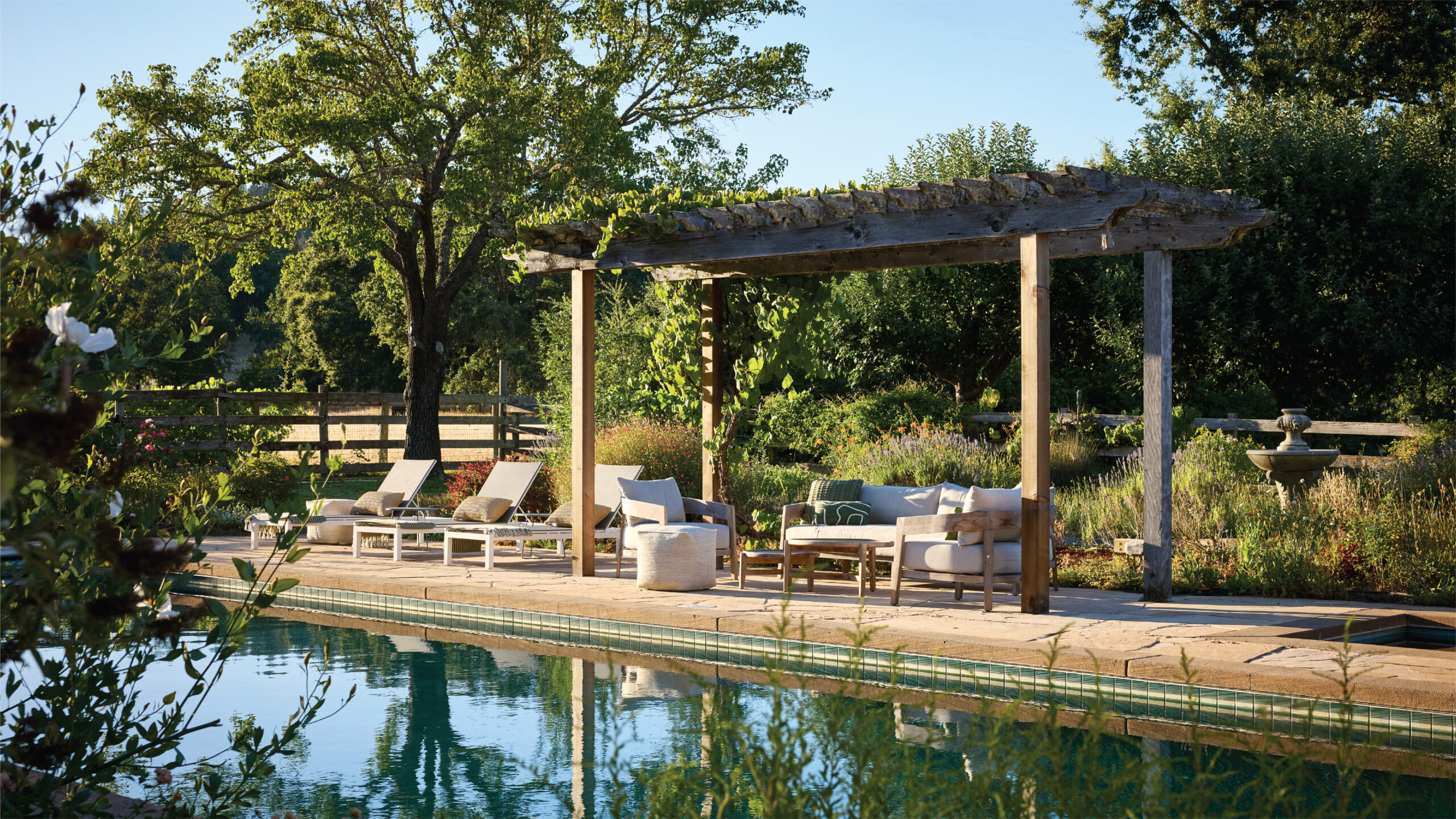
Yet the home’s visual language—layered textures, tailored stripes, saturated but controlled color borrowed from the landscape—retains an urban polish. That tension feels deliberate. Feder’s career across prominent fashion and home brands informs rooms that are relaxed but not rustic, edited but far from austere. The farmhouse may sit among orchards and grazing cattle, but its interiors carry the quiet confidence of a life steeped in design.
For Benson and Willner, the result is neither country idyll nor city outpost but something more nuanced: a house that honors its vernacular bones while embracing sustainability, craftsmanship, and continuity across generations. It is, above all, a place prepared for gathering—porch doors open, tables set, landscape rolling softly beyond the fence.
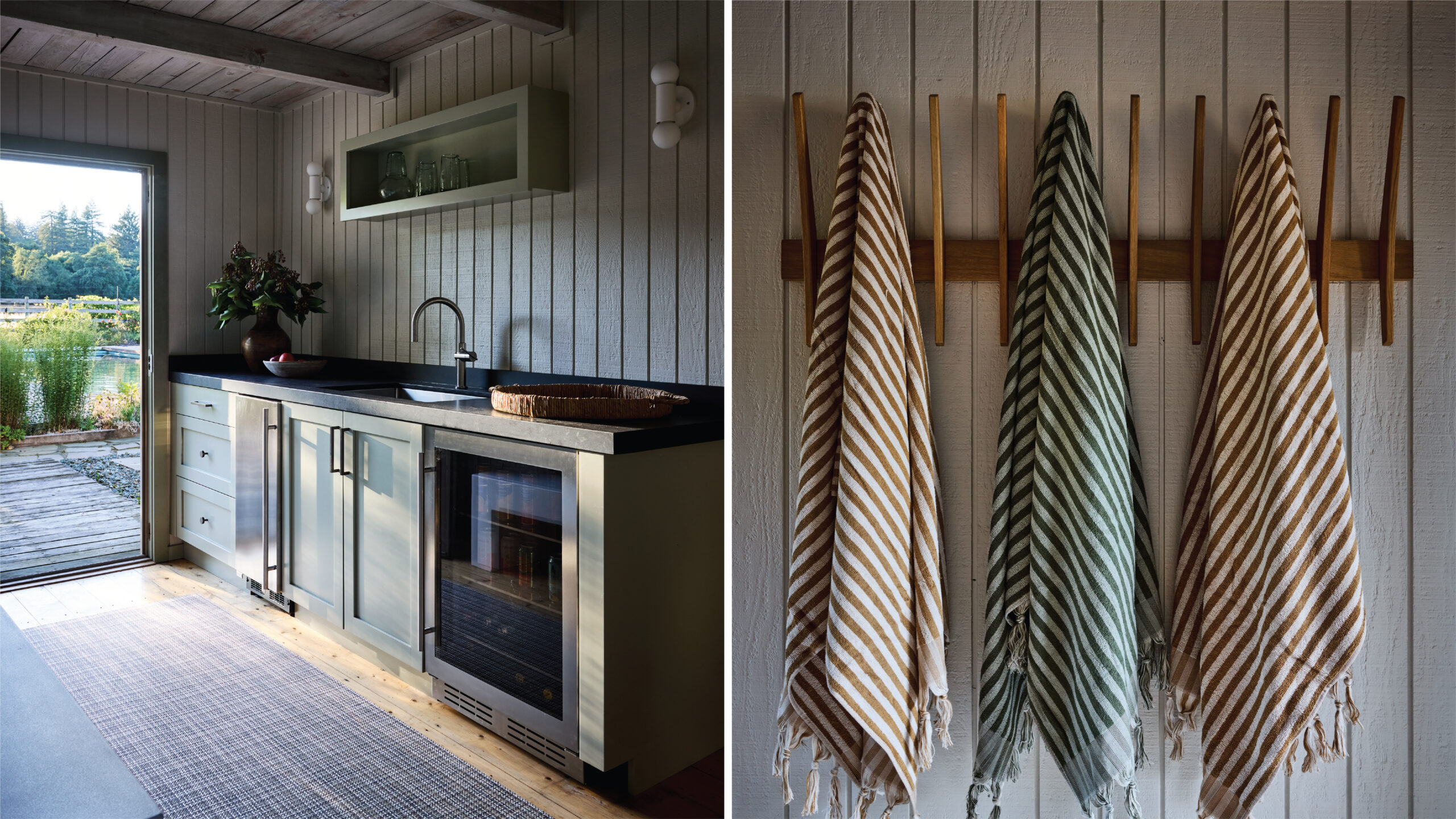
Photos by John Merkl